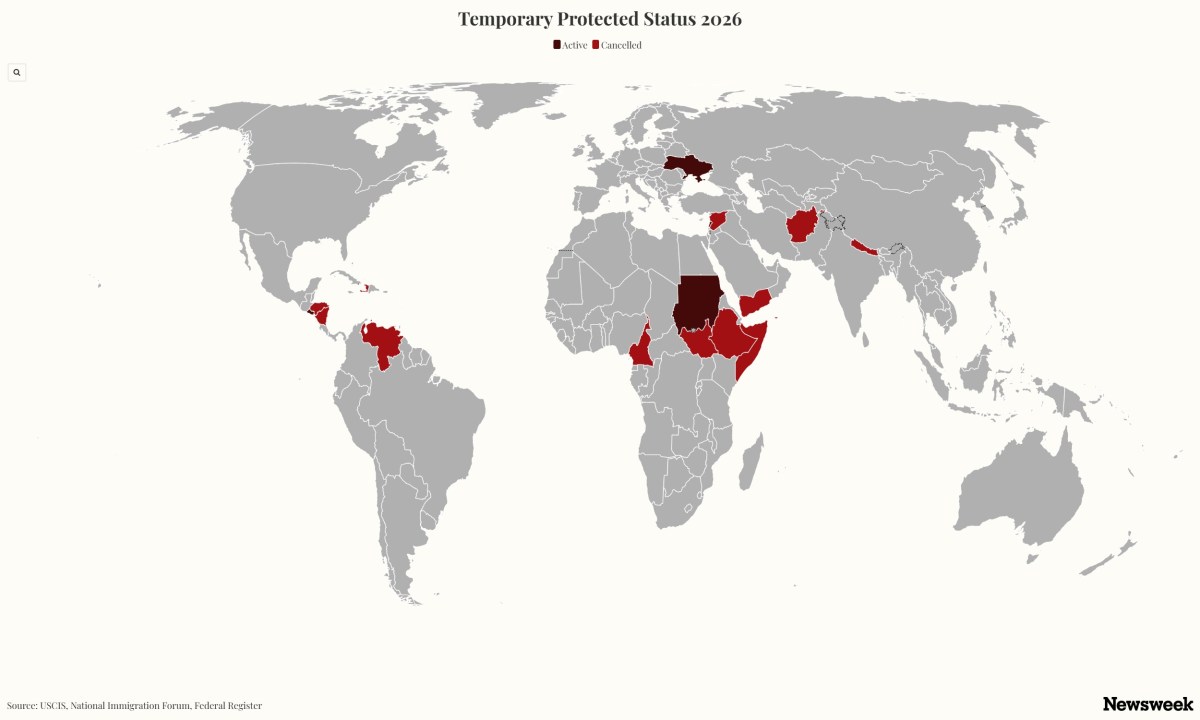
The Trump administration celebrated its latest court victory related to Temporary Protected Status (TPS) on Tuesday, as a district judge overturned his order preventing the Department of Homeland Security (DHS) from ending protections for those from Ethiopia. Judge Brian Murphy's decision means that 13 countries that were covered by TPS, which grants temporary legal status and work authorization, have lost those protections during President Donald Trump's second term. While some countries saw their status terminated last year, others were affected by the U.S.
Supreme Court's June decision in favor of the DHS' position. A smaller number of countries still have TPS, with all facing renewal decisions later this year. DHS does not discuss ongoing or future operations," a DHS spokesperson told Newsweek in response to questions about next steps for those affected by the rulings.
For too long, TPS has been allowed to function as a de facto amnesty program despite Congress never intending it to be permanent." Newsweek reached out to African Communities Together, which filed the case, for comment via email Tuesday afternoon. Murphy said that while Ethiopian TPS holders had raised significant legal concerns, recent Supreme Court rulings meant many of their arguments could no longer move forward. As a result, he declined to keep the protections in place while the case continued.
He did, however, allow one key claim to survive. Murphy said the plaintiffs could continue pursuing allegations that the administration's decision may have been influenced by racial or national-origin bias, even as he dismissed several other legal challenges. In his ruling, Murphy pointed to another federal court's conclusion that it would be too early to throw out claims alleging discriminatory motives, allowing the challengers an opportunity to seek evidence through the discovery process.
TPS allows nationals from countries affected by war, natural disasters or other extraordinary circumstances to live and work legally in the U.S. for limited periods without fear of deportation. When Trump returned to office in January 2025, 17 countries held TPS designations. Since then, his administration has moved to terminate protections for 13 of them, affecting roughly 1 million of the roughly 1.3 million TPS recipients who held the status at the start of his second term.
Administration officials, including former Homeland Security Secretary Kristi Noem, have argued that many TPS designations had been repeatedly extended for years or even decades and that conditions in the affected countries had improved enough to allow migrants to return home. The administration has consistently maintained that TPS was intended to be temporary and should not become a de facto permanent immigration program. Immigration advocates have strongly disputed that assessment, arguing that many of the countries remain plagued by political instability, conflict, economic collapse or humanitarian crises.
Extract — continue reading at the source.