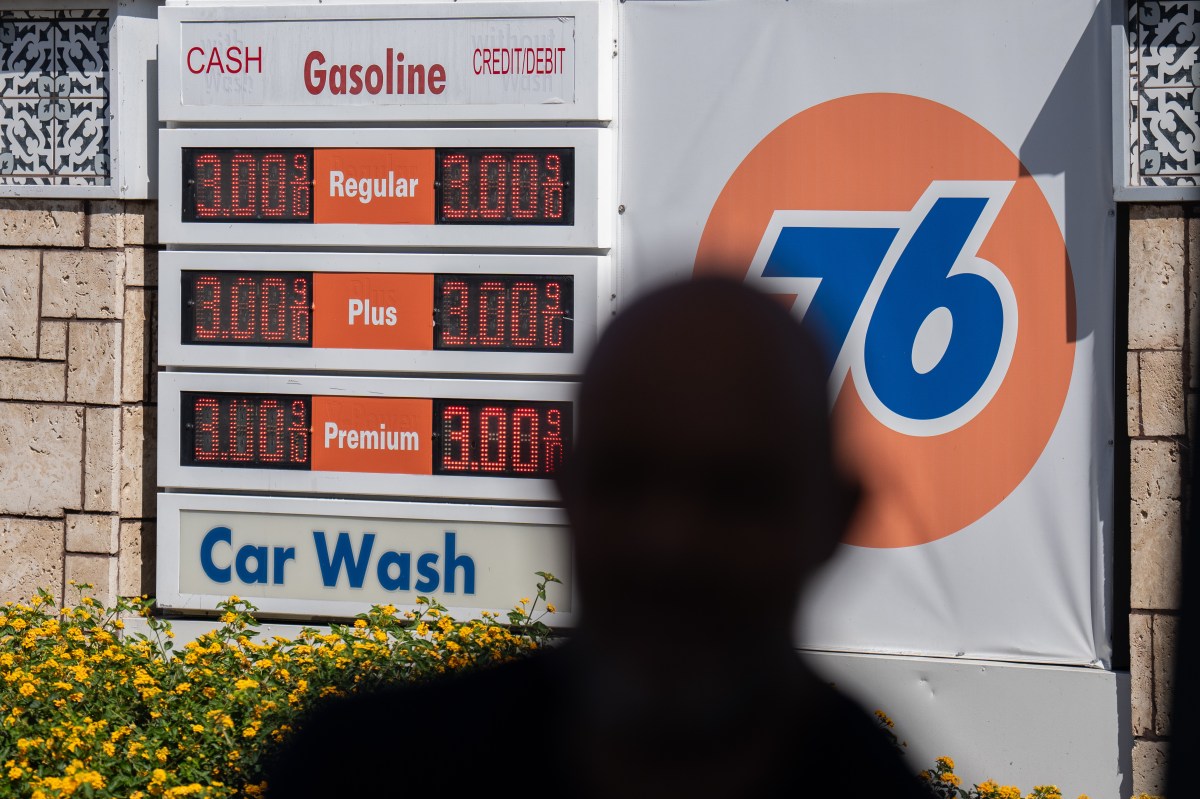
Gas prices have risen in every state where Democrats and Republicans are battling for control of a U.S. Senate seat since the war in Iran began, according to the latest data from AAA. For Republican candidates and incumbents, this could be a significant weakness to overcome, as a recent /Ipsos poll found that a bipartisan majority (78 percent) blames the Trump administration’s policies for higher costs, including 64 percent of GOP voters.
This blame could translate into lost support for Republican candidates in November, especially if gas prices, up over 46 percent since February 28, keep rising. Another survey conducted by Politico in the first week of October found that most voters would not be more likely to vote Republican even if President Donald Trump somehow ended the conflict in the Middle East or lowered prices at the pump before November. As of Tuesday morning, the national average gas price was $4.34 per gallon, according to AAA, up from $2.98 per gallon just before the U.S. and Israel launched joint strikes on Iran.
That means gas prices have risen by more than 46 percent since the start of the war, for a total additional cost of $73.5 billion, according to researchers at Brown University's Watson School of International and Public Affairs. That amounts to an additional $561.20 per U.S. household. Drivers in California are paying the highest price at the pump, with a statewide average of $6.28 per gallon.
Only three other states average above $5 per gallon: Hawaii ($5.64), Washington ($5.44), and Nevada ($5.44). The lowest gas prices are in Georgia ($3.79 per gallon), North Carolina ($3.81), Texas ($3.84), Ohio ($3.85), and Indiana ($3.88). Prices are up year-over-year and compared to late February, in each of the 13 battlegrounds for U.S.
Senate elections this November, including Alaska ($4.99 per gallon), Florida ($4.11), Georgia, Iowa ($4.22), Maine ($4.38), Michigan ($4.62), Montana ($4.49), Nebraska ($4.19), New Hampshire ($4.30), North Carolina, Ohio, South Carolina ($3.96) and Texas. Compared to February 26, two days before the start of the Iran war which disrupted global oil supply, gas prices are now up by $1.39 per gallon in Alaska, $1.17 in Florida, $1.01 in Georgia, $1.59 in Iowa, $1.47 in Maine, $1.61 in Michigan, $1.70 in Montana, $1.47 in Nebraska, $1.45 in New Hampshire, $1.03 in North Carolina, $1.09 in Ohio, $1.27 in South Carolina and $1.23 in Texas. According to calculations made by Moody’s Analytics chief economist Mark Zandi, higher fuel prices—including gas and diesel—have cost the average U.S. household an additional $1,100 since the war began nearly eight months ago.
Zandi warned on social media that the financial burden will likely increase in the coming months “as winter approaches,” pushing home heating fuel prices “much higher.” Patrick De Haan, head of petroleum analysis at GasBuddy, also thinks that Americans might not have seen the worst of higher gas prices yet. He wrote on social media that October 13 would have tied “2022’s record for number of days with the national average above $4 per gallon.” Four years ago, the country counted 157 days when the national average price for a gallon of regular gas was above $4. Facing plunging approval ratings since the start of the war in Iran, Trump and his administration have pursued several measures aimed at easing the surge in fuel prices ahead of the crucial midterms.
Extract — continue reading at the source.