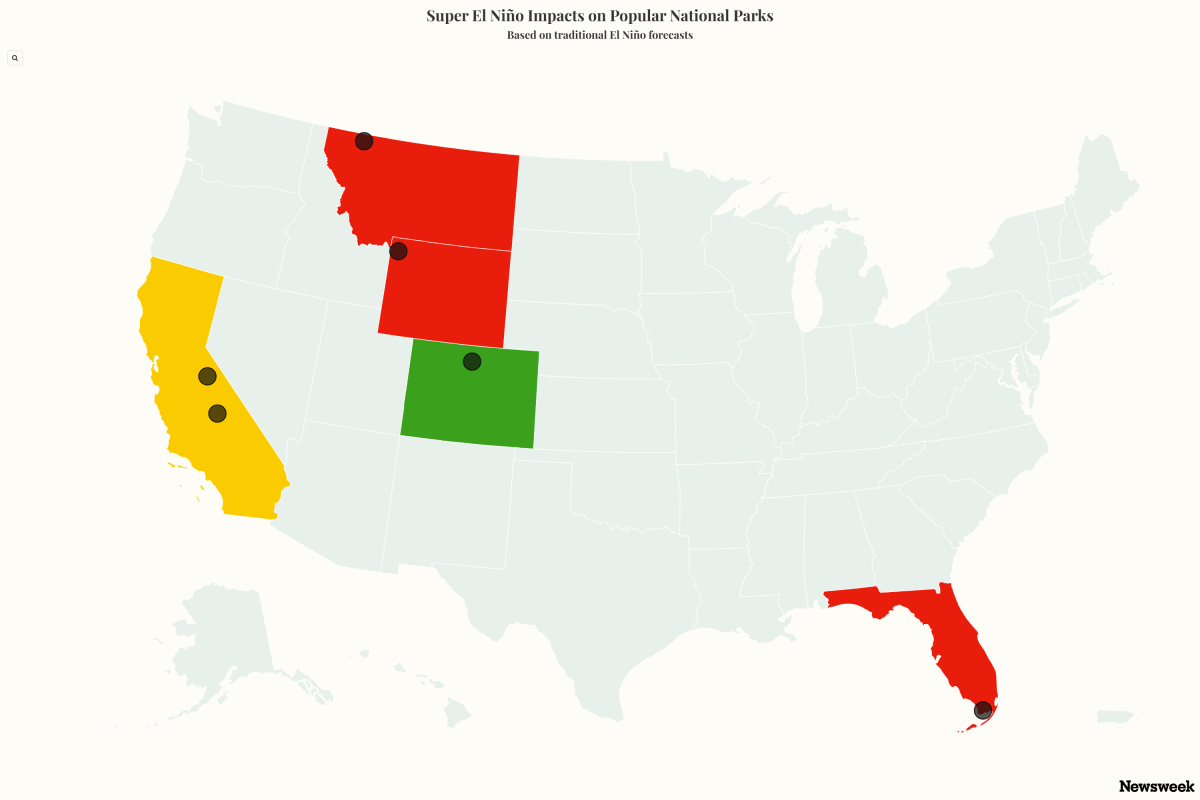
A potentially historic Super El Niño could dramatically alter conditions in some of America's most visited national parks, reshaping everything from waterfalls and snowpack to flooding and visitor experiences. Forecasters say there is a high probability that the developing El Niño strengthens into a "very strong" event this fall and winter, a category sometimes informally referred to as a super El Niño. Strong El Niño events can shift storm tracks across North America, bringing wetter conditions to parts of the South and Southwest while leaving some northern regions warmer than normal.
While the exact impacts will vary by location, the nation's most iconic parks could undergo some of the biggest transformations. A super El Niño is an unofficial term for a very strong El Niño event, when sea surface temperatures in the central and eastern equatorial Pacific rise more than about 2 degrees Celsius above average, significantly altering weather patterns around the world. These rare events can amplify impacts such as flooding, drought, extreme heat, and changes in storm tracks across the United States and beyond.
While a potential super El Niño could create challenges for travelers, not all of its impacts on America's national parks would be negative. In some locations, increased rainfall and snowfall could revive drought-stricken landscapes, boost waterfalls in parks such as Yosemite and provide excellent snow conditions in parts of the Rockies. However, the same weather pattern could also bring significant hazards, including flooding, landslides, debris flows, road closures and dangerous trail conditions, particularly across the Southwest and California.
As a result, a super El Niño could make certain parks more spectacular to visit while at the same time creating safety concerns and travel disruptions that visitors would need to monitor closely. Yosemite in California's Sierra Nevada could see one of the most noticeable changes. The Sierra Nevada often benefits from stronger El Niño winters, with storms delivering significant precipitation to California.
AccuWeather long-range forecaster Paul Pastelok told Newsweek that California's mountains can become a target for repeated storm systems during traditional El Niño patterns, particularly as winter progresses. That could mean both good and bad news for park goers. For late wintertime visitors, Pastelok urged caution, as strong atmospheric rivers could bring heavy rain or snowfall to California's national parks.
While this moisture has a benefit to spring and summer travelers--picturesque rivers, great fishing opportunities, and pleasant camping—Pastelok warned that flooding and mudslides could pose hazards for travelers in the colder season. "Be very cautious about planning any late-season or cold-season trips," he told Newsweek. "It could be dangerous depending on the storm systems that come in." The giant sequoias of California's southern Sierra Nevada could experience a mixed blessing.
Extract — continue reading at the source.