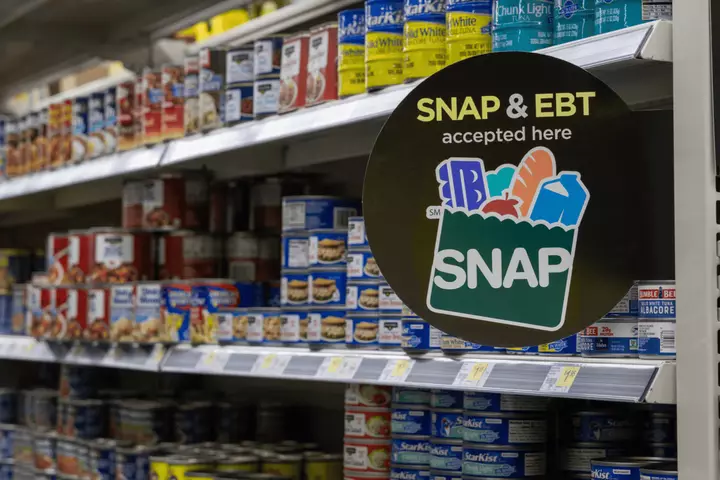
The number of households receiving food assistance varies widely across the United States, according to newly released Census Bureau data. Participation in the Supplemental Nutrition Assistance Program (SNAP) has fallen sharply following federal policy changes. Census Bureau released its 2025 American Community Survey (ACS) one-year estimates last week.
They show the demographic, social, economic, and housing estimates for the country, every state, and other geographic areas with populations of at least 65,000. The Census Bureau’s Food Stamps/SNAP survey shows that, nationwide, the United States had just over 134 million households in 2025. The survey then breaks those households down by their receipt of benefits, household type, the presence of children, and whether anyone aged 60 or older lived in the home.
The new figures provide a state-by-state picture of reliance on the nation’s largest food-assistance program during 2025, a year in which SNAP underwent significant changes. Separate monthly administrative data examined by the Center on Budget and Policy Priorities (CBPP) shows that nationwide SNAP participation fell by 5.5 million people, or 13 percent, between July 2025 and July 2026. Participation dropped from approximately 41.6 million people to 36.1 million, its lowest level in 17 years, according to the organization’s analysis.
CBPP reported that participation declined in every state except Alaska during that period. It fell by close to 5 percent or more in 48 states, nearly 10 percent or more in 26 states, and around 20 percent or more in eight states. The decline followed the July 4, 2025 enactment of the Republican reconciliation law commonly called the One Big Beautiful Bill (OBBB).
CBPP said that the regulation made it harder for some people to qualify for or continue receiving SNAP in three main ways: It also shifted part of the program’s future benefit and administrative costs to states. CBPP cautioned that participation had begun declining before the legislation was enacted, indicating that other factors may also have contributed. However, it said the fall accelerated in almost every state after the enactment.
It could become more pronounced as the law’s provisions are fully implemented. Children have accounted for a substantial share of the decline. Data gathered from 28 states showed that 1.5 million fewer children were receiving SNAP than in July 2025.
Extract — continue reading at the source.