A Texas school district has canceled classes after what officials described as the "rapid spread" of COVID-19, highlighting how the virus is still continuing to disrupt schools six years after the pandemic first upended education across the United States. San Perlita Independent School District in South Texas announced the temporary closure of all campuses this week, citing a growing number of COVID cases. The district said the shutdown was intended to help "protect the health and safety" of the school community while helping to prevent further spread.
The closure comes just days after another school was forced to take similar action. Last week, Park Ridge Achievement Academy in Louisiana temporarily shut down for one day "out of an abundance of caution" following a COVID outbreak that affected students and staff. The school disruptions coincide with a broader increase in COVID activity across much of the country.
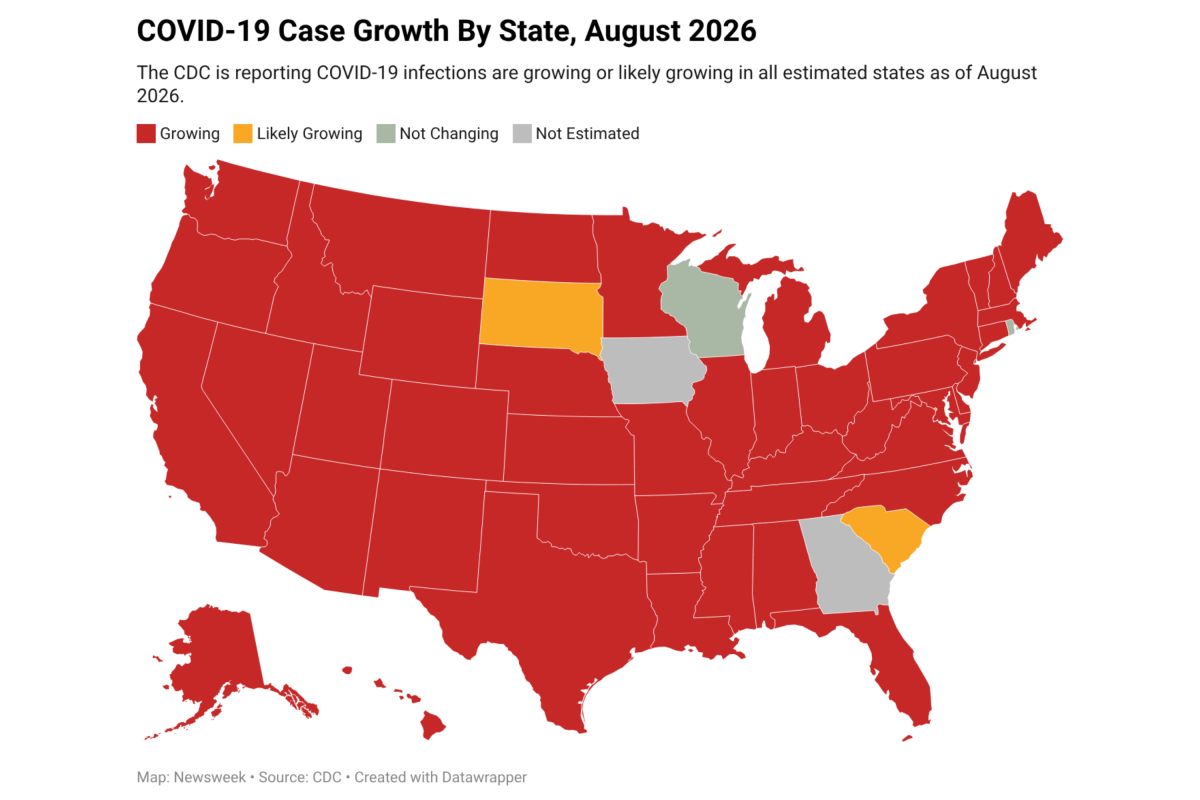
According to the Centers for Disease Control and Prevention's (CDC) latest epidemic trend estimates, as of August 19, COVID infections are currently growing or likely growing in 47 states, while no states are estimated to be experiencing a decrease in cases. The CDC's data also shows that Texas is one of the states that’s experiencing growth in infections. Nationally, the CDC estimates that COVID cases are growing, with infections increasing across much of the South and West.
The agency has described national COVID activity as low overall but trending upward. Growing wastewater surveillance data appears to support the trend. In Texas, the CDC has reported rising levels of SARS‑CoV‑2, the virus that causes COVID-19, in wastewater samples in several regions, including Central Texas.
Wastewater monitoring is often considered an early indicator of community spread because increases can appear before spikes in testing or hospital visits. Experts caution that rising case counts do not necessarily mean a return to the large-scale disruptions seen during the height of the pandemic. Instead, COVID has settled into a pattern of recurring seasonal waves, with increases often occurring during the summer and winter months.
Public health experts have said the current increase is consistent with those established seasonal patterns. Andrew Pekosz, professor of molecular microbiology and immunology at Johns Hopkins Bloomberg School of Public Health, previously told Newsweek that "Cases are increasing at a relatively steady pace; they aren’t surging dramatically. This is what we have come to expect from COVID-19 now that we are in the 'seasonal' phase and out of the 'pandemic' phase of the disease." While most infections are now milder than during the earliest years of the pandemic, outbreaks can still cause workplace disruptions, staffing shortages and school closures when large numbers of people become ill at the same time.
Extract — continue reading at the source.