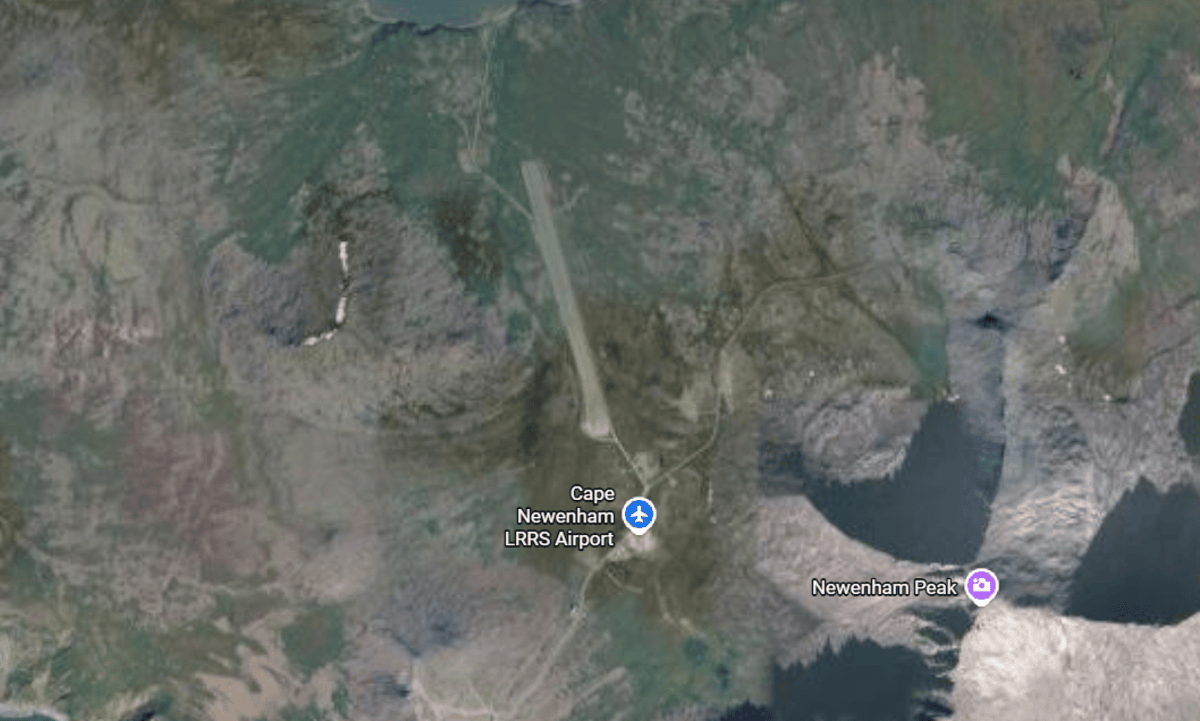
Eight people have been killed after a charter aircraft crashed at a remote military base on the coast of western Alaska, the U.S. military has said. The plane, a Cessna 441, had taken off from Anchorage and is thought to have crashed as it was approaching Cape Newenham Long Range Radar Site Airport, around 450 miles west of Alaska's largest city, according to civil aviation authorities. Two of those on board were pilots, and the other six were passengers, said Clint Johnson, the Alaska chief for the National Transportation Safety Board (NTSB), the government agency tasked with investigating civil transportation accidents, in a statement carried by the .
It's not clear why the eight individuals were flying in the area, but the top U.S. commander in Alaska said those on board "were dedicated professionals carrying out a vital mission in a demanding environment." “This is a devastating loss for our military family and the communities we serve," said U.S. Air Force Lieutenant General Robert Davis, the head of the U.S. Alaskan Command, and the Alaskan North American Aerospace Defense Command (NORAD) Region and the U.S.
Alaska Republican Senator Dan Sullivan said he had requested a briefing from the NTSB and the Federal Aviation Administration (FAA), for "answers on what caused this horrific tragedy." "I join Alaskans in condolences as we learn of the plane crash in Cape Newenham today," fellow Alaska Republican Senator Lisa Murkowski said. "I’ve traveled extensively with Security Aviation throughout Alaska, and have met many of their experienced pilots." The Anchorage-based Security Aviation is a prominent air charter company that says it takes passengers to "remote and secluded destinations" across Alaska for business or leisure travel. Cape Newenham is a radar site perched on the Bering Sea.
There are a network of radar stations stretching across Canada and Alaska that pick up potential threats, including missiles or aircraft, approaching North America. These types of threats are jointly monitored by NORAD, the U.S. and Canada's binational command. These radar stations are managed by the Pacific Air Forces Regional Support Center, housed at Joint Base Elmendorf-Richardson.
This is a developing story.
Extract — continue reading at the source.