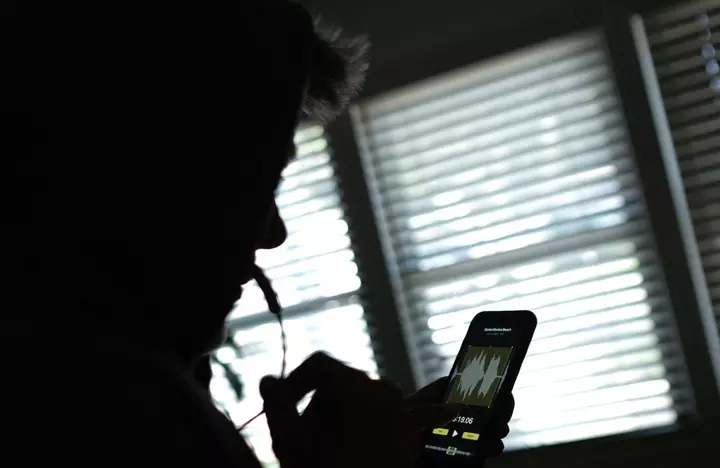
Scammers are using AI to make phone fraud increasingly convincing, with authorities across several states warning that voice-cloning technology can allow criminals to impersonate relatives, public figures and, in some cases, even law enforcement officials. The warnings have taken on new urgency in Florida, where the Osceola County Sheriff's Office says scammers have cloned the voice of one of its captains while carrying out an impersonation scheme involving supposed arrest warrants and missed jury duty. Newsweek has identified warnings or cases involving AI voice-cloning scams in Florida, Kentucky, North Carolina, Texas, California, Arizona, Michigan and New York.
The latest case comes from Osceola County, where scammers allegedly cloned the voice of Captain Steve Moser and used his photograph while contacting potential victims, according to local media. Sheriff Chris Blackmon said the fraudsters were posing as Moser in calls linked to claims that recipients had missed jury duty or faced an arrest warrant. He told News 6, "They cloned his voice and was using Steve's picture as well to say it was him making the phone call, and it was not." The sheriff told Fox 35 Orlando, "It's his voice, his face.
If you go look it up, you say, it could be him talking, but the entire thing's AI." The sheriff's office estimates it has encountered about 40 cases of scammers impersonating law enforcement this year alone. Captain Kimberley Montes, the director of public information and community relations at the Osceola County Sheriff's Office, confirmed to Newsweek that Moser was "impersonated via calls to try and scam people," adding that they were first alerted after seeing a post on Nextdoor, a social networking platform focused on local neighborhoods and communities. They shared a post on social media alerting residents in the area.
In March, the FBI in Louisville, Kentucky, warned residents that it had seen an increase in fraud targeting Kentuckians through calls from people impersonating law-enforcement and government officials. The FBI said the most prevalent variation involved scammers pretending to represent local sheriff's offices and falsely claiming that victims had missed jury duty or a court appearance. It specifically warned that "scammers may also use Artificial Intelligence (AI)" to make their impersonation appear more legitimate.
The agency said that 475 government-impersonation complaints from Kentucky were submitted to the FBI's Internet Crime Complaint Center (IC3) in 2025, with reported losses exceeding $3.15 million. In North Carolina, the Durham County Sheriff's Office issued a warning in April after a resident received a fake letter, while speaking to the scammer on the phone, that claimed they owed $30,000 for failing to appear in federal court. The department cautioned residents that fraudsters are now using AI and voice cloning to mimic voices, warning that "even if a caller sounds like a local official or someone you may know, always hang up and call the agency back at a publicly listed number." The Fort Bend County Sheriff's Office reported a sharp increase in telephone scams in August 2025 involving demands for money to avoid arrest over nonexistent warrants.
The department said scammers had used the name of a legitimate sheriff's office employee and told residents that warrants had been issued over failure to appear for federal jury summonses. Its warning advised residents to be suspicious if "a caller or recording such as an AI voice" uses high-pressure tactics. California Department of Justice officials have also warned about AI-powered impersonation.
Extract — continue reading at the source.