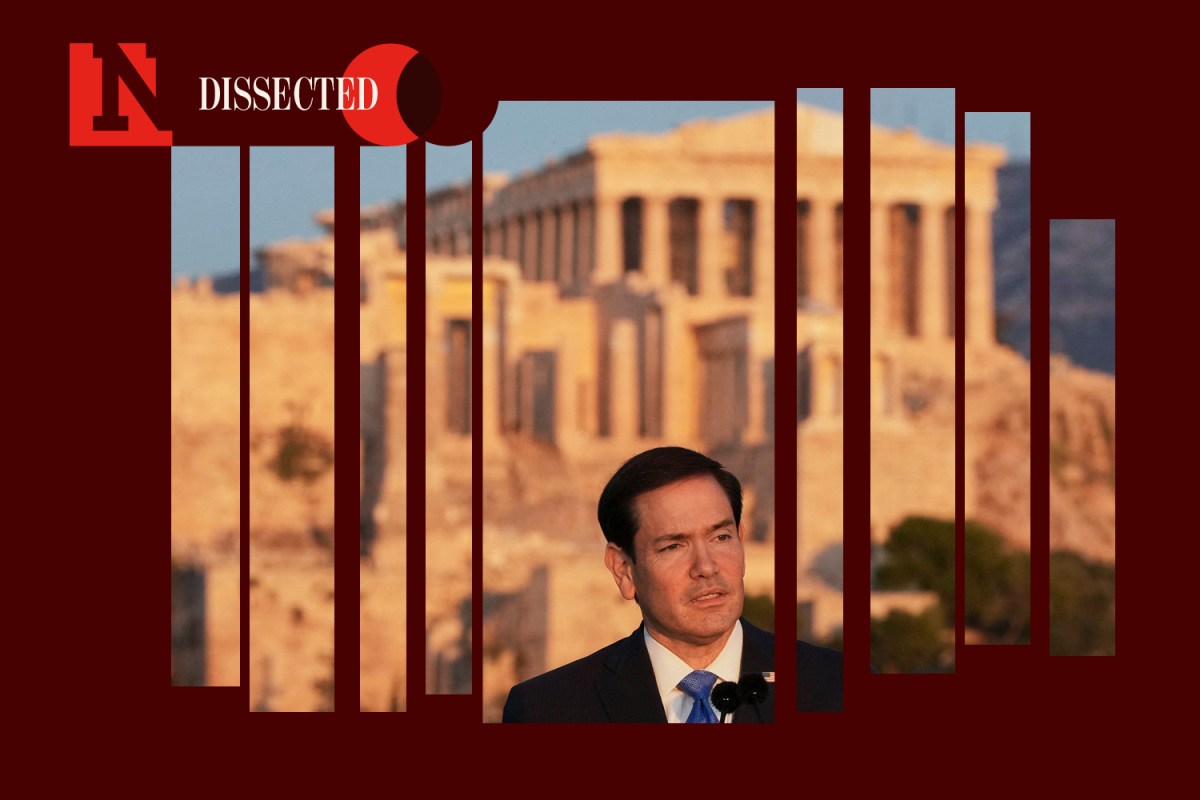
Secretary of State Marco Rubio, standing against a backdrop of the Parthenon in Athens. On Wednesday, Rubio solemnly called on the Western world to remember its civilizational origins and honor our ancestors by returning to the greatness of our cultural inheritance. The century’s fate is at stake, he warned.
The visual symbolism told as much of the story as Rubio’s words. Standing before grand, crumbling ruins glowing in the orange sunset, this great-grandson of Europe had his eyes on the throne of power back home in New Rome. Yes, "Lil Marco” was looking to the past and to the future.
This was meant to be a history-making speech that set the stage for the inevitable presidential run. But it was also Rubio’s pitch to the West: forget the other guy, I’m the serious one who will lead the free world back to true greatness. In this latest edition of Dissected, we take the scalpel to Rubio’s ode to Western civilization.
There are great ruins all across the world. In many cases, they are places where history seems to have exhausted itself: remnants of distant cultures that have long passed beyond living memory. Don’t be so hard on yourself.
The White House isn’t in ruins yet. But the Acropolis is different. For thousands of years...Generations of our statesmen, artists, and philosophers have looked to it – they’ve looked to it with wonder and they’ve looked to it with awe.
And generations of schoolchildren have yawned at it. ...the Greeks of antiquity, they seem to have an almost mystical hold on our memory. They call us back to them, again and again. I think that myth was a warning.
Extract — continue reading at the source.