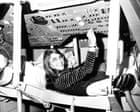
It tested the boundaries of technology and human achievement, and took people to the moon. However, one thing it failed to challenge was the prevailing hierarchy. Nearly everyone involved in Nasa’s space programme in the 1960s was male and white.
If you weren’t, you needed to be exceptional at what you did. Margaret Hamilton, who has died aged 90, was one of those exceptional people. Without her input, sending spacecraft into lunar orbit, and putting Neil Armstrong and his successors on to the surface of the moon, might have been impossible.
Hamilton directed the software engineering division at the Massachusetts Institute of Technology (MIT) Instrumentation Laboratory, which had been charged with developing the computer systems for Apollo. The result of this work was the Apollo Guidance Computer (AGC). This provided the astronauts with a computer-linked keypad, similar in appearance to a calculator and known by the acronym DSKY – short for Display and Keyboard – which they used for navigating and controlling the direction and manoeuvrability of the spacecraft.
In the Gemini missions, which preceded Apollo, astronauts used joysticks to control the spacecraft. AGC removed that necessity, leading to a more precise flight path while freeing the crew for other tasks. It was the first computer in the world based on the silicon-integrated circuits that are now mass-produced and found in everyday electronic devices such as smartphones, televisions and laptops.
One AGC controlled the command module, which remained in orbit around the moon, while a second controlled the lunar module (LM), which descended to the surface. The astronauts could briefly take manual control as the LM approached the landing site, but otherwise AGC flew the two spacecraft automatically. In July 1969, Apollo 11 became the first mission to put humans on the moon.
As its LM, codenamed Eagle, began its descent, alarms went off inside the module. Mission control considered aborting but Hamilton, listening in from MIT, had run the simulations so many times that she realised what had happened: a radar switch had been inadvertently left active. She had seen this during simulations when Armstrong’s companion Buzz Aldrin had made the same error during training, and had previously instructed two of Apollo 11’s mission controllers, Steve Bales and Jack Garman, that unless it happened repeatedly they need not abort.
Extract — continue reading at the source.