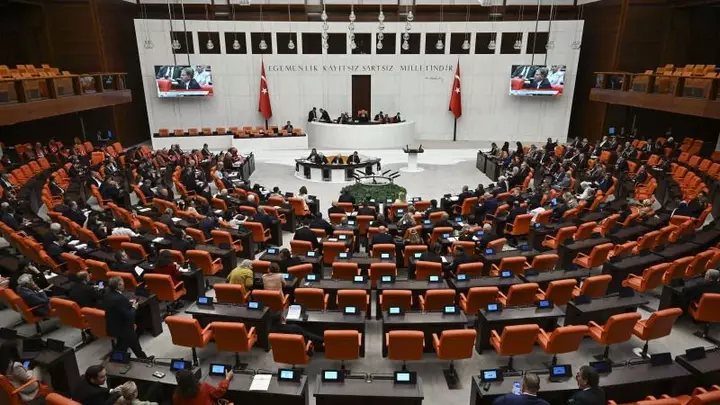
The Mecca Joint Defence Agreement is set to be brought before the Turkish Grand National Assembly (TBMM), with a legislative proposal concerning the agreement scheduled to be submitted to lawmakers for discussion today. The agreement, which designates three countries as the “Core Parties,” envisages mutual defence obligations based on respect for sovereignty and territorial integrity. The most significant provision of the agreement is set out in Article 2.
Under this article, any externally originating armed attack or military aggression against one of the parties will be considered an attack against all the other signatories. Consequently, the three countries will assume mutual defence obligations. The provision is based on the right to self-defence enshrined in Article 51 of the United Nations Charter.
Accordingly, the country subjected to an attack will receive immediate assistance through all available means of mutual support, including military resources and capabilities. However, this provision does not envisage “automatic” or “unconditional” assistance at the moment an attack occurs. The country under attack must first formally request assistance.
Following an objective assessment by all three countries, the parties will determine the scope and nature of the support to be provided. Decisions will require consensus, meaning that no action can be taken in the absence of unanimous agreement among the three parties. Any decision to deploy military forces will also have to comply with Article 92 of the Turkish Constitution, which regulates the authority to send Turkish armed forces abroad and allow foreign armed forces to be stationed in Turkey.
Beyond military cooperation, the agreement предусматри a comprehensive partnership in the defence industry. Under the established framework, the parties will undertake joint production in the defence sector, implement joint research and development (R&D) and innovation projects in technologically advanced fields, train qualified personnel through specialised experts operating in their respective territories, and support the development of their military industries. The agreement also предусматри the establishment of a comprehensive logistical support mechanism covering the supply of ammunition, weapons, fuel and spare parts during peacetime, wartime and states of emergency.
A “Strategic Political and Defence Committee,” comprising the foreign ministers, defence ministers and chiefs of general staff of the three countries, will be established to provide the institutional backbone of the alliance. The committee will convene at least twice a year, with meetings hosted by the member countries on a rotating basis. The leaders of the three countries may also hold meetings once a year whenever deemed necessary.
Extract — continue reading at the source.