Back in 2008, the team at Kojima Productions waxed poetic about people recruited to fight in proxy wars they have no political or ideological stake in. As these mercenaries follow their orders, traders get rich out of the so-called war economy. The more disastrous the conflict in a specific area, the higher the bidding price.
I expected my time with Metal Gear Solid: Master Collection Vol 2 to be nostalgic and, in good old MGS fashion, abundant with fictional events that sound eerily familiar to our current reality. Twenty minutes in, I was having an existential crisis. The package bundles remastered renditions of stealth games Ghost Babel and Peace Walker and the aforementioned Guns of the Patriots.
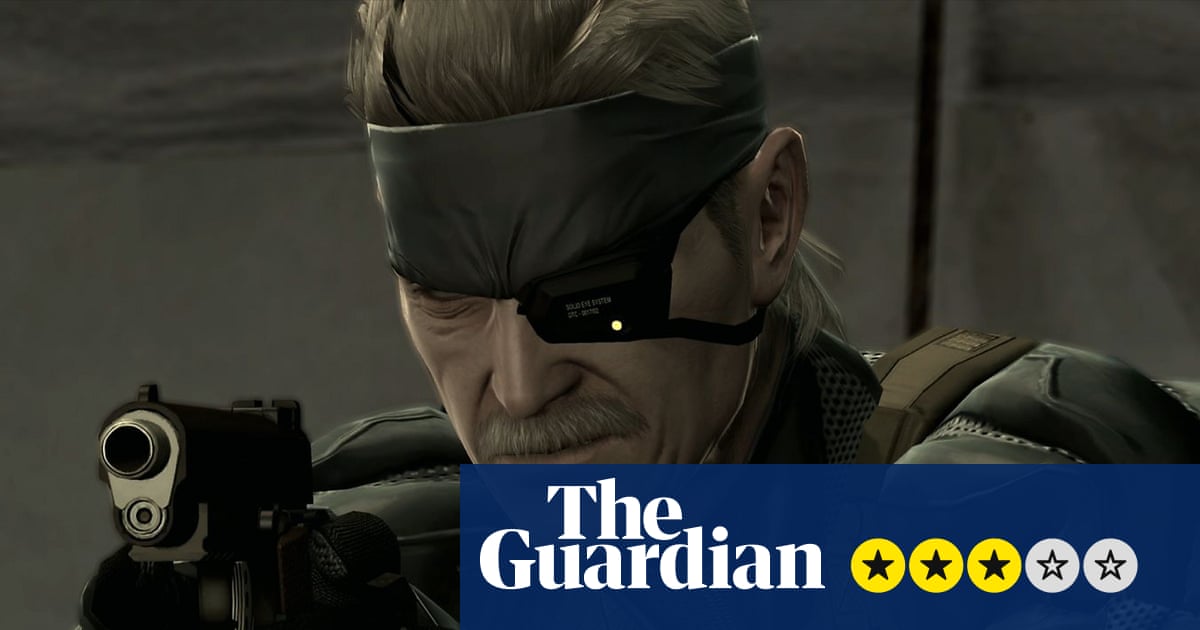
It’s an intriguing selection, spanning a Game Boy Colour reimagination, a PlayStation Portable prequel, and the culmination of the mainline series respectively. Despite being substantially distinct in isolation, all three entries focus on perpetuating acts of cruelty in order to collect a paycheque. Old Snake willingly takes part in the war economy, every downed soldier dropping their weapon with a satisfying clink.
When picked up, each gun is automatically sold to a black market trader for points, which can be exchanged for bigger, deadlier materiel. An enemy squad stepping on a landmine is no different from unlocking a shiny loot box. Conflict is welcomed as long as it’s profitable.
It puts food on the table for the group of mercenaries you lead in Peace Walker and the private military companies in Guns of the Patriots – it has also been the fuel of real-life prediction markets. The members of the fictional private military companies are IDed and monitored in real-time by an AI program, while in real life video game data is used to train AI that can be used by the military, with game companies facing boycotts for their alleged involvement in war and genocide. In 2026, Metal Gear Solid: Master Collection Vol 2 is whiplash disguised as a trip down memory lane.
As a collection, it’s an odd time capsule. Ghost Babel is almost a de-make, following in the footsteps of the original MSX entries while adapting modern mechanics and conventions, from sound detection to overly long cutscenes. Peace Walker, meanwhile, retains the roots of the current live service era – you can play both the main missions and side objectives with up to three other players online – without the predatory microtransactions and battle passes of today.
Extract — continue reading at the source.