UNITED NATIONS — The Middle East will take center stage when world leaders open the UN General Assembly's annual debate Tuesday, with some of Washington's most important regional partners arriving in New York facing a question: What will the region look like after months of war with Iran, renewed Houthi attacks and an uncertain future for Gaza? Leaders from Jordan, Türkiye, Qatar and Egypt are expected to address the Assembly during the annual General Debate, which begins Sept. 22. Israeli Prime Minister Benjamin Netanyahu is also scheduled to attend.
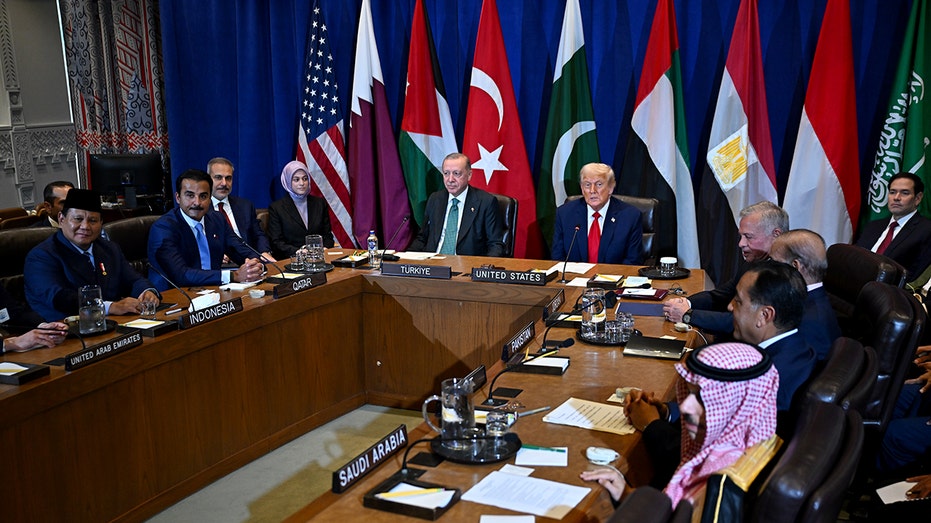
President Donald Trump is expected to meet Gulf leaders on the sidelines of UNGA to discuss the Iran conflict and the region's future. Ambassador to the UN Mike Waltz told Fox News Digital that the administration wants to hear directly from Gulf leaders about their concerns, describing the meeting as an important opportunity for diplomacy. TRUMP WELCOMES NETANYAHU TO WHITE HOUSE AS RAGING IRAN WAR THREATENS TO SOUR US-ISRAEL RELATIONSHIP Rich Goldberg, a senior adviser at the Foundation for Defense of Democracies, told Fox News Digital that the Iran war has fundamentally altered the region's strategic landscape, creating opportunities for new energy partnerships and closer cooperation between Israel and its Arab neighbors.
"The opportunity for regional integration and normalization works alongside energy infrastructure meeting the moment, the crisis of needing bypasses for Hormuz," Goldberg said. He argued that a network of pipelines carrying Gulf energy overland to the Mediterranean, potentially through Israel, could reduce dependence on vulnerable shipping routes. "We can make the Strait of Hormuz irrelevant," Goldberg said, describing potential energy links between Saudi Arabia and Israel, as well as routes connecting Qatar to the Mediterranean.
IRAN-BACKED TERROR GROUP’S LATEST TERRITORIAL GRAB THREATENS SECOND GLOBAL SHIPPING CHOKEPOINT But the threat to regional energy supplies now extends beyond Hormuz. The Houthis' offensive along Yemen's Red Sea coast has raised new concerns over the Bab el-Mandeb, another critical maritime chokepoint. Washington Institute analysts April Longley Alley and Allison Minor wrote in a Sept. 11 analysis that the offensive had "shattered the status quo" along Yemen's western coast.
NETANYAHU REJECTS BOARD OF PEACE'S GAZA PLAN: NO 'WITHDRAWAL UNTIL HAMAS IS GENUINELY DISARMED' Gaza presents a separate diplomatic challenge, with Arab governments seeking a political settlement while differing with Israel over Palestinian statehood and the territory's future. In a Sept. 6 joint statement , the foreign ministers of Jordan, Egypt, Qatar, Türkiye, Saudi Arabia, the UAE, Indonesia and Pakistan rejected proposals to forcibly displace Palestinians from Gaza and reiterated support for a Palestinian state along the 1967 lines, with East Jerusalem as its capital. They also warned that displacement proposals risk undermining Trump's Gaza peace plan.
ISRAEL’S E1 PLAN EXPLAINED: THE JERUSALEM-AREA CORRIDOR SPARKING INTERNATIONAL BACKLASH Qatar has simultaneously condemned renewed Iranian attacks against Arab states and Houthi attacks on Saudi Arabia and Red Sea shipping, while insisting that the Palestinian issue remain a priority. In a Sept. 8 joint statement , the leaders of France, Britain and Canada announced plans to ban imports from Israeli settlements and pursue targeted measures against settlements and those who facilitate them. They also said they would co-chair a meeting during UNGA to advance a two-state solution, one year after recognizing Palestinian statehood.
Extract — continue reading at the source.