Never mind it’s currently represented by two Democratic Senators. Never mind four of the nation’s premier quantitative race raters have it as “likely Democrat.” Cook—one of the top qualitative raters in the business—declared Pappas endangered, so he got to work. Speaking to camera, Pappas posted a vertical video that day with a screenshot of the rating on the screen.
That means this is a highly competitive contest,” he said. Go to ChrisPappas.org, stand with us, and let’s win in November.” Of course, when one visits ChrisPappas.org, a fundraising pop-up appears. They’re the metric by which donors decide what races are worth funding, journalists decide which races are worth covering, and prediction markets decide the worth of payouts.
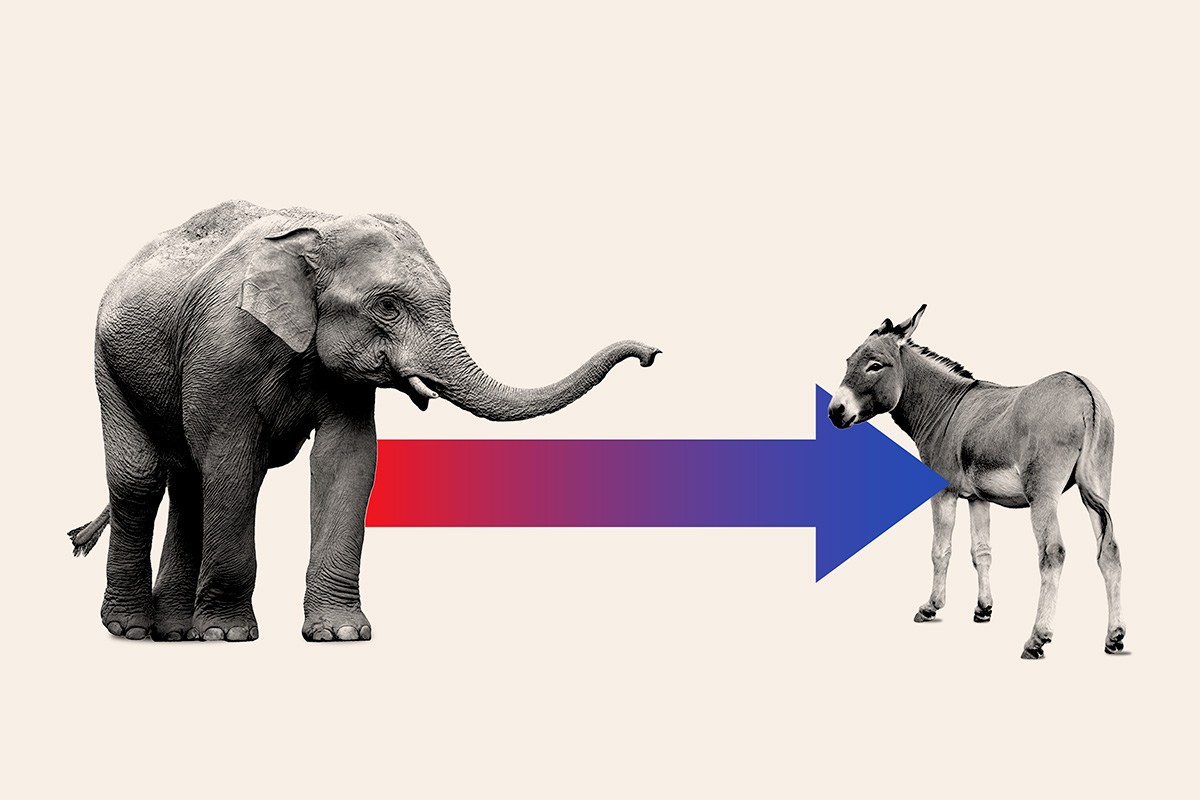
But with the rise of those markets and increased eyeballs on down-ballot races in the age of Donald Trump, these ratings have become a greater topic of discussion and scrutiny as political observers debate how informative they really are and what methods should best be used to calculate them. Since the 1980s, independent firms have rated election races on a scale that generally fluctuates from Solid D/R to Likely D/R to Lean D/R to Toss Up. Alongside The Cook Political Report, Inside Elections and Sabato’s Crystal Ball produce these ratings.
Each differs in approach, but at their core, the ratings are derived qualitatively, drawing on vote history, candidate strength, national mood, polling, and interviews. What’s injected controversy into the current moment is, as Carlson noted, the increasing prevalence with which the ratings are cited, coupled with discrepancies between raters. However, it’s not just the fact that Cook and Inside Elections have New Hampshire and Michigan as a toss-up while Crystal Ball has it as lean D that’s sparked controversy.
Tensions in the rating community are also heightened by the fact that a relatively new community of quantitative raters has come out with very different predictions this cycle. Quantitative raters use statistical, data-driven models to make their forecasts, relying more heavily on polls and the “generic ballot,” which calculates general support for Democrats and Republicans. Leaders in this space include FiftyPlusOne, Silver Bulletin, Split Ticket, and VoteHub.
These four entities uniformly predict a rosier environment for Democrats this cycle. While the three raters all have the Senate elections in Alaska, Maine, Ohio, and Texas in lean-R to toss-up territory, the four quantitative raters have those four races as leaning Democrat. So, we're just very much infatuated with this national polling, and I think that's pushing the model in that direction.” Donnini said VoteHub’s model aims to pinpoint those who are most likely to show up on election day.
Extract — continue reading at the source.