More than 10,000 people in the United States with chronic liver disease are currently waiting for a liver transplant, yet the supply of donated organs falls far short of demand. Some patients with liver failure also cannot undergo transplantation because they are not healthy enough to withstand the operation. MIT engineers are developing a possible alternative: injectable "mini livers" designed to provide some of the functions normally carried out by a damaged liver.
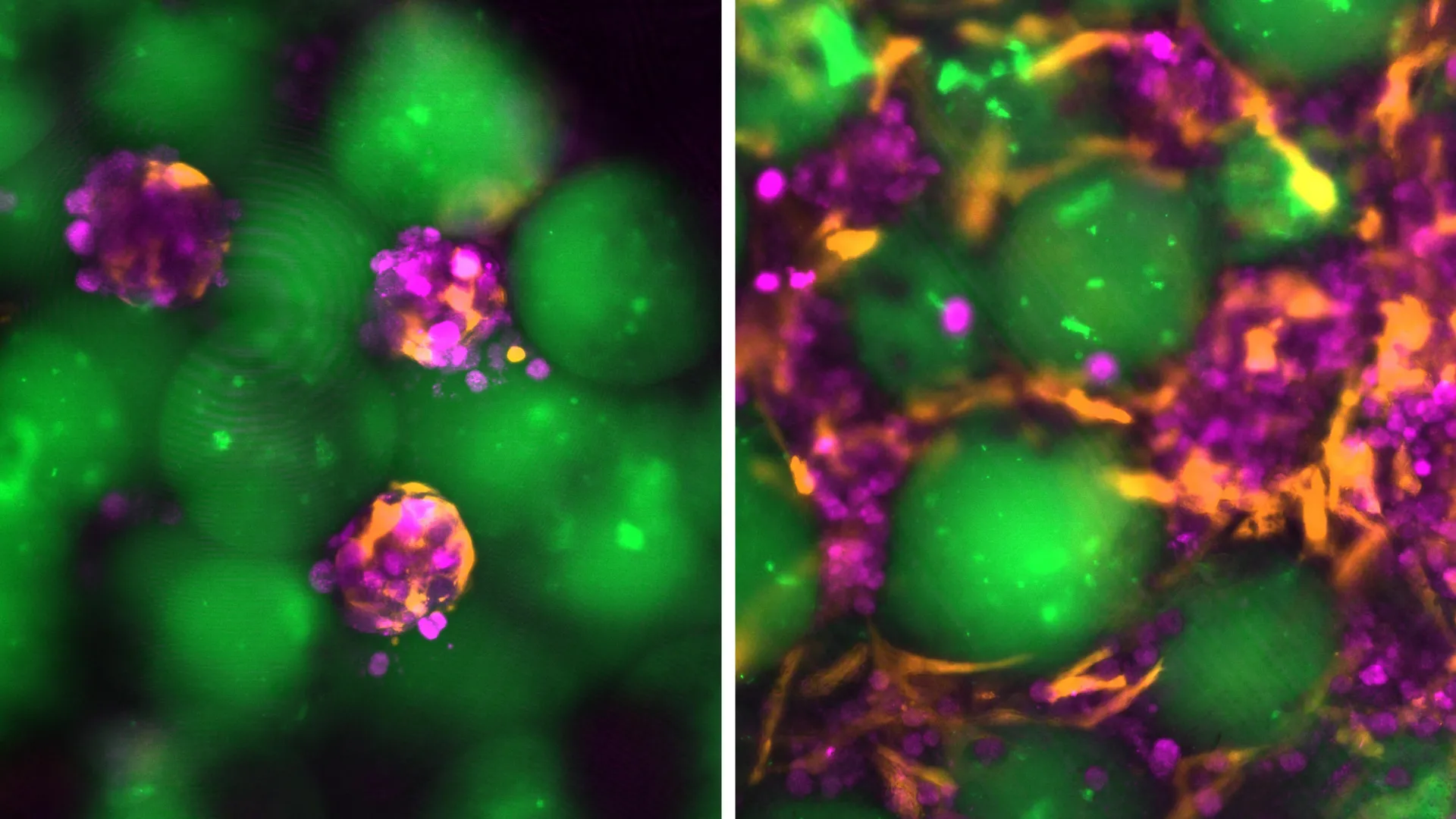
In a new study in mice, the researchers found that injected liver cells remained alive for at least two months. During that time, the cells continued producing many of the enzymes and proteins normally generated by the liver. "We think of these as satellite livers.
If we could deliver these cells into the body, while leaving the sick organ in place, that would provide booster function," says Sangeeta Bhatia, the John and Dorothy Wilson Professor of Health Sciences and Technology and of Electrical Engineering and Computer Science at MIT, and a member of MIT's Koch Institute for Integrative Cancer Research and the Institute for Medical Engineering and Science (IMES). Bhatia is the senior author of the study, published in Cell Biomaterials. MIT postdoc Vardhman Kumar is the lead author.
The liver is responsible for roughly 500 essential functions in the human body. Among other jobs, it helps regulate blood clotting, clears bacteria from the bloodstream, and processes medications. Many of these tasks are performed by specialized liver cells known as hepatocytes.
For more than a decade, Bhatia's laboratory has investigated ways to restore hepatocyte activity without requiring patients to undergo a surgical liver transplant. One strategy involves placing hepatocytes inside a biomaterial such as a hydrogel. However, those gels still need to be surgically implanted.
Injecting hepatocytes directly into the body could eliminate the need for that surgery. For the new study, the MIT team sought to make this approach more effective by creating an engineered environment that would help the transplanted cells survive while also allowing researchers to monitor the health of the graft without invasive procedures. Building an Injectable Home for Liver Cells The researchers designed an injectable mixture containing liver cells and tiny hydrogel microspheres.
Extract — continue reading at the source.