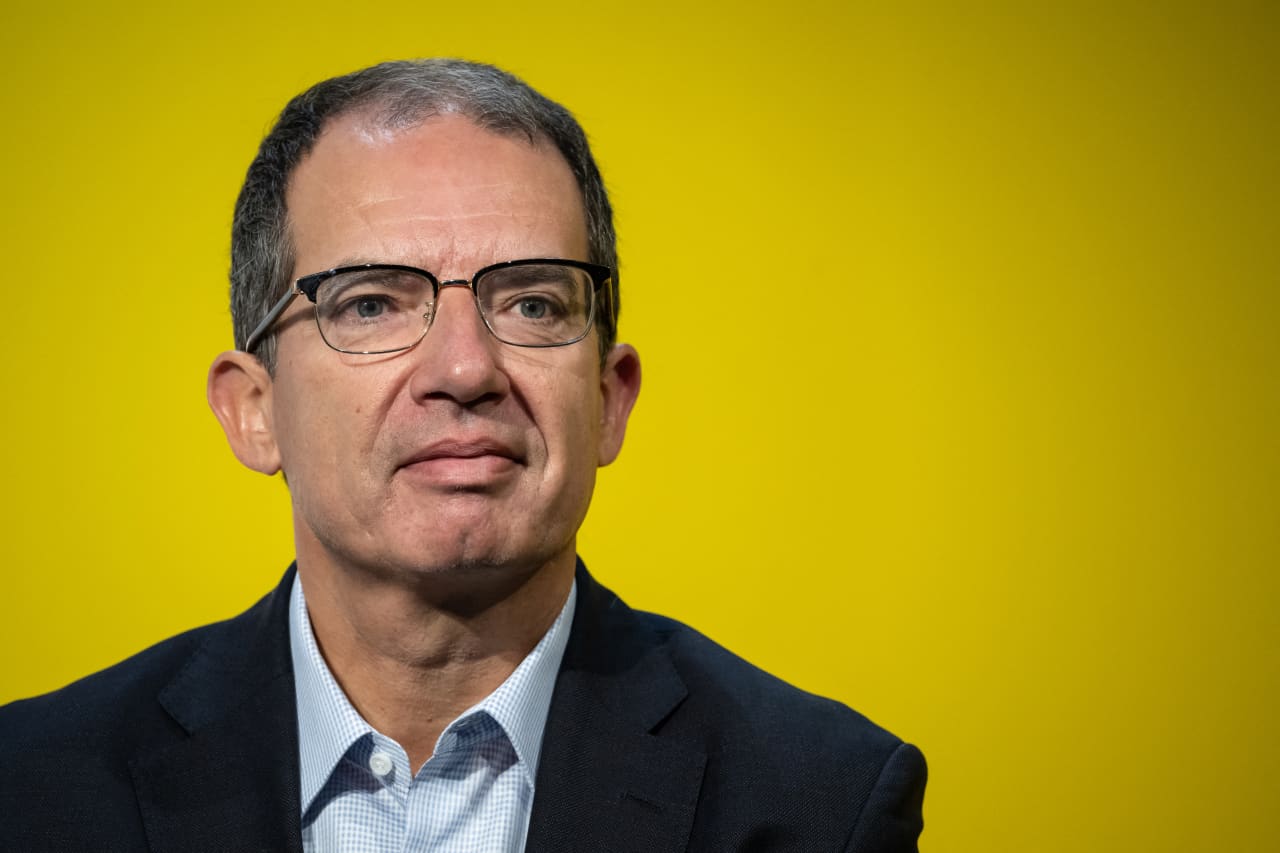
Moderna will reveal the data for its mRNA cancer vaccine next month. Forget Musk and Bezos: ‘Everywhere millionaires’ show how to get rich in America Moderna will reveal the data for its mRNA cancer vaccine next month. The results from the Phase 3 study will be presented at a major cancer conference in Spain Moderna's longtime CEO Stephane Bancel speaks the World Economic Forum in Davos in 2023. via Moderna’s stock soared Monday after the biotech company confirmed that it will share highly anticipated Phase 3 data for its experimental mRNA-based cancer vaccine next month.
Moderna has been testing the personalized cancer vaccine in combination with Merck’s immunotherapy drug Keytruda in patients with later-stage melanoma who have undergone surgery. The drug companies announcedthe preliminary results in August to much fanfare. At the time, they said the late-stage trial met its primary endpoint and the full data from the study would be released at a later date. **Read:**Moderna’s personalized mRNA shot could reshape the fight against skin cancer — but it may also be overhyped Video 91/1 Skip Ad Continue watching after the adVisit Advertiser websiteGO TO PAGE David Booth on Why You Shouldn't Panic Sell Play video: David Booth on Why You Shouldn't Panic Sell They’ve now confirmed that they will present those findings on Oct. 24 during the presidential symposium at the European Society For Medical Oncology’s annual meeting, a major cancer conference being held in Madrid this year.
The presidential symposium is reserved for cutting-edge cancer research. Don’t Short Yourself offers weekly money tips to help you earn it, stack it and grow it. I agree to the Terms of Use, Privacy Notice and Cookie Notice.
I would like to receive updates and special offers from Dow Jones and affiliates. I can unsubscribe at any time. One reason that analysts and doctors want to see the full data is to understand the hazard ratio, an important metric in clinical trials for cancer drugs.
Recurrence-free survival (RFS) is the study’s primary endpoint, and the general consensus is that the hazard ratio for RFS will be 0.65. That would translate to a 35% reduction of the cancer coming back, according to UBS analyst Michael Yee. If that happens, he predicts the stock could rally between 10% and 20%.
Without the hazard ratio, along with other data, it is “difficult to assess the magnitude, durability and commercial relevance of benefit in adjuvant melanoma,” Citi’s Geoff Meacham told investors in August. The therapeutic vaccine is unique and uses a new approach to treating cancer than mainstream treatments. A patient’s tumor is surgically removed and then sequenced, allowing researchers to figure out which mutated proteins are expressed on the cancer cells.
Extract — continue reading at the source.