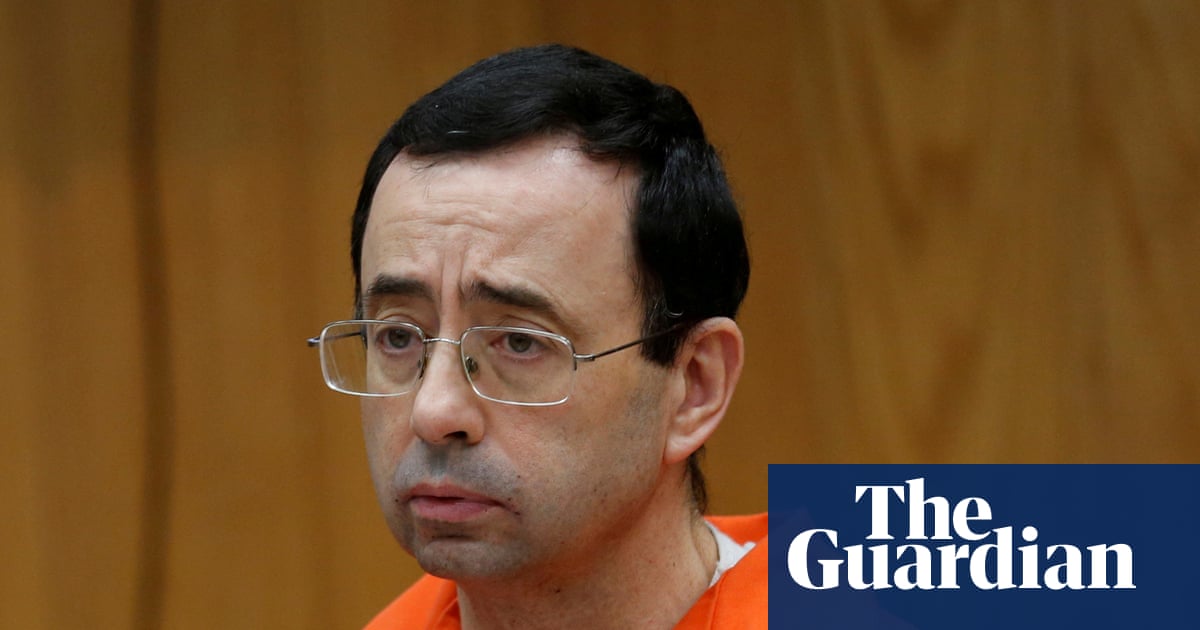
The judge who sentenced the former USA Gymnastics team doctor Larry Nassar to up to 175 years in jail for the sexual abuse of more than 250 women and girls has condemned the lack of meaningful change in the decade since Nassar’s crimes were exposed. Against the backdrop of the World Gymnastics Championships, taking place in Rotterdam this week, Judge Rosemarie Aquilina told the Guardian that human rights must be prioritised over the desire for sporting success. It’s the same answer: it’s money, medals and notoriety over the safety of children, and safety is a human right, it’s not a question mark.” Aquilina joined activists, survivors and advocates from Gymnasts for Change International (GCI) in Rotterdam, who gathered to question why the level of change has been inadequate 10 years on from Nassar’s arrest and what can be done.
Claire Heafford, a survivor of abuse within the sport and the chief executive of GCI, said: “We’re still in a place 10 years on from Larry Nassar where survivors aren’t being listened to and where the scale of the reform hasn’t met the scale of the revelations.” Heafford puts the unwillingness to engage with systemic change post-Nassar as “institutional fear, blinkeredness, and the fact that people who work in sport are not very creative. It’s incredibly difficult for people in the system to feel empowered as change makers when you’re in such fixed hierarchies.” The event was timed to reflect an opportunity for genuine change as World Gymnastics seeks to appoint a secretary general in the coming months. Minky Warden, of Human Rights Watch, said the reckoning sport faced since Nassar, took the wrong form.
I’ve interviewed hundreds of survivors in about 50 sports, winter and summer, from water polo to football to basketball and, 10 years on, I think just the scale and the severity and the duration of the abuses by the so-called Olympic doctor, Larry Nassar, caused a reckoning across sport. But, the reckoning often took the wrong shape, it took the shape of defence. There was a time when it was really hard to get rid of the abusive priest or the abusive teacher because they were moved around to different jurisdictions and continued abusing, and that is why the scale and the duration of those abuse catastrophes was so great and I think sports still has the same problem.” The former elite acrobatic gymnast Eloise Jotischky, who became the first person to win a civil case against British Gymnastics for the abuse she experienced between 2016 and 2018, which included inappropriate weight management techniques and verbal abuse, said there have been some changes, but even then the issue is with implementation.
That’s brilliant, but let’s implement them. It’s the implementation that matters because if you don’t implement them and if you’re not monitoring them, then what’s the point?” Kim Shore, of Gymnasts for Change Canada, who is a survivor of abuse within the sport and an independent safe sport advocate, said World Gymnastics needs to adopt and implement huge cultural reforms if things are to improve. No more gymnasts returning to competition without a doctor’s note.
No more coaches moving from one country to another country, if you’re banned in the US, you can’t just take a gymnast from Mexico to the Olympics’.
Extract — continue reading at the source.