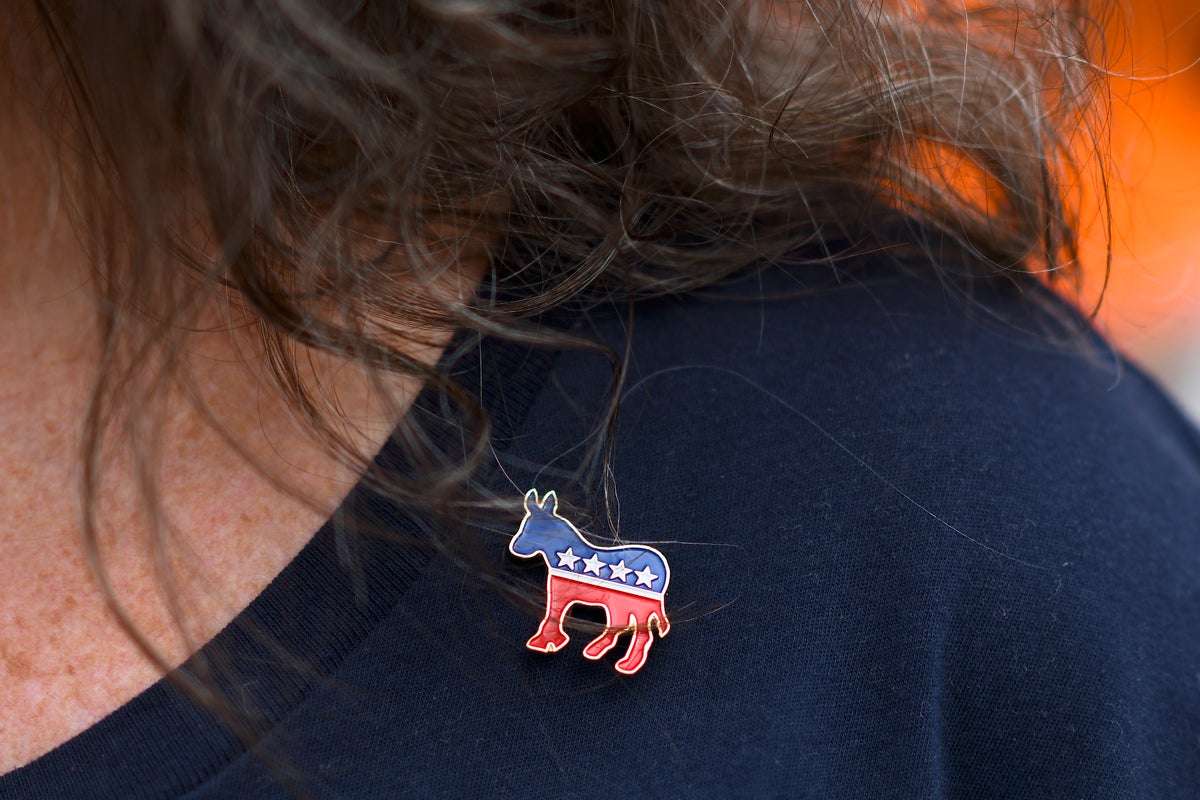
A growing number of Americans now identify as Democrats, a shift that presents fresh political headwinds for President Donald Trump and the Republican party ahead of the November midterms, according to a new poll. The latest Gallup data shows 31 percent of U.S. adults identified as Democrats in the second quarter of 2026, compared with 25 percent who identify as Republicans. That six-point advantage is the largest Democratic lead in party identification in more than a decade.
The findings add to recent signs of political trouble for Trump, whose approval ratings remain near historic lows. His tariffs, a central pillar of his economic policy, are broadly unpopular and were recently limited by the Supreme Court. The war with Iran, one of the major initiatives of his second term, has continued for months with no clear end in sight; multiple polls show most Americans oppose the conflict.
With polling trends moving against them, some Republican lawmakers and strategists have warned about a potential shellacking in the midterms, which historically see the president’s party lose seats in Congress. In the Gallup survey, Democrats’ advantage widened further when independents — who accounted for 44 percent of respondents — were asked which major party they leaned toward. Forty-nine percent of respondents identified as Democrats or leaned Democratic, compared with 39 percent who identified as or leaned Republican, a 10-point gap and the largest since 2008.
A year ago, by comparison, the margin was far narrower: 46 percent identified or leaned Democratic, versus 43 percent for Republicans. The last time the GOP held the advantage in party identification, when including so-called leaners, was the fourth quarter of 2024, which coincided with Trump’s presidential election. During that period, they held a 4-point lead over Democrats.
Over time, partisan identification tends to ebb and flow, with the advantage swinging back and forth between the two parties every few years. Bush administration, when he was pretty unpopular,” Jones added. He has largely framed the vote as a referendum on himself.
This month, he is also set to host the first-ever GOP midterm convention. Some Republican lawmakers, however, have indicated they do not want the commander in chief campaigning alongside them. "Candidly, he would not be helpful here." Join thought-provoking conversations, follow other Independent readers and see their replies
Extract — continue reading at the source.