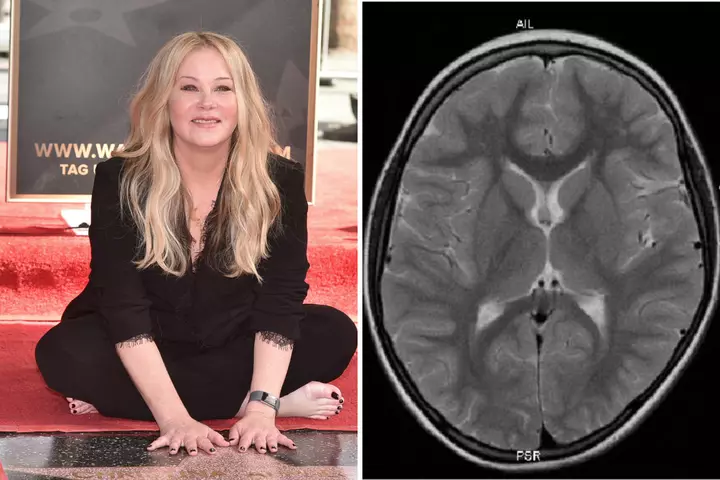
Christina Applegate says she was misdiagnosed with multiple sclerosis more than five years after publicly announcing that she had been diagnosed with the autoimmune neurological disease. The 54-year-old Dead to Me actress on Tuesday made the revelation on her MeSsy podcast with Sopranos actress Jamie-Lynn Sigler—who has also been diagnosed with this disease—saying that a doctor recently told her she does not have MS. "So I'm back at square one where I don't know what's going on with me," Applegate said.
Despite the change in diagnosis, Applegate said her debilitating symptoms have not disappeared and have in some respects gotten worse. "You don't get misdiagnosed and then all of the sudden I'm better," Applegate said, adding, "If anything, I've gotten worse." The National Multiple Sclerosis Society says there is no single symptom, physical finding or laboratory test that can by itself prove that someone has multiple sclerosis. According to the organization, doctors instead look for evidence of damage in different areas of the central nervous system and, depending on the evidence available, may also need to identify lesions with characteristics associated with MS, find certain proteins in spinal fluid or establish that damage occurred at different points in time.
The National Multiple Sclerosis Society says doctors must also rule out other possible diagnoses before diagnosing MS. Diagnostic tools can include a patient's medical history, a neurological examination, MRI imaging, blood tests and cerebrospinal fluid analysis, according to the organization. The diagnostic standards, known as the McDonald criteria, were revised in 2024 and published in The Lancet Neurology in 2025, according to the National Multiple Sclerosis Society and the published paper indexed by PubMed.
The National Multiple Sclerosis Society says the revised criteria incorporate additional biomarkers in an effort to improve the accuracy and speed of MS diagnosis. MS misdiagnosis is a recognized problem in clinical practice, according to a peer-reviewed review published in Neurology, which said misdiagnosed patients may be exposed to prolonged and unnecessary health risks. "MS remains a diagnosis of exclusion, meaning that there is no single test that definitively establishes the diagnosis," Dr.
Philip De Jager, a professor of neurology at Columbia University Vagelos College of Physicians and Surgeons, told Newsweek in an emailed statement Tuesday. "A neurologist will integrate a patient’s history and the results of laboratory and magnetic resonance imaging tests to determine the most likely diagnosis given the available information," he explained, adding, "As a result, it is important to seek at least one opinion from a specialized MS center on the diagnosis and to inform the selection of a therapeutic plan." Newsweek reached out to the National Multiple Sclerosis Society by email Tuesday for comment. De Jager said it is estimated that there are 1-4 affected per 1000 people in the United States and noted that "genetic ancestry and geography influence these estimates of prevalence." The National Multiple Sclerosis Society says neurological examinations used in assessing MS can test balance, cognition, coordination, hearing, reflexes, sensation, strength, vision and walking.
Symptoms associated with MS can include fatigue, numbness or tingling, weakness, poor bladder control, dizziness and vertigo. However, the National Multiple Sclerosis Society says no symptom by itself proves that someone has MS and that doctors must rule out other possible diagnoses. The organization says blood tests may be used to rule out other conditions that cause symptoms similar to those associated with MS.
Extract — continue reading at the source.