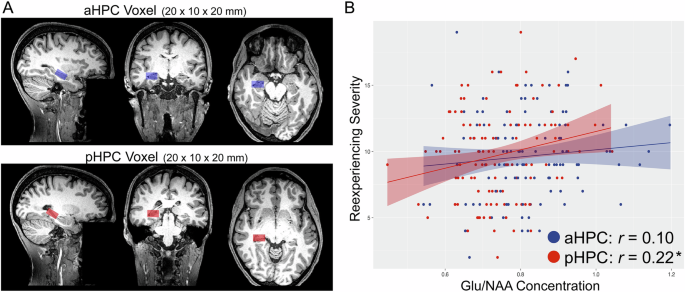
Hippocampal dysfunction is implicated in posttraumatic stress disorder (PTSD), particularly intrusive reexperiencing symptoms, and may be mediated by glutamatergic excitotoxicity. Markers of glutamate dysfunction (higher glutamate to N-acetyl aspartate levels; Glu/NAA) in the hippocampus (HPC) have been linked to reexperiencing symptoms. However, the HPC demonstrates heterogeneity along its anterior-posterior axis, with different functional connectivity patterns and PTSD symptom associations, motivating investigations into glutamate metabolism in anterior and posterior HPC subregions (a/pHPC).
To this end, 121 symptomatic trauma-exposed adults with current trauma reexperiencing symptoms completed magnetic resonance spectroscopy and resting-state functional magnetic resonance imaging to examine the regional specificity of HPC Glu/NAA associations with reexperiencing symptoms and the link to a/pHPC functional connectivity. PTSD symptoms were assessed with the Clinician-Administered PTSD Scale for DSM-5. Reexperiencing symptom severity was associated with greater Glu/NAA in the pHPC, but not aHPC. pHPC Glu/NAA was further linked to stronger functional connectivity between the pHPC and visual cortex (VC), which in turn correlated with more severe reexperiencing symptoms.
This strengthened pHPC-VC connectivity explained the shared variance between pHPC Glu/NAA and reexperiencing severity, suggesting dysregulated glutamate metabolism in the pHPC may contribute to reexperiencing symptoms through functional connectivity with the VC. These findings replicate prior work linking HPC Glu/NAA to trauma reexperiencing symptoms and provide novel evidence of this association in the pHPC, but not aHPC, which is mediated by its functional connectivity with the VC. This multimodal investigation supports translational models of glutamatergic dysfunction in trauma-related disorders and highlights new targets for pharmacological and neuromodulatory interventions.
The intrusive reexperiencing of a traumatic event as memories, nightmares, flashbacks, or reactivity to trauma reminders, is common among individuals exposed to trauma and represents a central set of symptoms in posttraumatic stress disorder (PTSD) [1]. Beyond PTSD, these reexperiencing symptoms predict the onset, maintenance, and severity of different transdiagnostic psychiatric difficulties following trauma exposure [2, 3]. Additionally, these symptoms independently cause clinically significant distress and impairment in subthreshold presentations [4].
As such, they are positioned as central therapeutic targets to address the growing impacts of trauma-related psychiatric distress and impairment [4]. Intrusive reexperiencing symptoms are memory-related phenomena, with proposed neurobiological substrates predominantly focused on the hippocampus [5, 6]. The hippocampus is key in forming and retrieving episodic memories [7] and distinguishing between safe and dangerous contexts [8,9,10,11].
Neurobiological investigations of trauma-related disorders consistently demonstrate hippocampal atrophy and dysfunction, linking these changes to fear learning and memory models of PTSD [12, 13]. Smaller volumes and hypoactivity of the hippocampus may hinder the ability to learn and remember safety cues in people with PTSD [6, 11, 14, 15]. These deficits may contribute to exaggerated activations of learned fear memories and difficulties regulating amygdala-mediated arousal to threat cues.
Extract — continue reading at the source.


