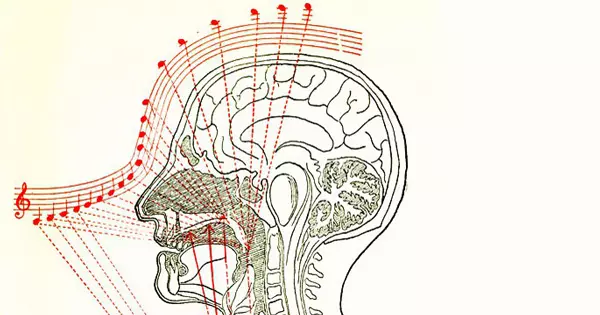
In a lifetime of living in this body, I have known no more powerful a homecoming than music — nothing roots us more firmly into the house of being, nothing levitates us more buoyantly to that transcendent place beyond marrow and mind. Stripped of its nihilistic drama, there is an elemental cry of truth, for me at least, in Nietzsche’s pronouncement: “Without music life would be a mistake.” Even Edna St. Vincent Millay, for all her lyrical love of life, echoed the sentiment: “Without music I should wish to die.
Even poetry, Sweet Patron Muse forgive me the words, is not what music is.” Every writer unblinded by ego will concede this. No writer has conceded it more beautifully or with more rapturous reverence for the life of the body in the life of music than Richard Powers in his exquisite 2003 novel The Time of Our Singing (public library). One of the novel’s protagonists — a young black woman in 1930s Philadelphia — becomes an emissary of the power of music as an instrument of self-discovery and self-possession, a living testament to song as the pulse-beat of the soul: Delia fell in love with singing.
Singing was something that might make sense of a person. Singing might make more sense of life than living had to start with. She threw back her head and nailed free-flying notes like a marksman nails skeet.
She sang with such unfurling of self that the congregation couldn’t help but turn and look at the teenager, even when they should have been looking skyward. Delia could feel them as she sang, the hearts of the flushed congregation flying up with her as she savored the song’s arc. She sheltered those souls in her sound and held them as motionless as the notes themselves, in that safe spot up next to grace.
The audience breathed with her, beating to her measure. Her breath expanded sufficiently to take her across even the longest phrase. Her listeners were in her, and she in them, so long as the notes lasted.
When Delia marries a German-Jewish physicist who plays the piano and consider music “the language of time,” music takes on a richer meaning — or, rather, it is stripped down to its elemental raw material — for without the arrow of time, without being able to tell one moment from the next, there could be no melody and no rhythm. This is what makes music our supreme laboratory for feeling and time. Eventually, the couple’s sons discover music on their own terms, in their own time.
Extract — continue reading at the source.