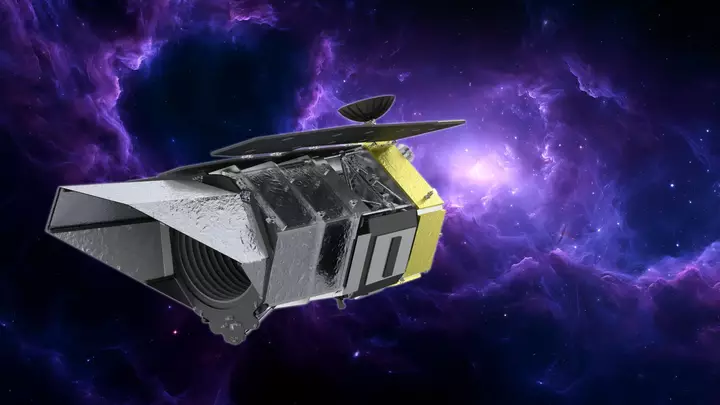
NASA's Nancy Grace Roman Space Telescope is performing even better than scientists anticipated after engineers completed an extensive series of tests and precision adjustments. The work has brought the observatory's powerful instruments into exceptionally sharp focus, with its main camera system now delivering image quality nearly 30% better than predicted. The achievement marks an important step toward the telescope's ambitious mission to investigate dark matter, dark energy, and other mysteries of the universe.
Even the smallest improvements in optical precision could help Roman capture clearer images during its sweeping surveys of the cosmos. "All of Roman's sweeping surveys will rely on the Wide Field Instrument," said Dave Hickey, a Wide Field Instrument systems engineer at NASA's Goddard Space Flight Center in Greenbelt, Maryland. "Many of the mission's primary goals, like studying dark matter and dark energy, wouldn't be possible without it, so it's both exciting and a huge relief to see that it's working well!" NASA Puts Roman's Powerful Camera System to the Test Following the activation of the Wide Field Instrument in September, engineers began a comprehensive testing campaign to confirm that each component worked properly on its own and as part of the complete system.
Their first priority was examining the instrument's 18 detectors, each roughly the size of a sticky note, along with the electronics that operate them. The team then evaluated the element wheel, a rotating mechanism equipped with filters and other optical components. These allow selected wavelengths of light to reach the detectors and can separate incoming light into its individual colors.
Next came the instrument's internal calibration system. Engineers activated its light-emitting diodes, or LEDs, which function as adjustable light sources that can produce different colors and brightness levels under commands from Earth. By measuring how the detectors respond to these controlled signals, scientists can identify differences in sensitivity and make the corrections needed for accurate observations.
Engineers also tested the instrument's alignment mechanism and moved it from the deliberately unfocused position used during launch to the position expected to provide the sharpest images. They finished by checking the thermal control system, which maintains the temperatures required for the instrument's various components to function correctly. "Calibrating an instrument is like tuning a piano or guitar before a concert," said Maxime Rizzo, a Wide Field Instrument systems engineer at NASA Goddard.
"You adjust everything until it's just how you want it and then leave the settings alone so it performs consistently while you use it." A Space Telescope Already Close to Perfect Alignment While one group concentrated on preparing the Wide Field Instrument, another worked to refine the telescope's overall optical alignment. The results were encouraging from the beginning. Roman's mirrors and other optical components were already positioned with remarkable accuracy, meaning engineers needed to make only minor corrections.
Extract — continue reading at the source.