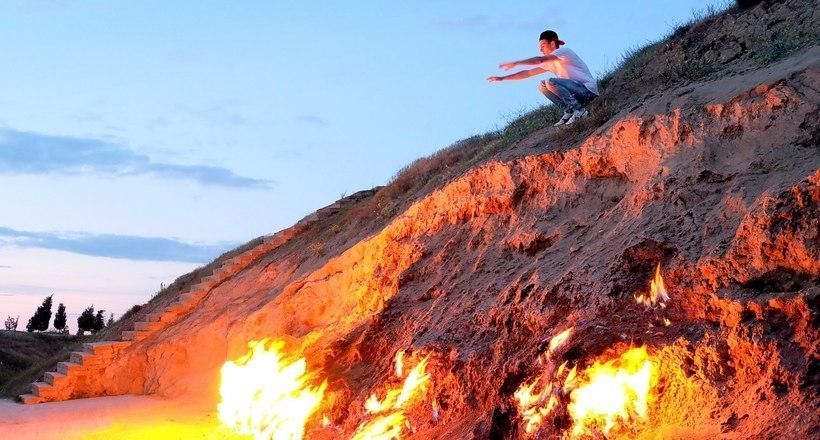
A wall of fire rising from the side of a hillside is not something most travellers expect to find in the middle of a landscape. Yet on the Absheron Peninsula, this extraordinary sight has been burning for generations. The Yanardag State Historical, Cultural and Natural Reserve, located in Mammadli village, about 27 kilometres from Baku, is one of the region's most distinctive natural and cultural landmarks.
Its name literally means 'burning mountain', and its fame comes from the natural flames that emerge from the earth and continue to burn as underground gas reaches the surface. The fire is not the result of a man-made source. Geological processes beneath Absheron allow natural gas to escape through cracks in the ground, where it catches fire and produces the flames that have become Yanardag's defining feature.
The peninsula was once known for many naturally burning sites, although a number of them disappeared as underground gas flows changed over time. The reserve notes that another nearby hill once burned for thousands of years before its flames eventually went out. Natural fires have been part of the history of the Absheron Peninsula for centuries.
Medieval sources recorded permanently burning fires around Baku and its surroundings, while the phenomenon became closely connected with fire-worshipping traditions. Yanardag is particularly associated with Zoroastrianism and the ancient reverence for natural flames. The fire became part of the cultural image of the region and contributed to the long-standing association of Absheron with the 'Land of Fire'.
The reserve's museum explores this history, including the relationship between natural fires, places of worship, Zoroastrianism and pyrolatry. The flames have also attracted the attention of travellers over the centuries. The official history of the reserve notes that Marco Polo mentioned the burning fires during his travels around Baku and its surroundings.
What makes Yanardag particularly fascinating is that the fire is not an isolated attraction. It sits within a wider landscape containing traces of both natural forces and human history. The reserve includes the Qirmaki Valley, an active mud volcano, sulfur springs, Ottoman trenches and a kurgan burial mound.
Extract — continue reading at the source.