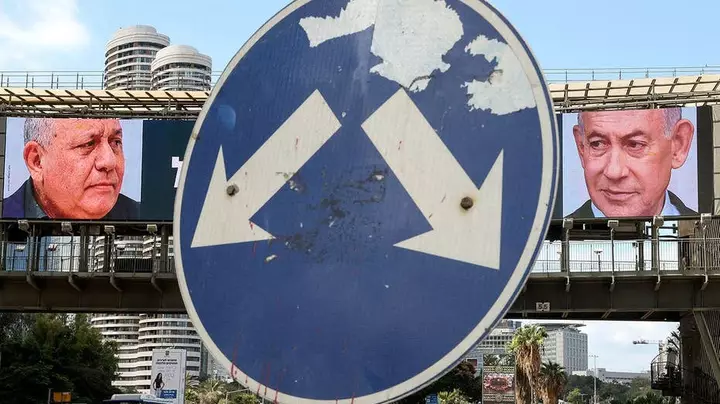
TEL AVIV, Israel - Israeli Prime Minister Benjamin Netanyahu's governing coalition remained well short of a parliamentary majority Thursday as newly counted ballots showed a dramatic surge in support for Arab parties, potentially giving the opposition enough votes to challenge his control of parliament. With 93.8% of ballots counted as of 4 a.m. ET Thursday (10 a.m. local time in Israel), including votes from the double-envelope count, Netanyahu's right-wing and religious bloc was projected to win 53 seats in Israel's 120-member Knesset, compared with 48 for the opposition bloc led by former military chief Gadi Eisenkot.
The two predominantly Arab parties were projected to secure a combined 19 seats, bringing the potential anti-Netanyahu parliamentary majority to 67. The updated figures showed Netanyahu's Likud remaining the largest individual party with 26 seats, followed by Eisenkot's Yashar party with 21 and former Prime Minister Naftali Bennett's Beyachad party with 12. The figures remain preliminary.
NETANYAHU DEFIES EXIT POLLS AS VOTE SHIFTS IN HIS FAVOR, BUT MAJORITY REMAINS ELUSIVE The results leave neither Netanyahu nor Eisenkot with the 61 seats required to form a government independently, raising the prospect of difficult coalition negotiations or another election. The biggest shift came from Israel's Arab voters, whose turnout surged compared with previous elections, potentially reshaping the country's political balance. Arab voter participation reached approximately 80%, compared with 53.2% in the 2022 election, according to the Israel Democracy Institute.
The 2026 figure remains preliminary. The Joint List was projected to win 11 seats, while Ra'am was projected to secure eight. Together, their 19 seats would nearly double the Arab parties' representation from the 10 seats they won in 2022.
Overall voter turnout reached 77.7% by the official 10 p.m. closing time on election night, the highest level at that hour since 1999, according to Israel's Central Elections Committee. The increased Arab participation could prove decisive in determining the next government's composition. Although Eisenkot and several other opposition leaders ruled out including Arab parties in their governing coalition during the campaign, their parliamentary support could allow the opposition to replace Knesset Speaker Amir Ohana, a Netanyahu ally, and gain greater control over the legislative agenda even before a new government is formed.
IRAN IS TRYING TO ‘CREATE A ROT FROM WITHIN’ THROUGH ‘INFORMATION WARFARE,’ ANALYST WARNS The political stakes intensified Thursday following a Channel 12 report alleging that substantial sums originating in Qatar may have been transferred to influence voter participation in Arab communities. According to N12, some of the funds allegedly traveled through financial channels previously used to transfer money to terrorist organizations, including currency exchanges. The allegations have not been independently substantiated, and investigators have yet to establish whether foreign financing occurred or whether election-related crimes were committed.
Extract — continue reading at the source.