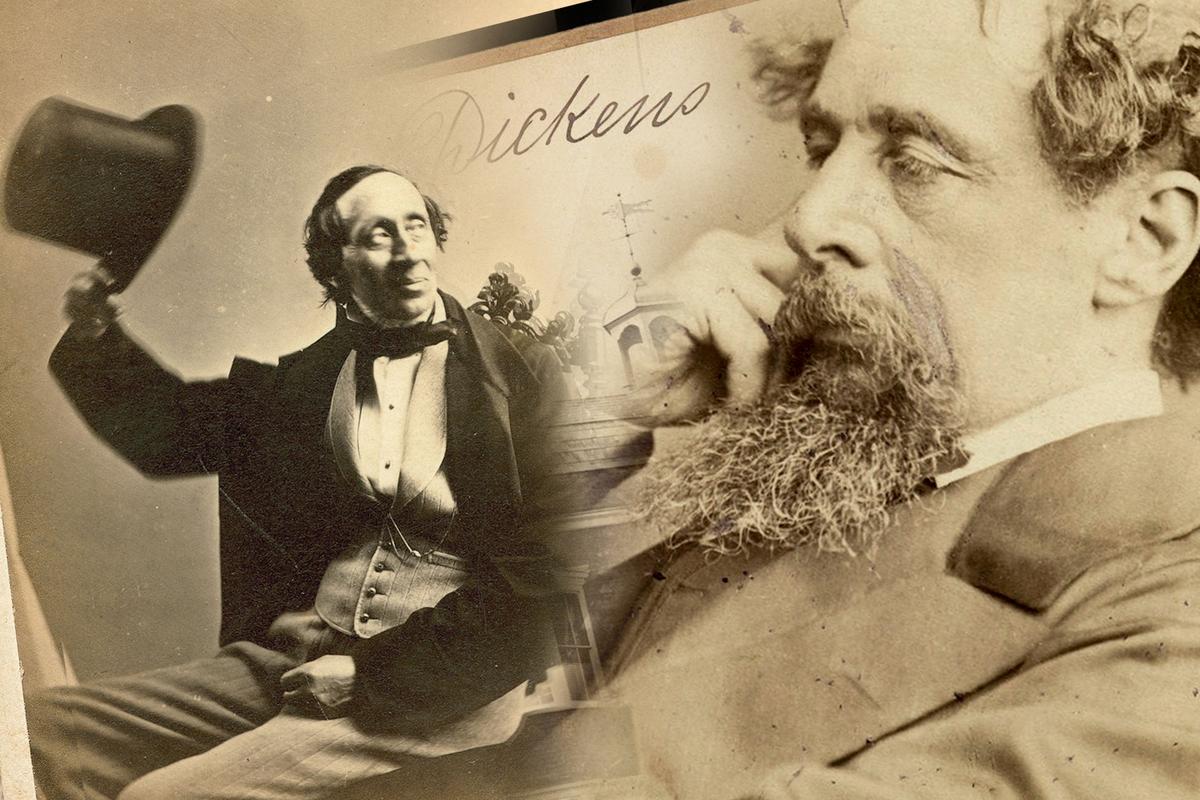
Courtesy the National Portrait Gallery, London/Wikipedia The English countryside in the mid-19th century could be an idyllic retreat. It is breakfast time and you are Charles Dickens, respectable author and exemplar of etiquette, sure that today will be safe and uneventful. Searching the house for your daughters, you also find your overstayed houseguest from Denmark, Hans Christian Andersen – famed author of fairy tales like The Little Mermaid and The Ugly Duckling – face down on the grass, in the middle of a complete meltdown on your lawn, after receiving news of a bad book review.
The Victorian era remains the measuring stick for (ostensibly) respectable domesticity, where emotions are repressed and ankles sequestered in attempts at control. Nonetheless, here lies Andersen, actively proving that even great authors were one lawn tantrum away from tearing at this veneer of respectability. And indeed, Andersen has since been headcanoned, with great enthusiasm, as a 19th-century ‘disaster bi’.
A disaster bisexual is less an identity or a diagnosis than a way of reading scenes that spill over. Intensely sincere to the point of social detonation. Seen in modern drama from Bridgerton to Saltburn, they are characterised by living, loving and feeling in a perpetual crescendo, then come to a full stop when they melt down.
The term circulates now as affectionate shorthand, especially online, for people and characters who come in too hot, overshare, and punctuate the resulting social chaos with wit. To the chronically online, Andersen’s correspondence, travels and attachments now read as exasperating yet endearing. But Dickens, that poor man, did not have Tumblr.
As Dickens in 1857, you offer Andersen reassurance. After all, you understand the impact of a bad book review (the criticism of your 1844 novel Martin Chuzzlewit still stings). Nonetheless, your words barely clear the air before Andersen begins to weep.
Not in a way that can be absorbed and moved past. A full-throated sob and a heavy stream of tears, earth streaked on his face and shirt. The scene does not resolve.
Extract — continue reading at the source.