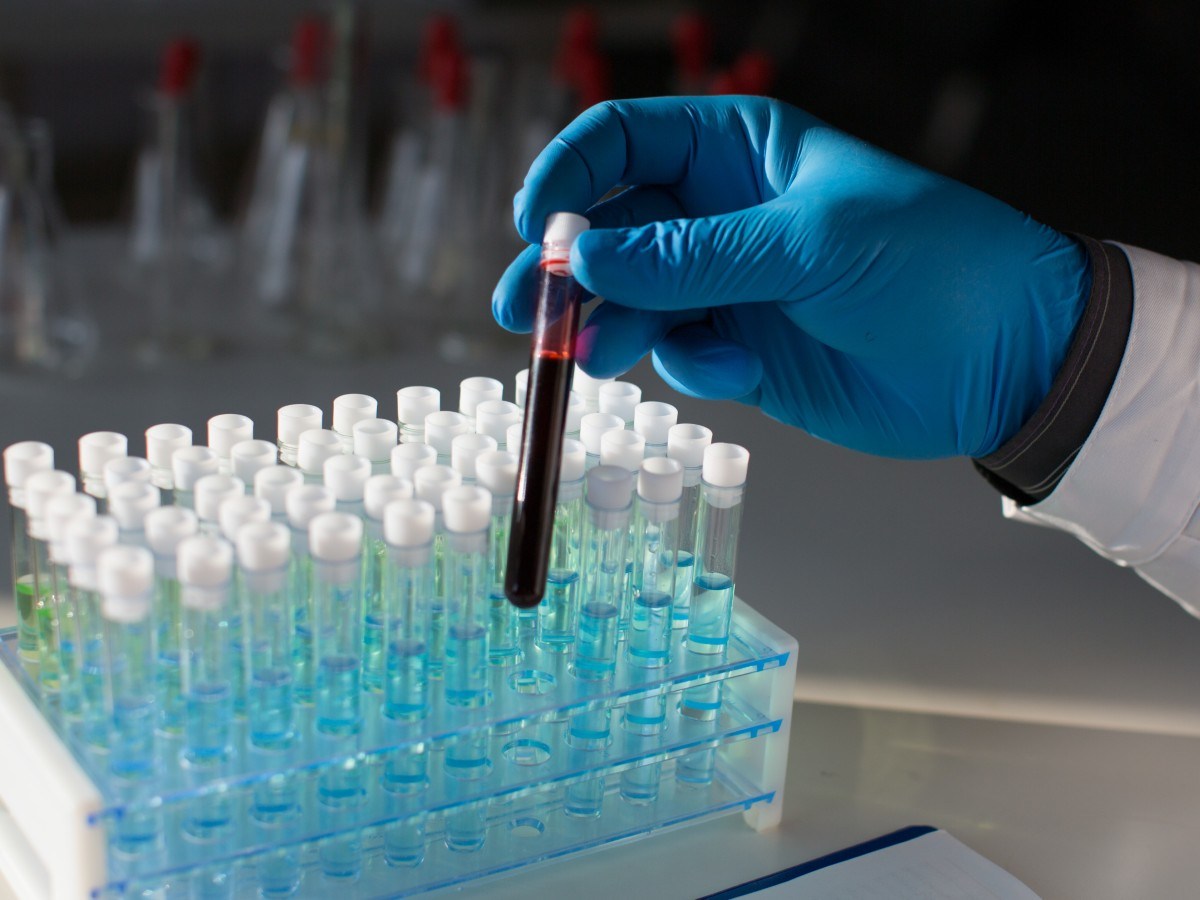
A new blood test is able to detect early-stage pancreatic cancer with notable levels of success, which experts have said could be a "promising" step forward for both diagnostics and treatment. Researchers from across the U.S. and in China, Korea and Japan said that the new test, which combines three biological markers, could potentially give doctors more time to act before a more invasive form of the cancer develops. The study was published in the journal Nature Medicine on September 16.
Pancreatic cancer is one of the most deadly cancers and more than 67,000 people are diagnosed with the cancer in the U.S. each year, according to the American Cancer Society. It is a very difficult cancer to detect early because the pancreas is located deep inside the body, meaning that tumors can't always be seen or felt by health care providers during routine physical exams. Patients often don't have symptoms either until the cancer has become very large or has already spread to other organs.
"The results presented are very impressive and promising, greatly exceeding the limitations of the current 'gold standard,' the CA19-9 blood-based marker," Channing Der, a professor at the University of North Carolina at Chapel Hill, told Newsweek. Symptoms of pancreatic cancer include abdominal pain, weight loss, itching and jaundice (yellow skin). A doctor will usually start the process of diagnosis by taking the patient's medical history and conducting a physical examination to check for any lumps in the abdomen.
Laboratory tests are also done to check the patient's bile flow and any other abnormalities, before a CT or MRI scan is done. If a mass is seen via the imaging on the pancreas, a biopsy is then usually taken. Der said that currently, most pancreatic cancers are diagnosed when "it has advanced and spread to other organs, making it challenging to treat with surgery and chemotherapy." The new test, called PANXEON, screens a patient for three markers: circulating microRNAs, exosomal microRNAs and carbohydrate antigen 19-9 (CA19-9)—all of which are signals in the blood associated with pancreatic cancer.
It then uses artificial intelligence (AI) to combine the measurements into a single score that estimates a patient's likelihood of having pancreatic cancer. Ajay Goel, study lead and professor of molecular diagnostics and experimental therapeutics at the City of Hope Medical Center, California, told Newsweek that by looking at more than one biological signal it gives doctors "a more complete molecular picture" of the patient's health. The test correctly identified patients with stage 1 and 2 of the cancer in 87 percent of cases out of almost 1,800 people across the U.S., Europe and Asia.
It also had a fairly low false-positive rate, at around 3 percent in low-risk groups and 16 percent in high-risk groups. PANXEON also detected high-grade dysplasia, an advanced precancerous lesion, in about 64 percent of cases. Goel said that this finding "raises the possibility that the future of pancreatic cancer detection may extend beyond finding cancer earlier to identifying dangerous disease before invasive cancer has developed." Dr.
Extract — continue reading at the source.