Where the wind-swept shores of the Caspian Sea meet the ancient, sun-baked oases of the Silk Road, a quiet revolution is reshaping the contours of Eurasian commerce. For centuries, caravans traversed these harsh, poetic expanses bearing raw silk, spices, and tales of distant empires. Today, the rhythmic hum of automated steel welding in modern industrial parks and the quiet opening of cross-border logistics complexes replace the faint camel bells of antiquity.
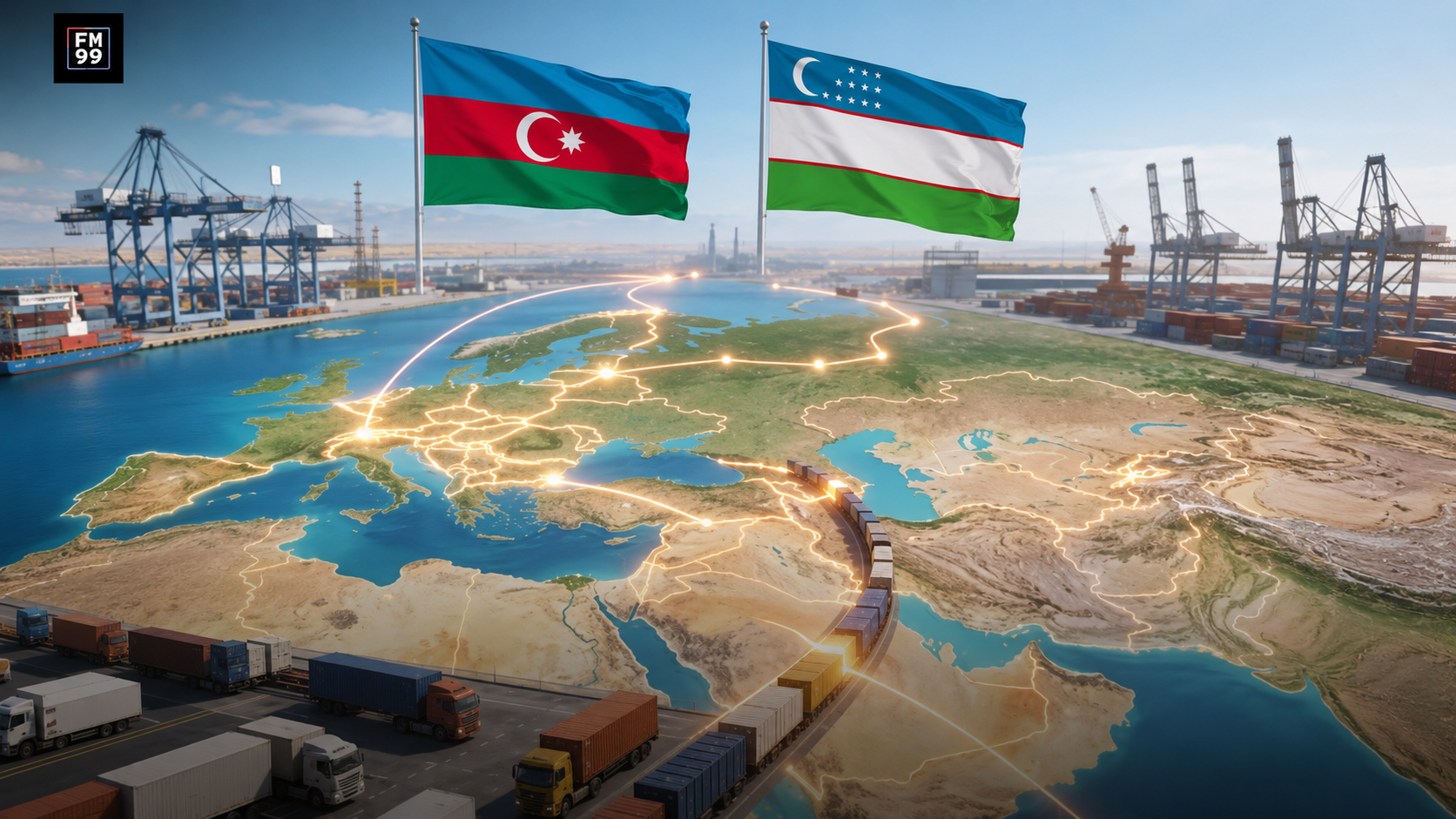
What is unfolding between Baku and Tashkent is no mere diplomatic courtesy or superficial alignment; it is the deliberate, architectural forging of an integrated economic spine across Central Asia and the South Caucasus. At the heart of this geopolitical shift lies a fundamental transition in economic philosophy. For decades following the collapse of the Soviet Union, bilateral trade across Eurasia was defined by fragmented, low-margin exchanges and passive raw material extraction.
Recent high-level diplomatic engagements between Azerbaijani President Ilham Aliyev and Uzbek President Shavkat Mirziyoyev, which are underpinned by a comprehensive action plan to elevate bilateral trade to $1 billion by 2030, signal a total departure from that legacy. Azerbaijan and Uzbekistan are no longer content to serve as passive transit corridors or commodity suppliers for external global powers. Instead, they are leveraging their geographic positions to construct a synchronized, value-added manufacturing ecosystem that retains capital, builds technical expertise, and creates industrial depth within their own borders.
A primary pillar of this integration is the heavy industrial and automotive partnership anchored in Azerbaijan's Hajigabul Industrial District. Moving past basic semi-knocked-down (SKD) assembly operations, where vehicle parts were simply imported and bolted together, a new $80-million joint venture is introducing full completely-knocked-down (CKD) manufacturing capabilities. By embedding automated body welding, industrial painting, and high-precision assembly lines directly on Azerbaijani soil, Uzbekistan’s manufacturing flagship, UzAuto Motors, establishes a strategic bridgehead into the South Caucasus, the Black Sea basin, and European markets.
Simultaneously, Azerbaijan accelerates its non-oil industrialization, cultivating specialized engineering talent and establishing the local supplier network necessary for future automotive component manufacturing. This industrial synergy operates as a two-way conduit. Azerbaijani capital and corporate enterprise are actively embedding themselves into Uzbekistan’s fast-growing domestic market of over 36 million people.
The commissioning of a large-scale gypsum production facility by Azerbaijan’s Matanat A in Uzbekistan demonstrates how Caucasian manufacturing expertise is supplying Central Asia's massive infrastructure and housing boom. Concurrently, Azerbaijani agricultural firm Gold Fresh Fruits has launched the second phase of a major 700-hectare intensive horticulture and cold-chain logistics project in Uzbekistan's Namangan region. Featuring state-of-the-art cold storage and distribution facilities, this venture addresses agricultural supply-chain vulnerabilities, mitigates post-harvest losses, and establishes a reliable supply route for high-value organic produce across regional markets.
Extract — continue reading at the source.