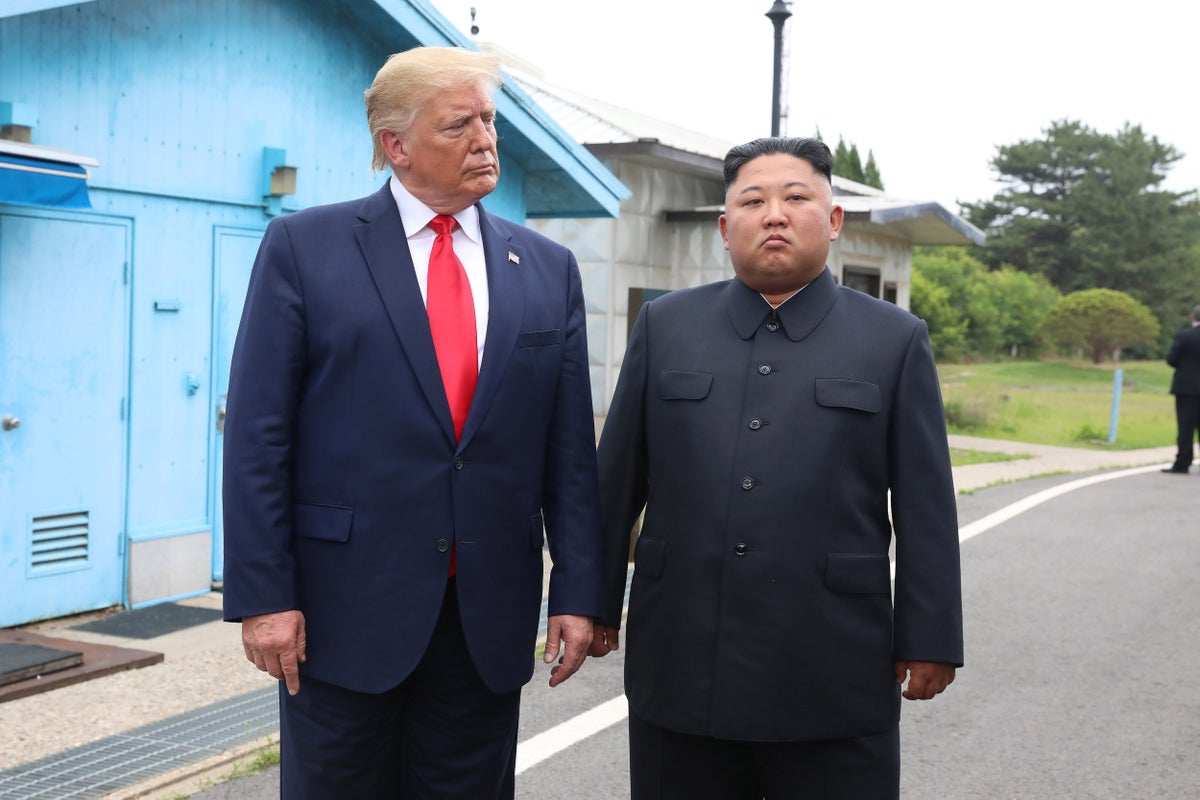
North Korea has dismissed a decision by Washington to scale back joint military exercises with Seoul, insisting the move does nothing to alter the aggressive character of the drills and dampening hopes for a diplomatic breakthrough between U.S. President Donald Trump and Kim Jong Un. The response came in a late-night statement from Kim Yo Jong, the influential sister of the North Korean leader, marking the regime's initial reaction to Trump’s directive to significantly scale down the annual joint operations.
"We think it’s not worth making comments on that and we have no any interest in it," Kim Yo Jong said in a statement released by state media. "The provocative, aggressive nature of the drills won’t change even though their duration and size were reduced." Her remarks were published hours after military authorities in Seoul and Washington confirmed a major reduction in joint maneuvers, following Trump’s sudden order aimed at reopening communication channels with Kim Jong Un. Trump instructed the Pentagon to "substantially reduce" the joint Ulchi Freedom Shield exercises shortly before their scheduled 11-day run commenced on Monday.
He pointed to his rapport with Kim and criticized South Korea for failing to back his stance regarding Iran. Officials in Seoul admitted the unexpected announcement arrived without warning, catching observers off guard across the Asian country and prompting anxieties over joint defense readiness. South Korea’s defense ministry stated Wednesday that both nations agreed to adjust the scale and length of the exercises following American requests.
Consequently, current drills will conclude this Friday rather than August 27, alongside reductions in field training operations. The Pentagon clarified that it was "continuing training that enhances tactical capability" while converting select events into computer simulations. "These adjustments preserve essential readiness and training objectives.
There will be no degradation to U.S. training objectives," the Pentagon stated. Concerns are growing among security analysts that truncating the maneuvers could undermine joint military preparedness and destabilize the long-standing alliance. Experts highlight that regular drills are essential due to routine rotation of military personnel.
According to Yang Uk, a researcher at Seoul’s Asan Institute for Policy Studies, missing full-scale exercises leaves incoming commanders unfamiliar with critical operational procedures when drills eventually resume. The Ulchi Freedom Shield exercises primarily consist of computer-simulated command post scenarios designed to test defense strategies against potential aggression from Pyongyang, typically accompanied by live field training. Alongside similar springtime drills, the operation serves as a cornerstone of the Washington-Seoul alliance established during the 1950-53 Korean War.
Extract — continue reading at the source.