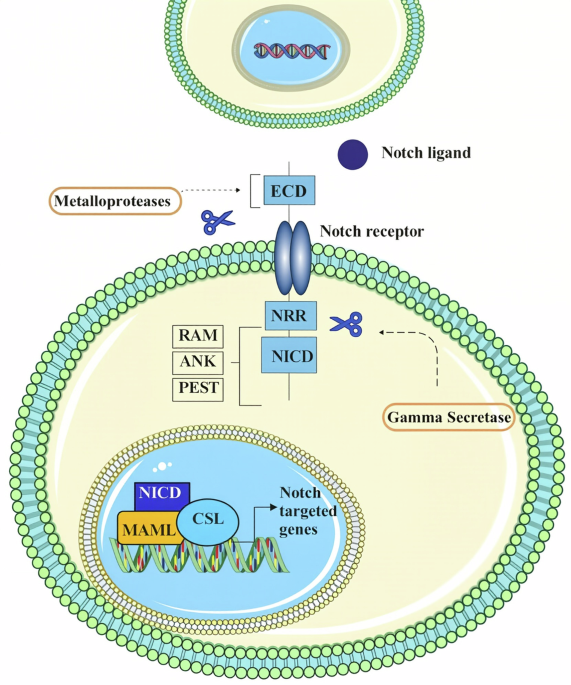
Aberrant Notch signaling is increasingly recognized as a key regulator of spinal cord injury (SCI) progression. This narrative review aims to synthesize current evidence regarding the multifaceted roles of Notch signaling in post-SCI inflammation, apoptosis, and neural regeneration. Recent preclinical studies investigating Notch signaling in SCI were comprehensively reviewed, with particular emphasis on its context-dependent effects on tissue repair and secondary injury, as well as therapeutic approaches targeting the Notch pathway.
Current evidence suggests that Notch signaling has a dual role following SCI. Physiological Notch activity supports the maintenance, proliferation, and activation of neural stem and progenitor cells, thereby contributing to endogenous regenerative responses. However, sustained or excessive Notch activation promotes astrocytic reactivity and glial scar formation, creating physical and biochemical barriers to axonal regeneration.
Notch signaling also modulates neuroinflammation by regulating microglial and astrocytic responses, producing context-dependent effects that may either limit or aggravate secondary tissue damage. Importantly, preclinical studies indicate that pharmacological inhibition of Notch, particularly through γ-secretase inhibitors, can reduce neuronal loss and glial scarring while enhancing functional recovery. Notch signaling acts as a double-edged regulator of SCI pathophysiology.
Its therapeutic potential is substantial, but effective intervention will require precise modulation of pathway activity to preserve regenerative functions while limiting detrimental inflammatory and scarring responses. This is a preview of subscription content, access via your institution Receive 12 print issues and online access Prices may be subject to local taxes which are calculated during checkout No datasets were generated or analyzed during the current study. All information reviewed and discussed in this article is derived from previously published studies, which are cited in the reference list.
Alizadeh A, Dyck SM, Karimi-Abdolrezaee S. Traumatic spinal cord injury: an overview of pathophysiology, models and acute injury mechanisms. Front Neurol. 2019;10:282.
Article PubMed PubMed Central Google Scholar Venkatesh K, Ghosh SK, Mullick M, Manivasagam G, Sen D. Spinal cord injury: pathophysiology, treatment strategies, associated challenges, and future implications. Cell Tissue Res. 2019;377:125–51.
Extract — continue reading at the source.