sözaltı news World
World
EN AZ
'Nothing will bring back my son': How 10 minutes of bombing by Israel shattered lives in Lebanon

'Nothing will bring back my son': How 10 minutes of bombing by Israel shattered lives in Lebanon

bbc.com 06.05.2026 01:22 13 baxış
The bombs started falling at 14:15 in the afternoon - bringing chaos and destruction across the country.

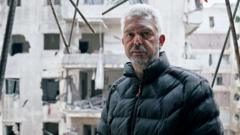
BBC traces how 10 minutes of Israeli bombing brought devastation to Lebanon Nawal Al-MaghafiSenior international investigations correspondent, BBC World Service, LebanonIn the southern suburbs of Beirut, the neighbourhood of Hay el Sellom is barely recognisable.What was once a densely populated, lively community is now a landscape of collapsed concrete, twisted metal and exposed wires. Homes have been reduced to layers of rubble. The sounds of everyday life have been replaced by silence.Despite repeated Israeli attacks since the start of the Iran war on other parts of Beirut's southern suburbs, where Hezbollah holds sway, residents say this neighbourhood remained calm until the afternoon of 8 April.Beirut's southern suburbs had faced repeated Israeli evacuation orders and air strikes since the start of the war, but residents told us few people left Hay El Sellom, as they had nowhere to go.

They also said that this neighbourhood had remained relatively calm.On that Wednesday, Mohammed's son Abbas was at home asleep when the building was hit by an Israeli air strike. "The three floors above mine all fell into one room," Mohammed says. "They all came down together… on top of him."It was part of a deadly wave of strikes that begun at 14.15 local time and saw about 100 targets across Lebanon hit in the space of just 10 minutes, according to Israel.The destruction wrought in this brief window would surpass that of any other day in this war.

The stated targets included Hezbollah command centres and military sites, but among the casualties were many ordinary Lebanese citizens.The death toll for the day reached 361, according to the Lebanese authorities, with more than 1,000 injured.'This is the second home I've lost'In the weeks after the attack, the BBC World Service visited some of the areas hit to piece together what happened on that day. We met Mohammed in the ruins of his apartment."This is the second home I've lost," he says. "In the last war [in 2024] I lost a home.

And in this war I lost another."I wish it was just my home that I lost, and that my son survived. This brick can be rebuilt. But nothing will bring back my son."He is adamant that everyone who died were residents of the building.

"If I thought there was even a 1% chance that someone from Hezbollah lived here, I wouldn't have stayed," he says. "I would never risk my son's life.""Maybe, since I'm 45 years old, I wouldn't worry about the risk to myself but a young man with his whole life ahead of him - I would not put him in a building if anyone was there."Following the death of his son, Mohammed expressed his sympathies for Hezbollah, asking it to defend Lebanon, in an interview with local media. That's a sentiment echoed by many people we spoke to in areas that have been consistently attacked by Israel.Hezbollah – an Iran-backed militia and political party based in Lebanon – had fired rockets into Israel on 2 March, in response to US and Israeli attacks on Iran.

A wider Israeli occupation of southern Lebanon followed, and further attempts to destroy the Hezbollah leadership.Earlier on 8 April, a temporary ceasefire between the United States and Iran had been announced, a pause in a wider regional war that had already reshaped the Middle East.Even though Israel said Lebanon would not be included, people on the ground were cautiously hopeful – until the assault began.'It all became silent'By analysing verified footage, social media posts and satellite imagery and comparing these with eyewitness accounts, we have identified at least five strikes that hit Hay el Sellom in quick succession.Some Israeli media reported Ali Mohammed Ghulam Dahini was killed in the neighbourhood, and say he was a senior Hezbollah figure. We also found a memorial poster which describes him as a Hezbollah fighter. We asked the Israel Defense Forces (IDF) if Dahini was a target, but it did not respond to this question, nor did it provide specific information about who or what was being targeted in Hay el Sellom.Liam Weir / BBCThe narrow streets of Hay el Sellom are strewn with rubble and twisted metalWhat is clear is the scale of civilian casualties.

Extract — continue reading at the source.

Read full story