Adolescent depression is undergoing a rapid surge and has become a severe global public health challenge. However, current therapeutic approaches are limited and often accompanied by significant side effects primarily due to the elusive underlying mechanisms. The gut-brain axis has recently gained growing attention for its pivotal roles in neuropsychiatric disorders, particularly the tryptophan (Trp) metabolism by the microbiota.
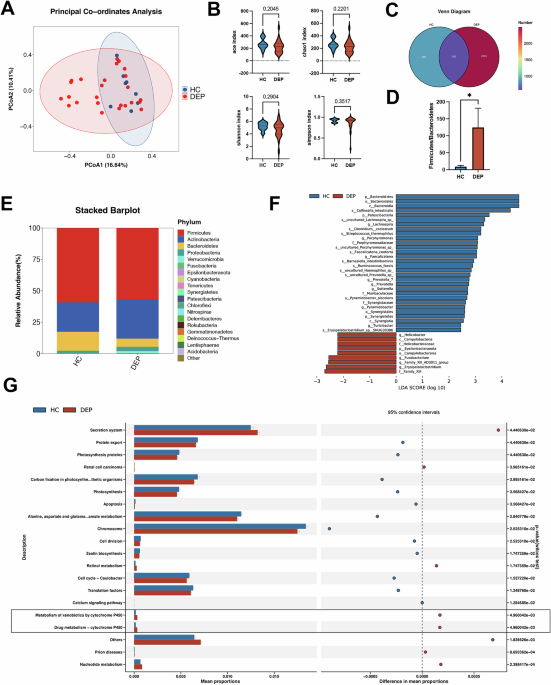
With the 16S rRNA gene sequencing, the abundance of Bacteroidetes, a microbiota phylum that includes several taxa involved in tryptophan metabolism and indole derivative production was significantly reduced in unmedicated adolescents with depression. The in-depth analysis showed that levels of key indole derivatives, including IAA, IPA and IAld, were markedly decreased in depressed patients; crucially, these reductions showed a significant negative correlation with depression severity scores. Consistent with the clinical findings, a similar decline in IAA, IPA, and IAld levels was observed in adolescent mice with depression induced by chronic restraint stress (CRS).
Notably, depression-like behaviors in these mice were substantially ameliorated by a high-Trp diet (CRS + 1.19% Trp) and direct supplementation with indole derivatives. In a reciprocal experiment, a low-Trp diet (0.09% Trp) was found to de novo induce depressive behaviors in otherwise healthy mice. Morphological analysis of brain tissue uncovered another critical insight, the microglial cells in CRS mice exhibited hallmark features of overactivation.
Remarkably, both the high-Trp diet and indole derivative supplementation exerted consistent protective effects, shown as restored microglial morphology and neurogenesis. Mechanistically, the indole derivatives were shown to activate AhR signaling, which in turn balanced the expression of anti-inflammatory factors (e.g., IL-10, TGF-β) and pro-inflammatory factors (e.g., IL-1β, CD68), thereby remodeling microglial morphology and promoting neurogenesis in hippocampus. A series of loss-of-function and gain-of-function experiments further confirmed AhR’s essential role: the salutary effects of indole derivatives on anti-depression were substantially attenuated in AhR-/- mice; reciprocally, conditional microglia-specific overexpression of AhR in the hippocampus of CRS mice significantly ameliorated CRS-induced depressive-like changes, accompanied by suppression of microglial activation and upregulation of anti-inflammatory factors.
Collectively, the present study revealed a previously unrecognized the microbiota-derived indole derivatives ameliorated CRS-induced adolescent depression via the AhR signaling pathway. These findings highlight that targeting the indole derivative-AhR signaling axis may represent a novel therapeutic strategy for adolescent depression, one with the potential to minimize side effects and address the unmet clinical needs of this vulnerable population. This is a preview of subscription content, access via your institution Receive 12 print issues and online access Prices may be subject to local taxes which are calculated during checkout The human and mouse fecal 16S rRNA gene sequencing data generated in this study have been deposited in the NCBI SRA under BioProject accession number PRJNA 1473045.
The mouse hippocampal RNA-seq data generated in the supplementary experiments have been deposited in the NCBI SRA under BioProject accession number PRJNA 1473098. Other data supporting the findings of this study are available from the corresponding author upon reasonable request. No custom computer code was used to generate results central to the conclusions of this study.
Extract — continue reading at the source.