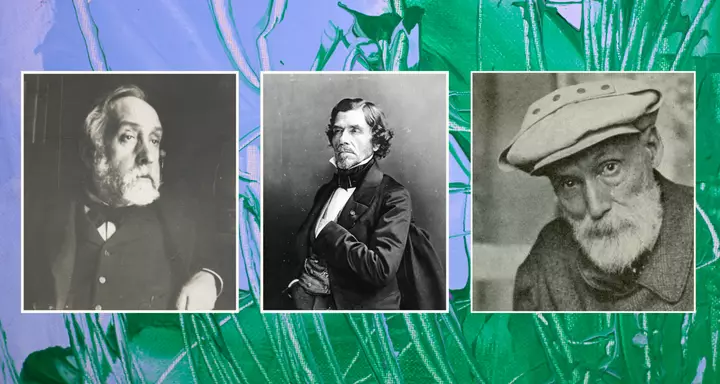
A few years ago, a student at the university where I’ve been teaching for the last decade asked me about my working process as an art historian. Without thinking too much about it, I said that I find the tools of the method actor useful. I told the student that I tried to develop an intense understanding of the great artists of the past, one so thorough that the men I study start to feel like real people I’m interacting with in my daily life.
I don’t remember if the student asked me any follow up questions, but I realize now that the idea had been percolating in my brain long before I verbalized it that day. I’d spent much of graduate school and the first years of my career as an academic developing expertise in masculinity studies to write my first book—a study of how paintings produced in Russia during the nineteenth century provide insight into the hidden anxieties and evolving identities of men in that period. The first chapter was on an artist named Karl Briullov, who I found enthralling.
Briullov’s tense relationship with his father, his temper when he felt dissatisfied with his paintings (he once threw a boot at a canvas so hard that it ripped through the fabric)—all of it made him come to life for me, made him feel like a man I actually knew. These men may have been horrible, but they were also fascinating companions. And it was undoubtedly their misogyny that was the source of so many of their problems.
So close was my study of Briullov that at some point, it started to feel like we were dating. It probably helped that he was quite handsome, and he produced a slew of dreamy self-portraits that fit in well with the style of romanticism which was then prevalent. But as soon as I finished writing the chapter on him, I began to feel morose.
I knew it was time to turn to the next artist in the book and do a similar deep dive into his letters and paintings, but I just couldn’t bring myself to start. Slowly but surely, it dawned on me: it felt like I’d broken up with Briullov. And I missed him terribly.
Now this is not (as far as I know) a normal feeling for an art historian to have. At least, I’ve never heard another scholar report any experiences along these lines. But the feeling plagued me as I finished the work and began my next major project—a book on some of the most awful misogynists of the modern art canon.
Extract — continue reading at the source.