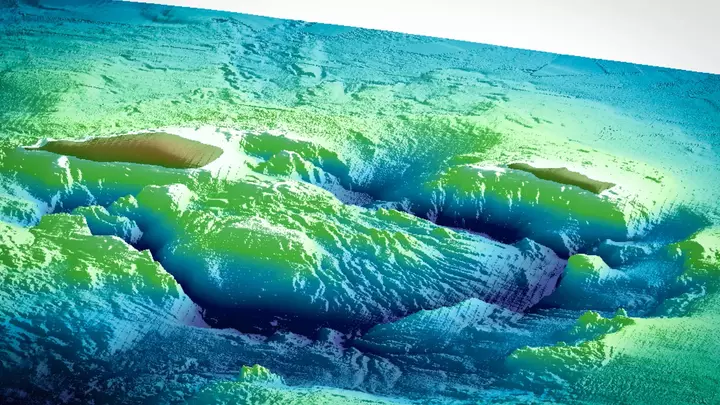
One of Earth's most powerful supervolcanoes is slowly refilling its enormous underground magma reservoir, thousands of years after producing one of the largest volcanic eruptions in recent geological history. Scientists at Kobe University have discovered evidence that fresh magma is accumulating beneath Japan's Kikai caldera, which unleashed a catastrophic eruption about 7,300 years ago. The discovery offers a rare look at how giant volcanic systems rebuild their magma supplies after massive eruptions.
It could also provide important clues about the behavior of other supervolcanoes, including Yellowstone in the United States and Toba in Indonesia, potentially helping scientists improve their ability to recognize warning signs of future eruptions. How Supervolcanoes Store Enormous Amounts of Magma Some volcanic eruptions are so immense that they dramatically reshape the landscape. The amount of magma released can be staggering, enough to bury all of New York City's Central Park beneath a layer roughly 12 kilometers (7.5 miles) thick.
When such enormous volumes of magma escape from underground, the rock above the emptied reservoir can collapse, leaving behind a broad, relatively shallow depression known as a caldera. These features are associated with some of the most powerful eruptions in Earth's history. Famous examples include Yellowstone, Toba, and Japan's Kikai caldera, most of which lies beneath the ocean.
Kikai last experienced a giant eruption approximately 7,300 years ago, producing the largest known volcanic eruption of the Holocene, the geological epoch that began roughly 11,700 years ago and continues today. Although scientists know that giant caldera volcanoes can erupt more than once, they still have an incomplete understanding of how the enormous quantities of magma required for these events accumulate underground. This makes it extremely difficult to anticipate when another major eruption might occur.
"We must understand how such large quantities of magma can accumulate to understand how giant caldera eruptions occur," says Kobe University geophysicist Nobukazu Seama. Scientists Discover a Massive Magma Reservoir Beneath Japan Kikai's underwater location might seem like an obstacle to studying the volcano, but it actually gives researchers an important advantage. The surrounding seafloor allows scientists to carry out extensive geological surveys across the volcanic structure.
"The underwater location allows us to implement systematic, large-scale surveys," Seama explains. To investigate what lies beneath Kikai, researchers from Kobe University collaborated with the Japan Agency for Marine-Earth Science and Technology (JAMSTEC). They used powerful airgun arrays to generate seismic pulses that traveled through the crust beneath the ocean floor.
Extract — continue reading at the source.