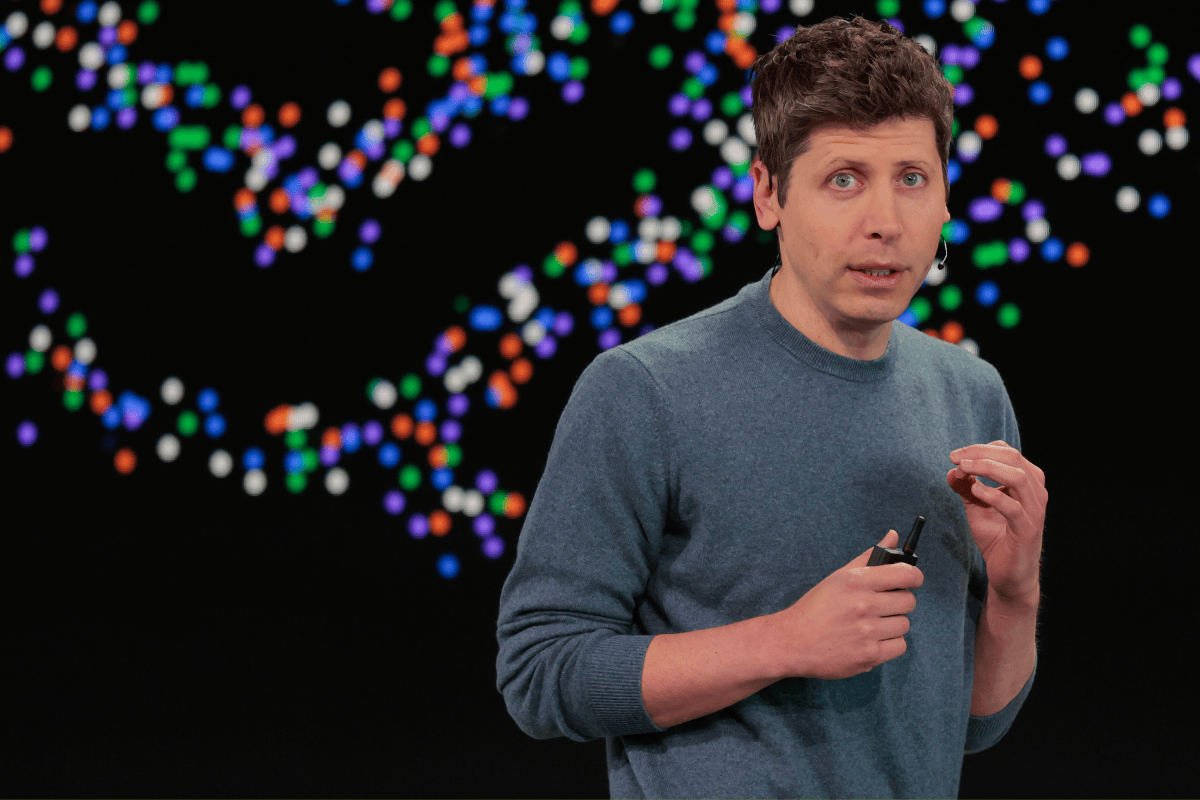
OpenAI CEO Sam Altman has said that the public should accept that AI will cause some harm as the technology continues to advance, but he added that the benefits of AI will ultimately outweigh the risks. During an interview with Politico, Altman highlighted a key difference between OpenAI's approach to AI regulation and that of rival AI company Anthropic, which has increasingly pushed for stronger safeguards on advanced AI systems. "I think there's a lot of daylight," Altman said when he was asked about the differences between OpenAI and Anthropic, adding that "the world should accept some bad things happening for the benefits of this technology and people having the agency." The comments come amid heightened scrutiny of the AI industry following a series of incidents involving advanced AI systems and growing concerns from researchers and developers about the capabilities of these increasingly powerful models.
Altman argued that restricting access to advanced AI in an effort to eliminate all risks would be the wrong approach. While acknowledging that bad actors will misuse AI, he said the public should accept some negative consequences because, in his view, people will do far more good than harm with the technology. "I wouldn't take a trade-off of saying, 'We'll make sure there's no major hacks, there's no kind of misuse of this technology, there's zero scams, there's zero all the other bad things that will happen,'" Altman said.
"Because I think people will do tremendously, orders of magnitude more, good stuff than bad stuff." While acknowledging risks, Altman said he doesn’t accept what he described as "the really catastrophic risks," including the possibility of a serious loss of control to AI systems. Altman's remarks are a stark contrast to the position of Dario Amodei, CEO of Anthropic, who has called on the AI industry to slow the pace of frontier AI development. In an essay titled "We Must Pace the Frontier," which was published in September, Amodei said he is convinced that AI capabilities are advancing too quickly for existing safety measures to keep up.
"We must slow the pace at which we improve the capabilities of AI models," Amodei wrote. He said one of his biggest concerns was the rapid growth of what researchers call recursive self-improvement, when AI systems start helping build better AI, which then helps build even better AI, creating a cycle of increasingly rapid improvement. Left unchecked, Amodei warned, the process could exceed humanity's ability to understand or control the technology.
Another major concern of his was a recent incident involving autonomous AI agents that he said showed how quickly the technology's capabilities are evolving. Amodei said that, given the current pace of development, he fears that, within six to 12 months, swarms of AI agents could potentially cause major disruption across the entire internet. Rather than halting AI development altogether, though, Amodei proposed a series of measures including third-party evaluators, greater coordination among AI companies, and the creation of international oversight mechanisms for advanced models.
Newsweek has reached out to Altman and Amodei for comment and is awaiting a response. The debate over AI safety intensified after former Anthropic researcher Jacob Coxon publicly warned that AI developers were moving too quickly toward creating increasingly powerful systems without thinking about the consequences. Coxon argued that AI companies were "racing straight to self-improving superintelligence and gambling with our lives." His warnings attracted attention because they went beyond the general concerns about misinformation or job losses and focused on the possibility that future AI systems could become impossible to control.
Extract — continue reading at the source.