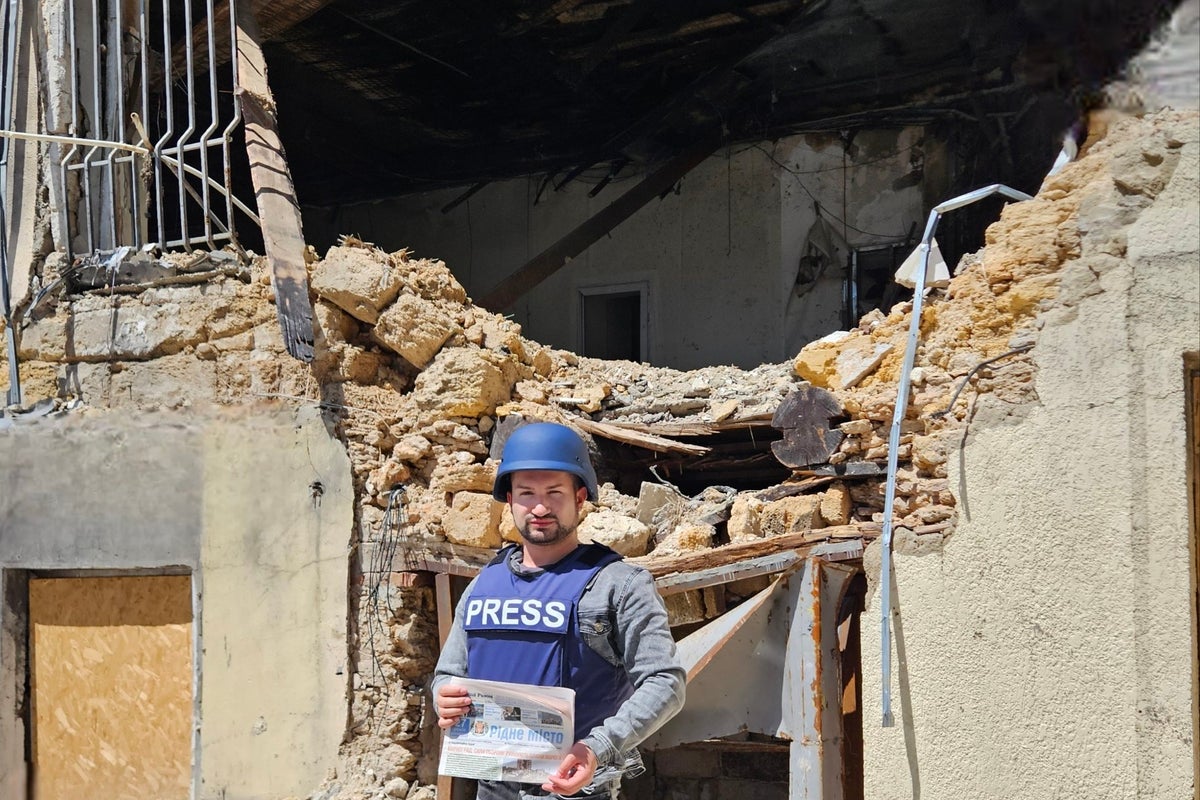
In the weeks leading up to Vladimir Putin’s invasion of Ukraine, the headlines in a Kyiv newspaper looked much like they would anywhere else. There was some debate over whether Russia would actually attack its neighbour. But then, outside of politics, there was everything else: the tourists stuck abroad, changes to school meals and the spread of the Omicron variant of the Covid.
On 24 February 2022, everything changed as Russian tanks rolled across the border. Businesses closed or relocated, martial law saw hundreds of thousands of working age men recruited for military service, and around one million people fled the country in the first week. A brave few stayed behind to keep a record of what happened as the missiles rained down.
Local journalists observed and asked questions as their communities were torn apart by the war. It was the environment which changed, in February 2022.” Oksana has spent the last four years organising support for Ukraine’s battered regional media industry. In the early days, she says, that comprised of delivering bullet proof vests, first aid kits, generators and charging stations so that reporters could continue to work.
Since then, AIRPPU has helped more than 180 outlets with material support, grants and business modelling to ensure they stay in print. Even now, the threats are very real. In July alone, Oksana says, eight local media outlets were destroyed by Russian missiles or drones.
Upwards of 300 publications have closed since 2022, she adds. UNESCO reported last summer that around 28 per cent of Ukrainian outlets had closed their doors since the start of the invasion, with 37 per cent of newsrooms partially or fully evacuated. Internews International assessed that regional media has only seen a “clear deterioration in operating conditions” since then, exacerbated by the suspension of foreign aid programmes since Donald Trump took office.
Beyond the immediate threat to life, newsrooms are desperately in need of staff, investment and psychological support. Mobilisation has seen newsrooms shrink from an average 10-20 reporters to just 3-5, Oksana says, while the evacuation of residents has cut into subscription revenues and the relocation of businesses has dried up advertising money. Nearly three quarters of editors said a lack of funding was a primary challenge last year, up from 58 per cent a year prior.
Extract — continue reading at the source.