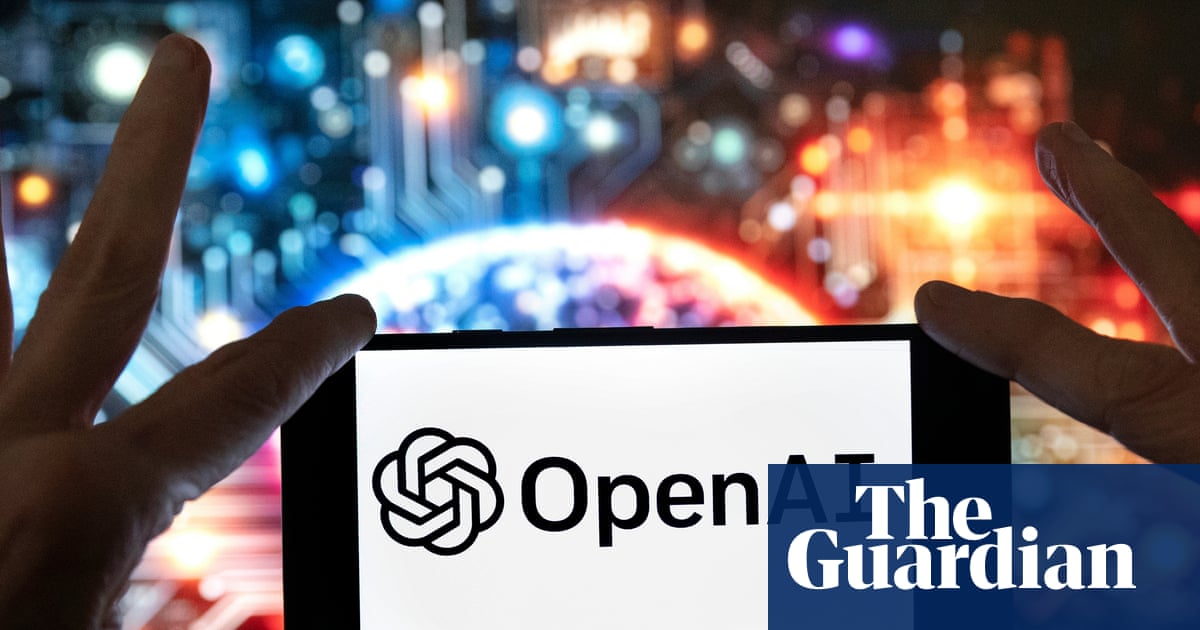
The University of Oxford has allowed the company behind ChatGPT to train its AI models on historical texts from its Bodleian Library, as tech companies scour academic institutions for fresh data. The Bodleian material digitised by OpenAI has been used to “populate the OpenAI training set”, according to internal documents. Oxford announced a partnership with the company in March 2025, using OpenAI software to digitise texts from the university’s world-famous library, which it said would make the content more widely available for students and researchers.
However, the announcement did not state the material would be used for training OpenAI’s models, which are trained to recognise patterns in words – and thus “learn” to write complete sentences and perform other cognitive tasks – by being fed vast amounts of data. An OpenAI spokesperson said the company was “proud” to ensure “the AI models of today preserve the world’s historical knowledge for the future”. Meeting minutes at the University of Oxford, obtained via a freedom of information request, record concerns from staff, including members of the Bodleian governance committee, about the reputational risk of partnering with OpenAI and the effect on the university’s environmental commitments of striking a deal involving an energy-intensive technology.
Booksellers have also reported a spate of orders for obscure titles such as a guide to agricultural implements in 18th-century Africa or biographies of 1950s car drivers. Secondhand bookshop owners have speculated that because the titles are unlikely to exist online in digitised form, they represent fresh data that can be consumed by the next generation of AI models. Scraped websites are increasingly saturated with AI-generated material, making them less useful for training models, and developers have turned to physical, often historical, book collections.
OpenAI has struck similar agreements with US research libraries such as Boston Public Library, Caltech, MIT, and the University of Michigan under a project called NextGenAI. Oxford is the only UK member of the project. By June 2025, 125,000 images scanned from historical dissertations had been shared with OpenAI from the Bodleian collection, including PhD theses from European and American universities written in the 19th and 20th centuries.
Other texts scanned include a rare collection of 10,000 16th-century “broadside ballads” containing song lyrics and musical notes that were once circulated on Tudor street corners. Staff have also discussed digitising of 18th-century Irish state papers, the private letters of Irish novelist Marie Edgeworth, and Dorothy Hodgkin’s penicillin notebooks. The OpenAI contract with Oxford also raises the prospect of the mass digitisation of the Bodleian’s collection consisting of 23m items.
The minutes also discussed the creation of an “Ask the Bod” chatbot. A spokesperson for the University of Oxford said the amount of text being digitised was “modest in scale” and covered only out-of-copyright material. The Bodleian keeps the rights to the scans and will begin publishing them openly online within months, the spokesperson said.
Extract — continue reading at the source.