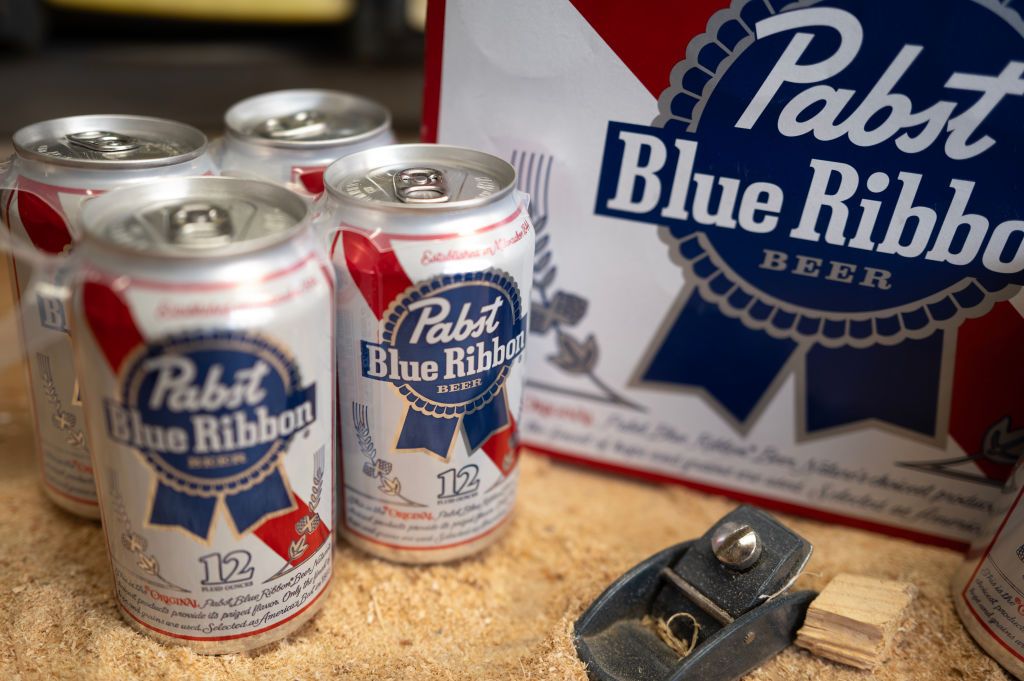
A truck carrying roughly 40,000 pounds of Pabst Blue Ribbon vanished from a California distribution center earlier this month, prompting the brand to issue a public ultimatum and highlighting a surging wave of sophisticated cargo fraud in the state. Police say the theft may be part of a coordinated operation hitting multiple shipments in a single morning. Montclair police said a purported subcontractor used fraudulent paperwork to pick up about $25,000 worth of Anheuser‑Busch/Pabst Blue Ribbon product on August 17, while another shipment worth $45,000 also vanished that same morning.
Investigators “identified similarities between the two incidents” and are probing whether they were committed by the same organized theft ring, according to police. Newsweek has reached out to Pabst Blue Ribbon via email and the Montclair Police Department via online form for comment. In response to the theft, Pabst took a public approach, announcing on social media that the thief had “exactly 18 days and 44 minutes” to return the truck “no questions asked.” The company did not explain the countdown, though the timing appears to nod to 1844, the year Pabst was founded.
In its post, the brand also emphasized that the threat was not a marketing stunt, adding that the beer is “getting warmer” while the trail grows colder. Pabst added that it is working closely with local authorities and will offer a reward for information leading to the beer’s return. Police say the theft relied on fraudulent documentation, a tactic increasingly used in cargo‑fraud schemes targeting food and beverage shipments.
In the Pabst Blue Ribbon case, investigators said they found discrepancies in the trucking company information, driver identity, and vehicles used for pickup. California now accounts for 34 percent of all reported cargo thefts nationwide, making it the most targeted state for freight crime in the United States during the second quarter of 2026. Backed by increasingly sophisticated, multi‑jurisdictional criminal networks, cargo theft has become one of the state’s most persistent supply‑chain threats.
According to a Q2 2026 report from Overhaul, national cargo theft rose 5 percent from the first quarter, with Southern California remaining the highest‑risk zone in the country. Electronics continue to be the top target, followed by food and beverages, clothing and shoes, and assorted consumer goods. Thieves most often strike distribution centers, warehouses, truck stops, highways, rest areas, and major rail corridors, exploiting the state’s dense logistics infrastructure.
The California Highway Patrol identifies several primary methods used by organized groups: These operations often span multiple counties or states, making recovery difficult once stolen freight enters the black‑market pipeline. Police have not announced any leads, and it remains unclear whether the shipment is still intact or already dispersed. Stolen consumables often move quickly through informal resale networks, making recovery difficult once the cargo leaves the original truck.
Extract — continue reading at the source.