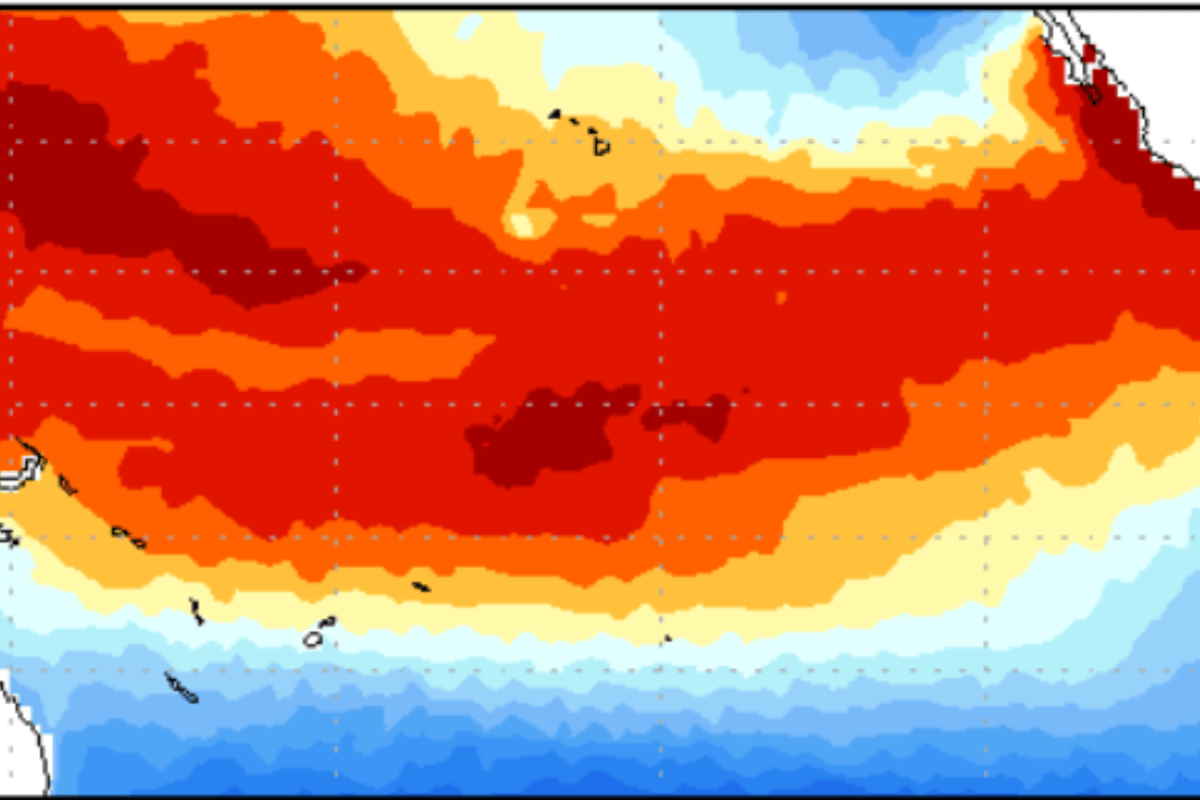
Temperatures in a key zone of the Pacific Ocean reached a record high last month, as this year’s El Niño continues to intensify toward becoming the strongest ever. The European Union’s Copernicus Climate Change Service (Copernicus) warned on Monday that El Niño had pushed temperatures in the relevant Pacific region to 29.70 degrees Celsius. It said this sea surface temperature was an "all-time high" for El Niño, exceeding the peak temperatures of previous strong El Niño events in 1982-83, 1997-98, and 2015-16.
Copernicus director Carlo Buontempo told AFP: "This year's El Niño…is 'very exceptional' but it is too early to say whether it is the strongest ever observed." Speaking of global temperatures, he said: "If we follow the pattern we have seen in the past, we may have a record-breaking 2026, followed by a record-breaking 2027." Betting odds platform Polymarket places the chances of the 2026-27 El Niño being the most powerful ever at 80 percent as of Monday. For months, weather forecasters all over the world have been warning that this year’s El Nino is likely to be the strongest ever, and the latest record temperature readings have occurred before it is expected to peak. El Niño is a naturally recurring climate pattern associated with warmer waters in the Pacific that can influence temperatures and rainfall worldwide.
In America, typical El Niño effects can include stormier weather across southern regions, drier conditions in some northern areas and changes in hurricane activity. Federal forecasters have been saying for months that this El Niño could be the strongest since 1950, with the National Weather Service’s Climate Prediction Center warning last week that "an event of this magnitude" increases the chances of experiencing more intense impacts. Temperatures in the 3.4 Pacific region were 2.99 degrees Celsius above the September average for 1991–2020, according to Copernicus’s bulletin.
The previous record was in December 1997, when temperatures were 2.81 degrees Celsius above normal. The latest record comes before this year’s El Niño is expected to peak, in December, according to the World Meteorological Organization (WMO), meaning temperatures could heat up even more. Even if the event peaks in December, there is a greater than 83 percent chance of a "strong-to-very strong" El Niño event through January-March 2027, the National Weather Service's Climate Prediction Center said last week.
El Niño releases stored heat into the atmosphere, meaning warmer ocean temperatures can end up pushing global temperatures higher. "El Niño doesn't add new heat to the planet. It releases heat the ocean has already been storing beneath the surface, which is why a strong event so often becomes one of the hottest years measured (as with 2024)," Celeste Saulo told the Global Heat Forum in Bangkok.
"The ocean it's drawing from is the warmest we've ever measured it. There is simply more heat available to release," she said. The Pacific’s 3.4 region has warmed quickly this year, the WMO’s analysis show, rising from 1.6 degrees Celsius above normal in June to 2.5 degrees above normal in August.
Extract — continue reading at the source.