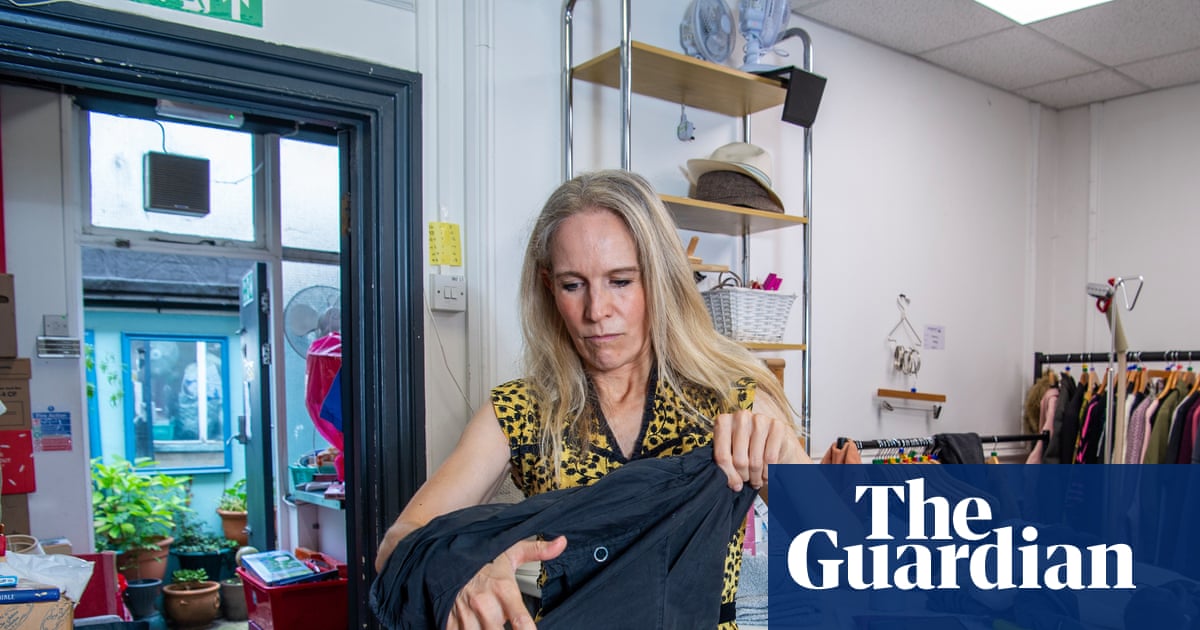
The small stockroom of St Raphael’s Hospice charity shop in Cheam, south London, is rammed with donations. Rummaging through the donations, it’s clear that much is unsaleable: a smelly, soiled bathrobe, tatty trainers, heavily bobbled jumpers, old socks, an empty Swarovski jewellery case. They’re also overwhelmed with deluges of low-quality fashion – a shift in donation habits that accelerated during Covid, because, says Worley, all that time at home enabled people to sell their best stuff on Vinted.
The experience here echoes that of author Tansy Hoskins, whose latest book, Charity Shop World, paints a picture of a charity retail sector in crisis. She spent 16 months working in a London charity shop, sorting through “daily avalanches” of clothing, which swamped “all the other categories put together”. Everyone Hoskins interviewed said similar: “quality is the big change marker – it’s gone through the floor.
You’re just fighting against the waste.” The problem is nationwide. Since the book came out, she’s “been contacted by managers of charity shops around the country – for example, Nottingham, Accrington, Newcastle – all saying that most of what they’re getting is waste.” It is, of course, our waste. According to Jose Baladron of Traid, which has 12 shops across London, shopping for new clothes is “through the roof – the UK is the highest consumer of clothing in Europe by far”.
Yet the price of rag has “plummeted”, according to Merryn Haines-Gadd of the environmental action charity Wrap, “due to the saturation of low-quality fast fashion”. Ten years ago, a charity might have been paid 50-60p per kilo. Plus there’s only so much the ragman can take.
For anything they can’t take, charity shops have to pay to have it collected as waste. At St Raphael’s, some of that has included, according to Worley, saucepans with food still in the bottom, babies’ soiled sleep-suits and used sanitary products. In June, the British Heart Foundation announced plans to close 150 of its 651 stores; its latest accounts indicate that its retail arm lost £3.3m last year.
Cancer Research is part-way through a 190-shop closure programme, and rumours are swirling that up to 100 Oxfam shops might close (which the charity has denied). Fara’s new in-store poster campaign advises would-be donators: “If you’d be happy to give it to a friend, we’d be delighted to receive it.” Items should be “clean, complete, and in good condition”, states their online guide. But just as people “wish cycle” by chucking unrecyclables into the recycling, so do people “wish give”.
Extract — continue reading at the source.