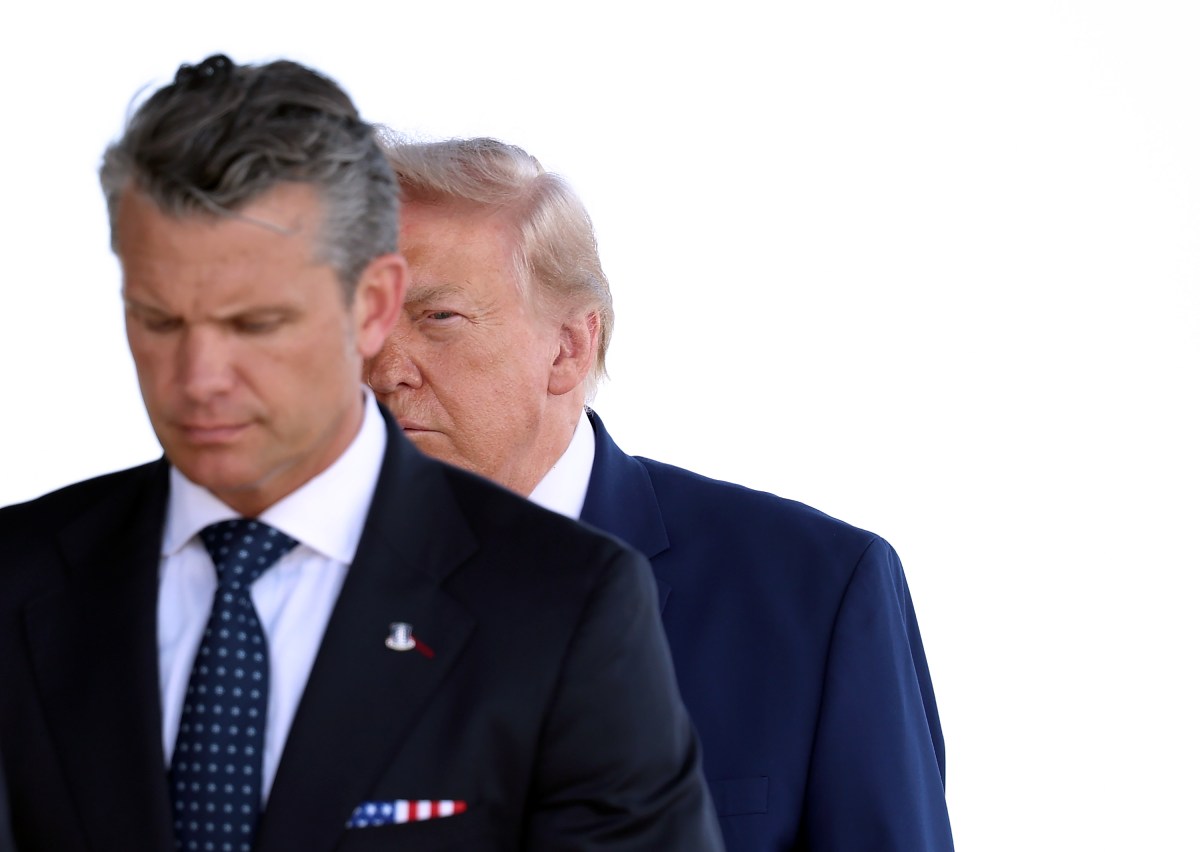
But before Driscoll quit, he went to the boss’s boss instead. Army secretary spoke with President Donald Trump about the state of the Army—detailing concerns about worsening readiness during the Iran war and the number of senior officers fired, pushed out, or passed over for promotion—then submitted his resignation. That is according to multiple reports emerging from the meeting, which came after months of brewing tension between Hegseth and Driscoll.
It is the latest signal, and perhaps the most dramatic yet, that Hegseth is waging a lonely war in the Pentagon. Driscoll was no bureaucratic holdover; the kind of pen-pusher Hegseth likes to ridicule and then remove from the engine of the American military. No, Driscoll is an Iraq veteran, a Trump appointee and a longtime friend of Vice President JD Vance since Yale Law School—close enough to have described taking "couples’ trips" with him.
This friendship gave Driscoll a measure of protection inside the administration. The White House called him "highly effective" on his way out in its eulogy, praising Driscoll for making the Army "more powerful than ever thanks to his work" with Trump and Hegseth. It’s telling that someone this well connected concluded the ordinary channel to Hegseth was no longer worth using.
Hegseth appears to be winning his war against—by his diagnosis—a slovenly and insubordinate Pentagon to restore the "warrior ethos," as he puts it. Officers he distrusted are gone, resistant subordinates are leaving, and the building runs increasingly on his preferences, be it around fitness or ending emphasis on diversity, equity, and inclusion (DEI) policies. By his own standard, that is success—he set out to break an establishment he considered disloyal, and he largely has.
But the shape of Hegseth’s victory deserves sharper focus. Hegseth removed the Army chief of staff and two more generals in April; the four-star running Army forces in Europe and Africa followed in June. Last week, he withheld promotions from four officers linked to them.
The service has had no Senate-confirmed chief of staff since the spring, and with Driscoll gone it has no confirmed civilian secretary, no confirmed general in charge of operations, and no confirmed commander of Army troops in Europe. None of that proves the departures were about Iran, or personal disloyalty to Hegseth. Read structurally, the pattern is plainer in its explanation.
Extract — continue reading at the source.