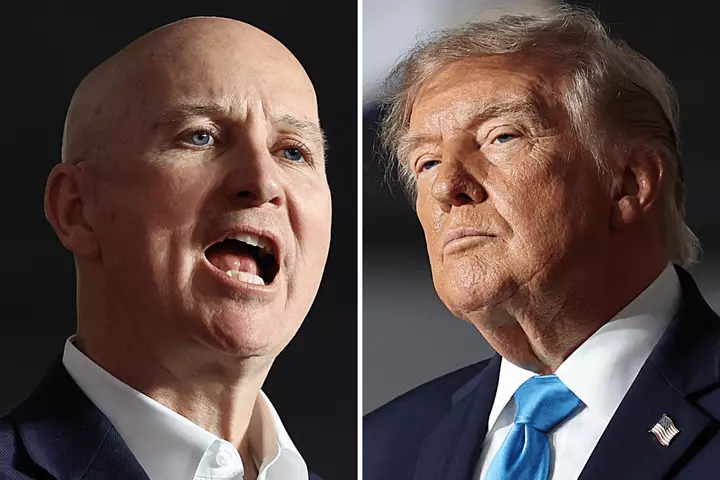
Republican Senator Pete Ricketts faces an unexpectedly competitive reelection race in Nebraska—a state President Donald Trump carried by 20.4 percentage points in 2024—where recent polling has produced conflicting leads against independent challenger Dan Osborn. Sabato’s Crystal Ball moved the contest from “Likely Republican” to “Leans Republican” on October 14, pushing the race further onto the Senate battlefield while still favoring Ricketts. Republicans hold a 53-47 Senate majority, so Democrats need a net gain of four seats on Election Day, November 3, because Vice President JD Vance would break a 50-50 vote tie.
Historically, the president's party tends to lose seats in midterm elections. The race tests whether Osborn’s working-class, independent appeal can overcome Ricketts’ stronger Republican profile. Trump campaigned alongside Ricketts in Grand Island on October 5, the city’s first presidential visit since 2006 and another sign of the GOP effort to shore up the seat.
He also sought to counter Republican attempts to portray him as a Democrat in disguise. Zach Kraft, a spokesperson for the Republican National Committee, dismissed the suggestion that Osborn could win. Newsweek also emailed the Democratic National Committee, the Democratic Senatorial Campaign Committee and the National Republican Senatorial Committee seeking further comment on the race.
A new YouGov survey placed Osborn at 48 percent and Ricketts at 47 percent. It questioned 1,809 likely Nebraska voters September 24-October 3 and had a margin of error of plus or minus 3.3 percentage points. Three percent were undecided.
Dona-Gene Barton, an associate professor of political science at the University of Nebraska-Lincoln, told Newsweek that one narrow advantage should not be mistaken for an established trend. A GOP strategist familiar with Republican thinking in Nebraska, who requested anonymity to speak candidly about the race, also told Newsweek that Republicans were not placing significant weight on the YouGov result. The strategist argued that Osborn benefited from being underestimated during his 2024 campaign against Fischer, but said the challenger had been on Republicans’ radar much earlier this cycle.
In the strategist’s assessment, that made a repeat late surge less likely because Ricketts and allied groups had already spent months trying to define Osborn as aligned with Democrats while attacking his policy positions and public remarks, framing them as out of step with Nebraska’s conservative electorate. The GOP strategist went on to caution against treating Trump’s appearance at the Pinnacle Bank Expo Center on the Nebraska State Fairgrounds on October 5 to support Ricketts campaign as evidence of Republican alarm, saying the president had campaigned in states with Senate contests across the country. The visit nevertheless gave Ricketts an opportunity to stimulate turnout in a heavily Republican part of Nebraska and enter the closing weeks with the party’s national leader at his side, the strategist said.
Extract — continue reading at the source.