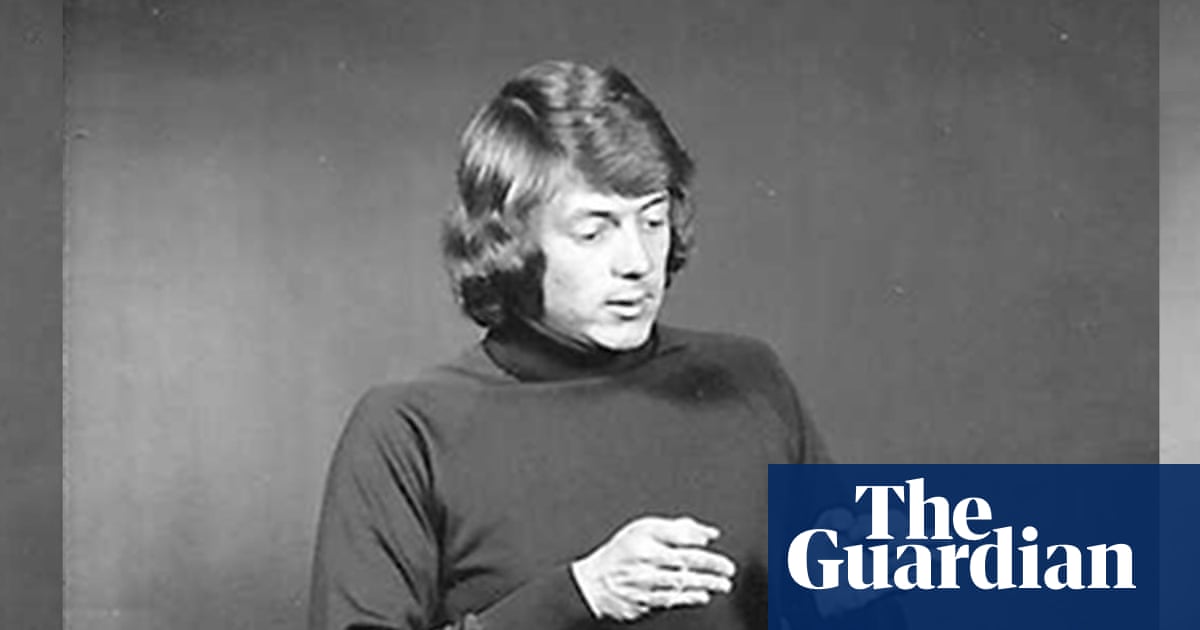
Peter Llewellyn-Jones, who has died aged 76, was an interpreter and teacher who helped to establish sign language interpreting as a recognised profession in Britain. Throughout his working life, alongside employment as an actor and writer, he devoted himself to improving accessibility and opportunity for deaf people. He became a pioneer in the teaching of British Sign Language interpreting and linguistics, and wrote the UK’s first undergraduate degree course in the subject, for the University of Wolverhampton in 1992.
Peter was also instrumental in developing sign-language interpreting for British television and in bringing it on to the stage; starting in the early 1980s, he worked on 600 professional theatre productions across the UK. One of the earliest to interpret for Royal Shakespeare Company productions, he worked on RSC main house shows and tours from 1991 to 2000, interpreting alongside Vanessa Redgrave, Kenneth Branagh, Jim Broadbent and Ian McKellen, among others; McKellen later became a prominent champion of interpreted theatre more broadly. In 2004 Peter wrote about interpreting the plays into British Sign Language in a chapter for the book Shakespeare and the Language of Translation, edited by Ton Hoenselaars.
Peter was also an accomplished actor and writer. He co-wrote and co-presented the second series of Insight (1984), a groundbreaking television programme for deaf children, in which he acted and signed with the actor, comedian and presenter Victoria Wood. He also played Mr Grimley, alongside Victoria Williams and two puppet creatures, in the children’s television series The Riddlers, which ran from 1989 to 1998.
He was one of the first sign-language interpreters to appear as an additional on-screen element in British television programming, including for See Hear! in 1982, and for the current affairs series Listening Eye (1983-88). He was the presenter of the weekly educational series Our World, for primary schools (1985-94) and also interpreted the news on various ITV channels in the 80s and 90s. Along with the American academic Robert G Lee, Peter developed the “role-space” model, an influential approach to the interpreter’s role and behaviour.
It drops the idea of the interpreter as a neutral, invisible “conduit” who simply converts words, and replaces it with the claim that every interpreter already occupies an active three-dimensional space in any interaction, whether they mean to or not. Peter argued interpreters were never really neutral machines, and gave the profession a way to think honestly about the influence they always have. Peter interpreted at events for King (then Prince) Charles, Diana, Princess of Wales, Norman Tebbit and Neil Kinnock, for social services, health and legal settings, and for industry leaders and politicians.
In an 1991 interview in the Guardian with the journalist Mary Russell, Peter observed: “Deaf people have the right to be bored by politicians, same as the rest of us.” Born in Wealdstone, Middlesex, to Arthur, a vicar, and Joan (nee Fisher), an occupational therapist, Peter left school at 16 having passed only four O-levels. After travelling around Europe for a period, he was persuaded by his father to train in St Albans as a missioner and welfare worker to the deaf, and qualified in 1972, leading to his first employment with the St Albans Diocesan Association for the Deaf. He then worked for the British Deaf Association, and for Tyne Tees Television, and began lecturing and consulting, developing university teaching curriculums in the field, and working at the universities of Wolverhampton and later Leeds, where he was senior teaching fellow and programme director for the MA in interpreting and translation studies (2003-12).
Extract — continue reading at the source.