With games like Pragmata, 007 First Light, Beast of Reincarnation, and Onimusha: Way of the Sword, I’ve spent much of 2026 thinking about what makes a good action game. Is it about the challenge of performing extraordinary feats on the screen? Is it about fighting, and winning, excruciating battles against enemies that feel mathematically impossible to beat?
Is it just about power fantasy? There's merit in difficult games that push us to master combos and boss fights, but in recent years, these sorts of games have become hegemonic. That's why developer S-Game's Phantom Blade Zero surprised me.
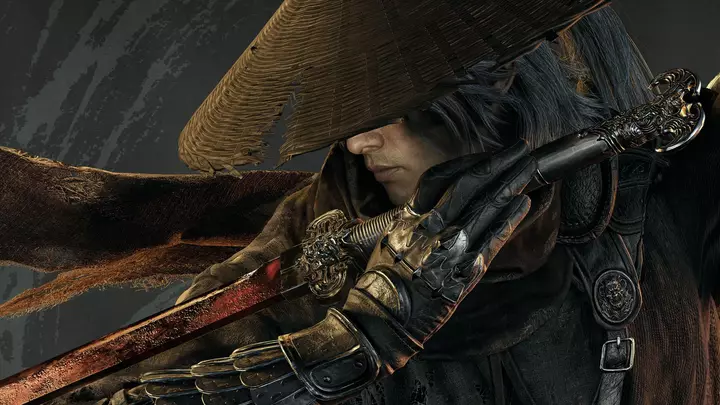
Unlike many of its contemporaries, Phantom Blade Zero is not more interested in requiring players to achieve the martial prowess of kung-fu masters with their controllers than it is in celebrating martial arts as a spectacle. Unfortunately, the game pushes this desire too far for its own good. At the center of Phantom Blade Zero, out Oct. 29 for PlayStation 5 and Windows PC, there's Soul, the somber and mysterious protagonist, whose main goal is to find a way to survive before his magically inserted artificial heart stops working.
He has only 66 days to accomplish this goal. The protagonist is a legendary swordmaster and a former member of the Order, an organization that is influential in the Wilun. Like many other warriors, he uses and manipulates Sha-Chi, and has continuously fought the Maskwalkers.
That all sounds cool, right? Did I understand what all these terms meant when I started playing the game? The Order, Wilun, Sha-Chi, and Maskwalkers were just some of the terms I encountered in the first hours of the game, with little context to give them color or shape.
At first, I felt frustrated that I didn't really understand what was happening and why the cool-looking edgelord warrior (I mean, his name is "Soul!") was doing whatever he was doing. But then I gave in, and just let the game guide me. You see, Phantom Blade Zero presents a narrative structure that I have seen in other Chinese productions, from donghuas like Lord of Mysteries to novels like Mo Dao Zu Shi.
Extract — continue reading at the source.