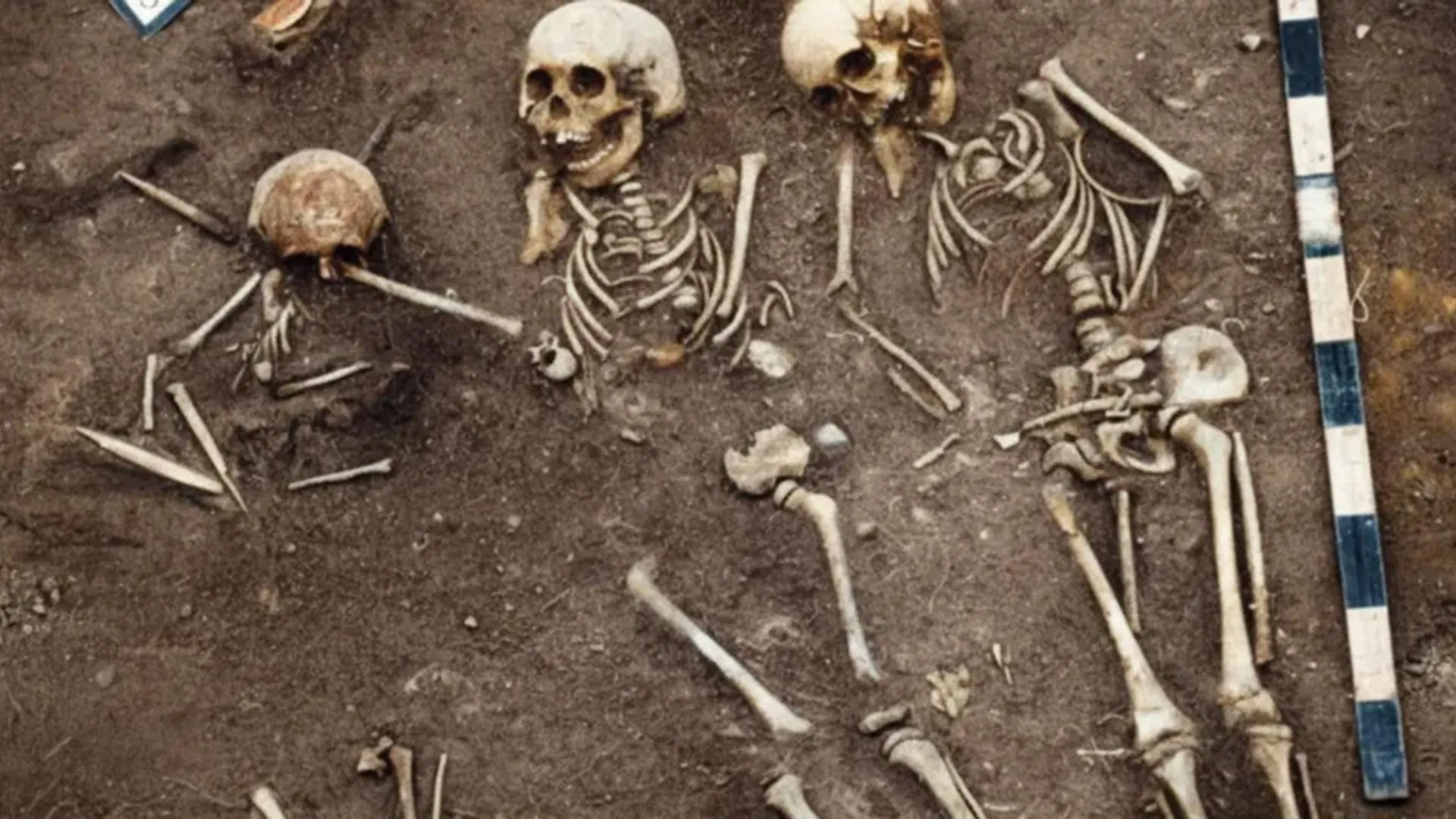
Plague is often linked to rats, packed medieval cities, and the devastating epidemics that tore through Europe during and after the Middle Ages. But new research published in Nature suggests the disease was already a deadly threat 5,500 years ago. At that time, it was killing people in small, mobile hunter-gatherer groups - long before farming and urban life created the crowded conditions usually associated with major plague outbreaks.
An international research team studied ancient DNA recovered from human remains at four hunter-gatherer burial sites in the Lake Baikal region of East Siberia. By sequencing genetic material preserved in teeth, the scientists were able to reconstruct ancient bacterial genomes and identify previously unknown early forms of plague. "Whether the earliest forms of plague were mild or virulent has been a matter of debate, but our findings demonstrate that these ancient strains were already highly lethal," says senior author Eske Willerslev, Professor at the University of Copenhagen and the University of Cambridge.
To understand what happened within these prehistoric communities, the researchers combined genetic evidence with archaeology and radiocarbon dating. "Based on the plague DNA, the genetic relationships between the victims, the archaeological analysis and the radiocarbon dating, we've built a really clear, complete picture of what happened during these outbreaks," says lead author Ruairidh Macleod, who carried out the work while a PhD student at the University of Cambridge - and is now Research Fellow at the University of Oxford. The team found DNA from Yersinia pestis - the bacterium that causes plague - in 18 of the 46 people tested.
That means nearly 40 percent of the individuals carried evidence of plague, a detection rate even higher than that reported at some medieval plague burial sites. Early Plague May Have Been Far Deadlier Than Expected Earlier research had shown that ancient strains of Yersinia pestis were missing some of the genetic features that eventually allowed bubonic plague to spread efficiently through fleas and rodent hosts. Because of that, scientists had often assumed that the earliest versions of the bacterium probably could not trigger severe outbreaks.
At the two largest cemeteries, researchers found an unusually large number of children and young teenagers among those who had died. Archaeologists had struggled for decades to explain why so many young people were buried there over such a short period. "The unusually high number of children and the short timespan was a real puzzle that we've been trying to solve since the 1990s.
Finding out that plague was the cause is extraordinary, but it makes so much sense," says archaeologist Andrzej Weber of the University of Alberta, Principal Investigator of the Baikal Archaeology Project. Radiocarbon dating indicates that many of the deaths happened close together in time. In some cases, siblings appear to have died together, while other graves contain parents and children who may also have died during the same outbreak.
Extract — continue reading at the source.