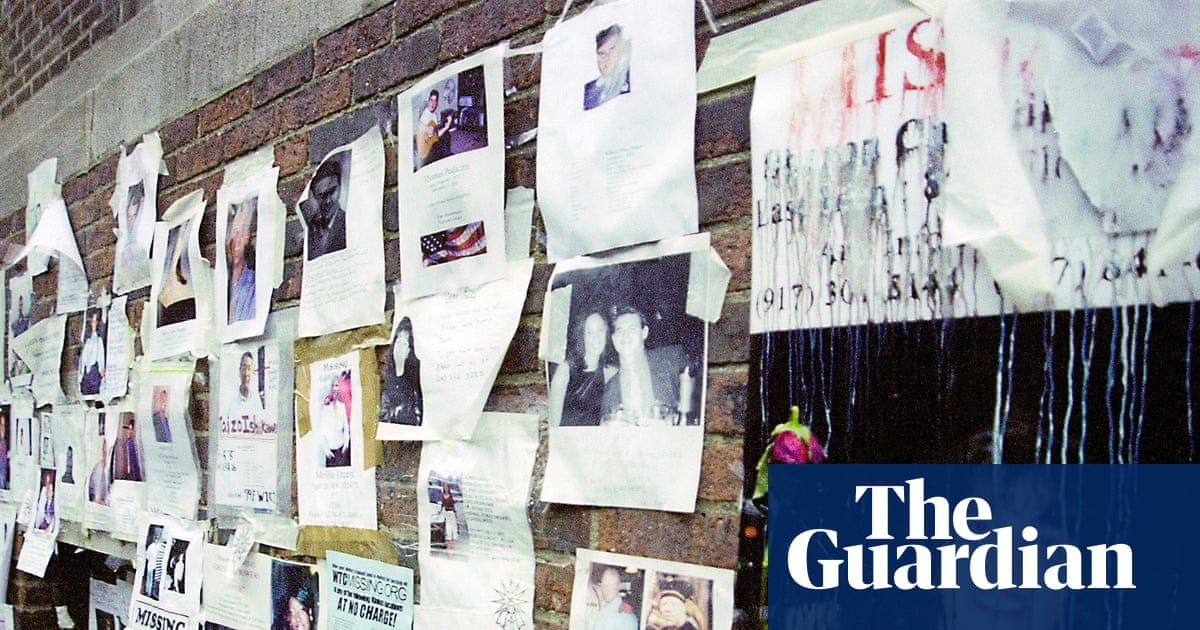
It was a plea for information about a person who had vanished in the deadliest terrorist attack in US history. You knew it then.” The missing posters kept coming in the days after 9/11, and Buehler kept photographing them. But having amassed more than 500 images, he put them away in a box on a top shelf because he could not bear to look at them.
As the 25th anniversary of the atrocity neared, he decided to revisit them and will put a selection on public display for the first time this week. Countenance: The 9/11 Missing Posters, an installation at Most Holy Trinity – St Mary’s church in Brooklyn, places 144 pictures across 24 translucent vellum panels, in vertical pairs reminiscent of the twin towers. The World Trade Center was always a favourite subject for Buehler.
He had been photographing it since 1973, when he was 16. On September 11 2001, as an advisory board member for a tech startup, he had been invited to a conference at the Windows on the World restaurant at the top of the north tower, but turned the offer down (a friend intended to go but was delayed). Every night he updated a website, posting photographs and dispatches – an early form of what would soon be called blogging.
He watched the spontaneous emergence of public shrines. Memorials bloomed in Union Square and Washington Square Park. On fences, subway entrances and storefronts, the missing posters multiplied, each a radical act of hope, though very few of those reported missing would ultimately be found alive.
This was an era before cloud storage, smartphones and ubiquitously accessible digital photos. When families realised their relatives had not returned home, they frantically searched their living rooms for any tangible likeness. Some posters were designed by colleagues with desktop publishing software, cleanly formatted in neat typefaces.
Others were raw, hurried cries for help: a snapshot Scotch-taped to a blank sheet of copy paper, bordered by frantic handwritten descriptions detailing physical marks that might identify an unconscious patient in a trauma ward. The posters listed height, weight, date of birth, company names, floor numbers and identifying traits: a butterfly tattoo on a lower back, surgical scars, wristwatches, the colour of a tie worn that morning. One said, ‘Please find daddy.’ This was before digital phones, when everybody had pictures online, so a lot of them were done in copy shops.
Extract — continue reading at the source.