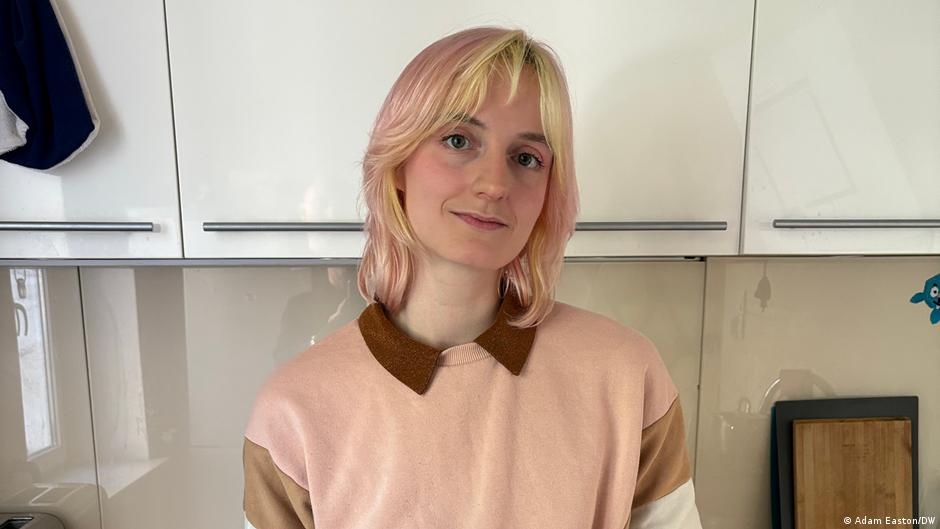
Hours after Vladimir Putin announced his "special military operation" in Ukraine on February 24, 2022, Russian troops began attacking Kyiv's Antonov Airport close to the home of Nastya Podorozhnya's family. Nastya was 24 at the time and living in Krakow in neighboring Poland, having recently graduated from the city's Jagiellonian University. Alarmed by the news from Ukraine and fearful of what was coming, Nastya rushed back to Ukraine two days before the invasion to be with her family and help her sister and her three children cross the border to safety in Poland.
Nastya realized she could use her experience of living in Poland — how to get a doctor's appointment or simply buy a tram ticket — to help the flood of mostly women and children arriving in the country. Poles were offering help and food at the border, but some people sought to take advantage of the vulnerable arrivals. "I spoke to activists engaged in anti-human trafficking and they said what was happening at the border in the first weeks after the invasion was like Christmas, Easter and birthdays rolled into one for traffickers because people were so easily trusting the volunteers," Nastya told DW in a two-bedroom apartment in central Krakow her organization uses to provide shelter to vulnerable women refugees escaping domestic abuse or trafficking.
Named Martynka, after Nastya's youngest niece, the organization also runs a hotline. It has received more than 5,000 requests for help since March 2022 and now gets about a hundred every month. Her small team provides psychological and moral support in four languages as well as legal assistance and counselling.
"One of the very young women who lived with us for a long time was drugged by her boyfriend who she met as a teenager when she escaped the full-scale invasion and after years of relationship she found out that he has been drugging her and selling sex with her to other people" she said. Nastya said she was motivated to help partly because of a traumatic experience of her own. While studying in Krakow, a Ukrainian man tried to rape her outside of her dormitory.
After a long and difficult legal process, during which police detained the suspect before releasing him, he was eventually found guilty of violating Nastya's bodily autonomy and given a restraining order. "This terrible, traumatic experience not only gave me horrible PTSD, which later on sort of helped me be empathetic and understand survivors with PTSD, but also it put me through the system of justice and how survivors are being treated," she added. Since 2022, around 100 women and children have found shelter in the apartment.
Her team's work relies largely on donations from international organizations. But cuts to USAID have led to increased competition for grants, while donor fatigue has forced the team to cut its one-to-one therapy sessions. "Ukraine is not in the headlines anymore," says Nastya.
Extract — continue reading at the source.