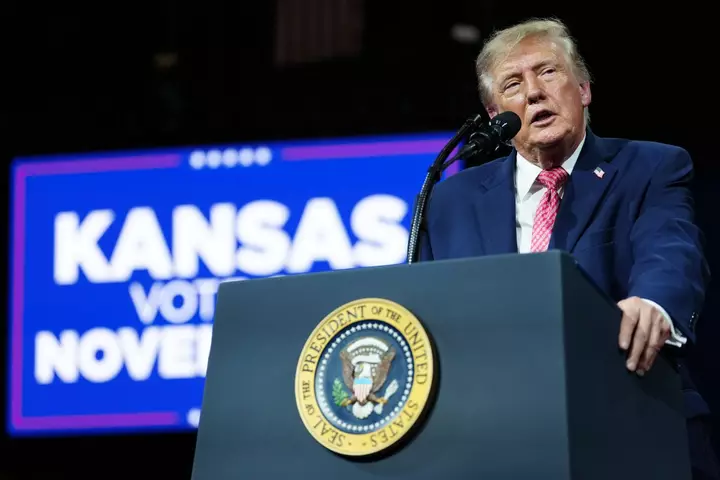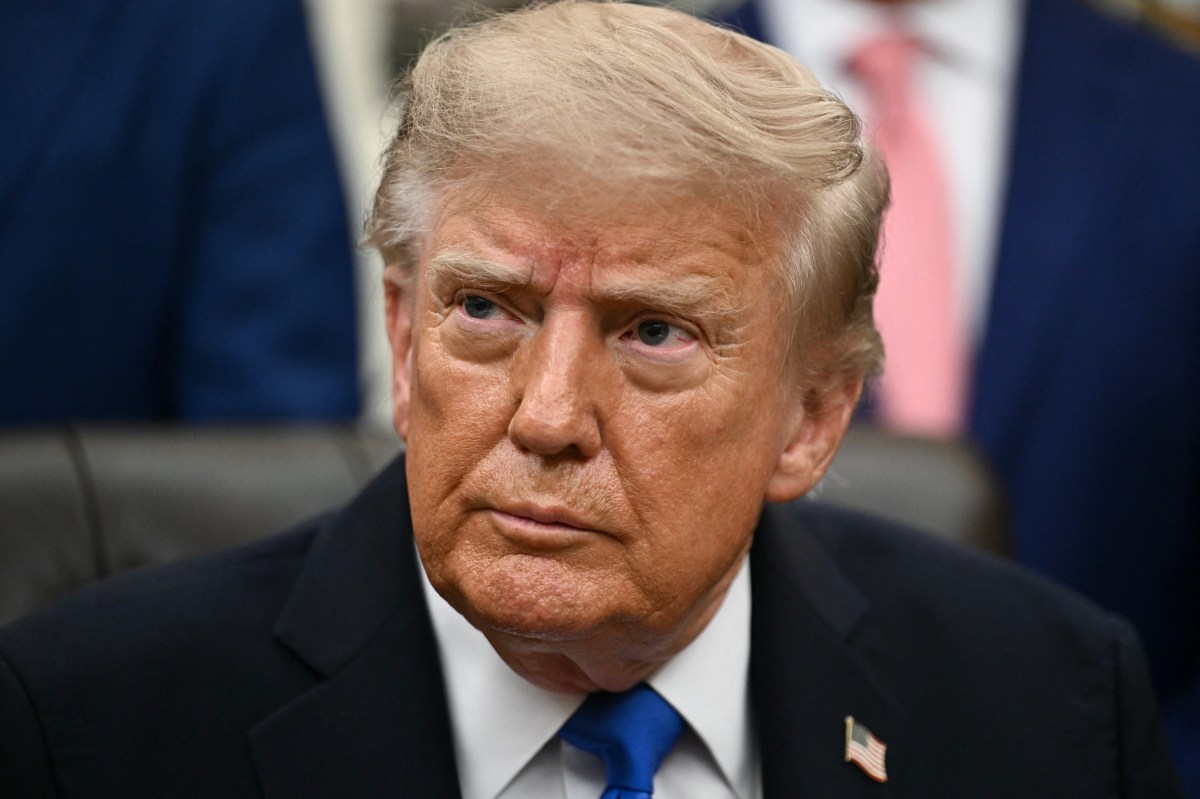
Republican lawmakers and GOP strategists are fretting over the impact of Donald Trump’s trade war with Canada, just 10 weeks out from the elections that will determine which party commands Congress for the remainder of the president’s term. Trade negotiations between Washington and Ottawa broke down in late August, due to what the U.S. side said were unreasonable demands from Ottawa, and after Canada likewise alleged that American negotiators sought 11th-hour changes to their agreement. But with Democrats favored to win the House and hopeful that they can also flip the Senate, the economic threats now facing border states in particular may be translating into an electoral risk for the GOP ahead of November’s vote.
In response, White House spokesman Kush Desai told Newsweek that Trump would continue to deliver on his “resounding Election Day mandate to level the playing field for American workers and lower costs for American families." “That Canada is a target and that he’s made this a personal fight with our closest ally is madness in the closing days of an election you’re already going to lose by big margins,” said Madrid, who co-founded the anti-Trump Lincoln Project in 2019. According to the latest forecasts from Race to the White House, Democrats currently hold a 79 percent chance of securing a House majority, and 58 percent odds of winning the Senate. Many of the states considered in play in the midterm elections are those expected to face economic consequences from the latest exchange of tariffs, such as Michigan, Ohio and Texas.
The Republican pollster Whit Ayres, a fixture in GOP campaigns since the early 1990s, said that the political risks were heightened in states close to the border and those that share a healthy commercial relationship with Canada. In light of these midterm risks, certain GOP lawmakers have been vocal in their opposition to the president’s trade policies. Collins’ representative pointed Newsweek to a statement from Tuesday in which she said that the tariffs still in effect “will lead to higher costs for Maine families and uncertainty for businesses.” And like Collins, other Republicans are urging a deescalation in the trade tensions, with House Speaker Mike Johnson quoted by Bloomberg this week as saying that resuming negotiations was “very important for both countries.” “There’s no Republican on the ballot who will tell you they think this is a good idea,” the GOP strategist Doug Heye told CNN this week. /Ipsos polling conducted in late August found that a plurality (46 percent) of Americans believe their country shoulders most of the blame for the current dispute with Canada, with 57 percent opposing further tariffs on the country, compared to only 20 percent who supported this.
Ten times as many—40 percent to 4 percent—say the latest tariff exchange will have a negative impact on their finances. And even before the tariffs, Ayres told Newsweek, the party had clearly lost control of the narrative on inflation and affordability, and said that this explained “why the president’s job approval on both is so low.” A poll recently published by the Financial Times revealed that Trump’s standing with voters on “inflation and the cost of living” and “jobs and the economy” had both fallen to their lowest levels since the survey began in May. The pollster, Focaldata, told Newsweek that Trump’s declining support among Republicans along these economic metrics was “driving a Democratic advantage on the issue among the public at large.” Despite these fears, neither side has publicly shown much desire to return to the negotiating table.
Prime Minister Mark Carney’s retaliatory duties of 15 to 50 percent came into effect on an estimated $20 billion worth of American imports came into effect on Tuesday—what he had called a “dollar for dollar” response to Trump’s 50 percent tariffs on hundreds of Canadian goods together worth around $20 billion per the U.S. On Monday, Trump said that he would prevent the Canadian aerospace company Bombardier from selling any planes in the U.S. unless it relocates its manufacturing facilities. Liliana Soto, press secretary for Arizona’s Democratic Governor Katie Hobbs, told Newsweek that Trump’s “reckless trade wars” were “killing Arizona jobs and hiking costs on Arizonans, and this latest threat is no different.” Bombardier employs hundreds of Arizonans at its facility in Tucson, and lawmakers from other states—including some Republicans—have noted the economic contributions of the company to the U.S.
Republican Senator Jerry Moran of Kansas said he had contacted the administration to “make certain the President is aware of the significant contributions of Bombardier to Kansas and the importance of its presence in Wichita to many Kansas workers.” "I’m go
Extract — continue reading at the source.