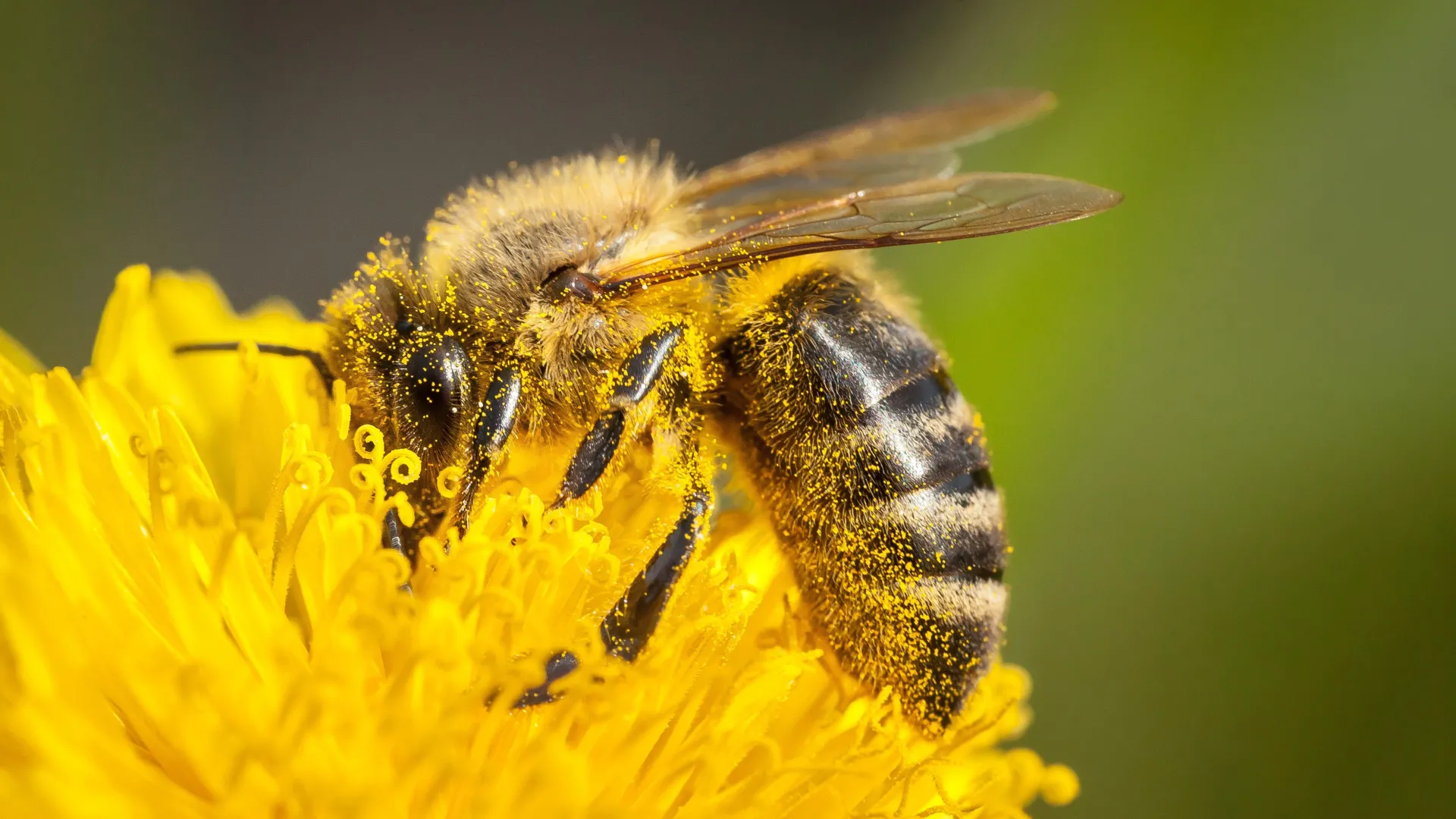
New research led by the University of Oxford has uncovered an unexpected ability in bees. They can change how much they eat depending on the balance of essential amino acids in their food. This feeding behavior may protect them from consuming excessive amounts of certain amino acids when pollen does not provide the nutritional mix they need.
The findings, published in Current Biology, also show that many types of pollen contain essential amino acids in proportions that do not closely match the needs of bees. Essential amino acids are protein building blocks that animals cannot produce themselves and therefore must obtain through food. The discovery could help farmers, landowners, conservationists and gardeners make better decisions about how to support healthy pollinator populations.
Why Pollen Is Not Always Perfect Bee Food Bees obtain nearly all of their food from flower nectar and pollen. Nectar supplies mostly sugar, while pollen is their primary source of protein. However, pollen did not evolve mainly as a food reward for pollinators.
It is the male reproductive material of plants, so its nutritional composition does not necessarily provide bees with the ideal mixture of nutrients needed for growth, survival and reproduction. To explore this nutritional mismatch, researchers compared the essential amino acid composition of honeybee tissues with pollen collected from 99 UK flowering plant species representing 26 plant families. They also produced artificial foods designed to mimic either the amino acid composition of different pollens or the composition of honeybee tissues.
Newly emerged worker honeybees were then given these diets during controlled laboratory experiments. Most of the pollen samples turned out to be a relatively poor match for the essential amino acid composition of honeybee tissues. Bees given food that more closely resembled their own tissue composition (rather than pollen) consumed more food, gained more body mass, and chose a diet containing a greater proportion of protein.
One Amino Acid May Help Control Bee Appetite The researchers suspected that histidine could play an important role in this response. Histidine is an essential amino acid, but bees require it only in relatively small amounts. To investigate further, the team created artificial diets containing either relatively high or low levels of histidine compared with branched-chain amino acids (such as leucine and isoleucine) that are important for bee growth and development.
Extract — continue reading at the source.