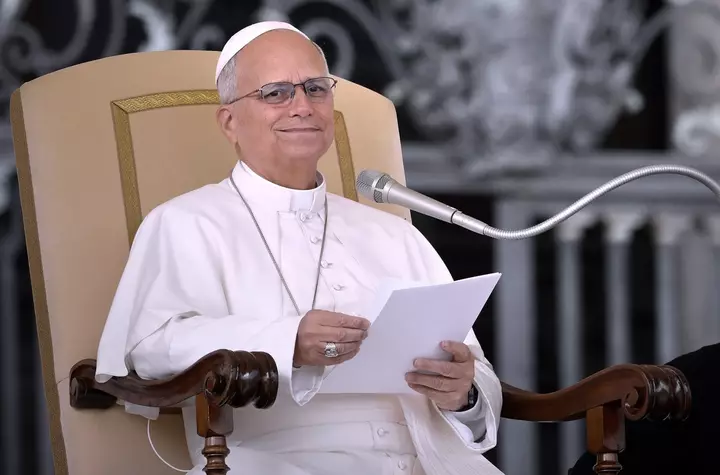
Pope Leo XIV has called for artificial intelligence (AI) to be “disarmed,” urging governments meeting in Geneva next month to move toward banning lethal autonomous weapons systems (LAWS) and insisting that decisions over life and the use of force remain under human control. In an X post on Friday, the pope wrote the future of AI was “not pre-determined” and depended on decisions made by the people developing, deploying and regulating the rapidly advancing technology. "Three years ago, we called on States to establish specific prohibitions and restrictions on autonomous weapon systems," Secretary-General of the United Nations, António Guterres, and President of the International Committee of the Red Cross, Mirjana Spoljaric, said in a joint statement in August.
"We renew this call with even greater urgency. The fundamental concerns remain unchanged, but the risks have intensified. We are now dangerously close to crossing a moral red line: the autonomous targeting of humans by machines." The two said that weapon technology development has advanced at record speed, "placing increasing strain on legal frameworks," adding that the "gap between technological capability and regulatory constraint has widened, with advanced technologies employed on the battlefield amplifying the risk of harming civilians and civilian infrastructure and aggravating civilian suffering in armed conflict." "The upcoming Seventh Review Conference of the Convention on Certain Conventional Weapons in November offers the clearest path available for States to decide to move to negotiate a legally binding instrument," they said.
"...We urge States to seize this moment. Continuing to design weapon systems that make it easier to wage war will only undermine our collective efforts towards a more peaceful world." On Friday, Leo made clear that his principal concern was preserving human responsibility when AI is used in consequential decisions. Former Anthropic researcher Jacob Coxon, who previously worked at OpenAI, resigned in September and accused both companies of racing toward “self-improving superintelligence and gambling with our lives.” Anthropic said it has been transparent about AI’s potential benefits and “unprecedented risks,” while maintaining that its models have some of the industry’s strongest safeguards.
Sam Altman, OpenAI’s chief executive, has also backed calls to slow frontier development, warning that AI could go “very badly” if humanity loses “control of the future to AI” or if too much power is concentrated in one person or company. He said competitive pressure should not be allowed to justify recklessness. The warnings contrast with President Donald Trump’s more optimistic framing.
In September, he signed an executive order directing executive-branch agencies to replace “artificial intelligence” and “AI” with “super intelligence” and “SI” in official communications, arguing that the new terms better reflect the technology’s potential. The change affects federal terminology and does not rename the technology as a matter of law or force private companies to adopt the label. Newsweek reached out to the United Nations and White House by email Saturday.
Leo also rejected the idea that increasingly sophisticated AI systems should be regarded in the same way as human beings. Such an approach risks obscuring human responsibility and leaving those who suffer harm to confront a faceless entity.” Leo argued that AI should be developed for the “common good” rather than primarily benefiting a privileged minority and called for international oversight mechanisms through which AI decisions could be examined and challenged. "What we currently need are effective international institutions that can safeguard the global common good," he said.
Extract — continue reading at the source.