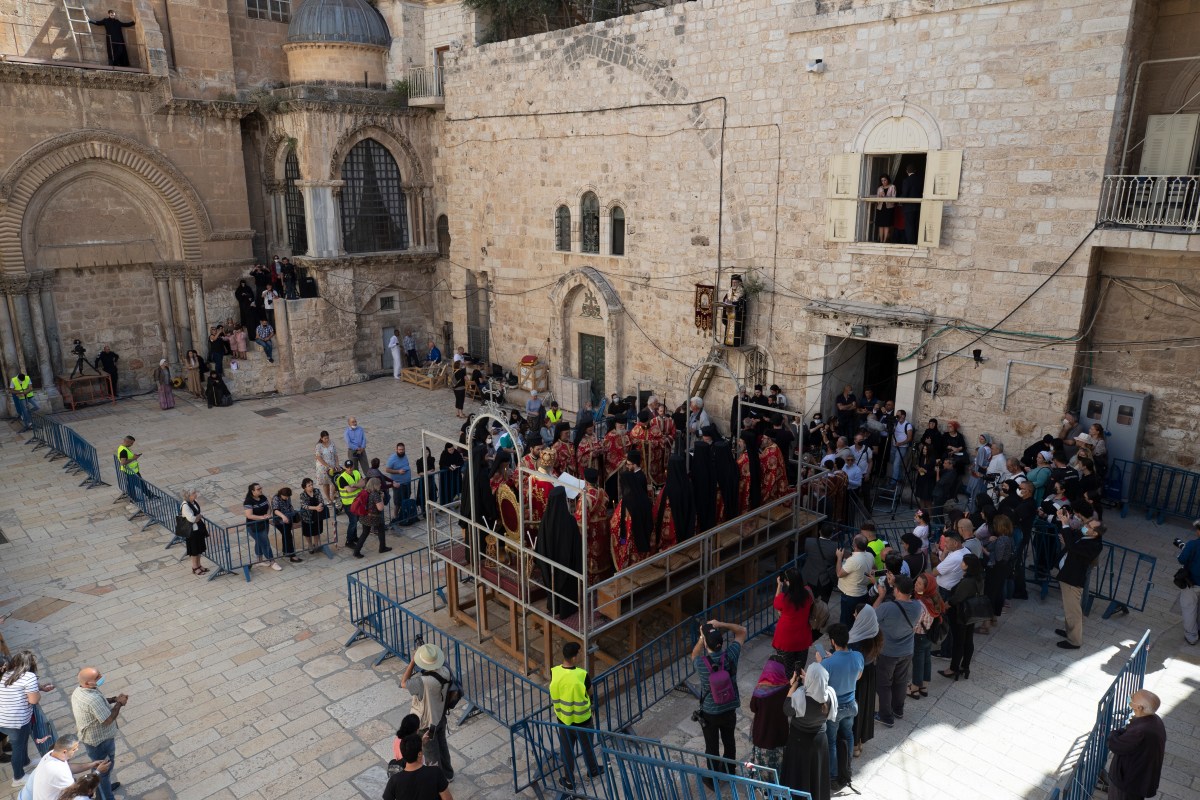
Archaeologists found evidence of an ancient burial ground and cultivated landscape beneath Jerusalem’s Church of the Holy Sepulchre, the excavation’s leader said, potentially strengthening the site’s connection to biblical accounts of Jesus Christ’s burial. The comments offer new details from an excavation that began in 2022 during a restoration of the church’s floor and entered its final phases in 2025. Researchers documented an abandoned quarry that was later used for cultivation and rock-cut burials (features resembling the landscape described in the New Testament), according to a 2025 preliminary excavation report published in the journal Liber Annuus.
The Gospel of John says a garden stood near the site of the crucifixion and contained “a new tomb, in which no one had ever been laid.” The research is also receiving renewed attention following the 2026 publication of the first volume in a planned series documenting the excavation. The project traces the site’s transformation “from quarry and garden to imperial basilica and global pilgrimage centre.” In their 2025 preliminary report, Stasolla and her colleagues described several phases of limestone extraction, followed by efforts to level and repurpose the bedrock. Some quarry cavities reached depths of about 20 feet before they were filled with soil, according to MailOnline.
A separate archaeobotanical study by Sapienza University researchers examined material collected from four areas and identified cereals, figs and other cultivated or wild plants. The team also documented olive wood and pollen from several herbaceous species. Researchers traced the later history of one burial chamber to Jerusalem’s redevelopment under Roman Emperor Hadrian in the second century, when a Roman structure blocked access to it.
About two centuries later, workers under Emperor Constantine removed that construction and isolated the chamber from the surrounding rock, allowing it to become the focus of a Christian shrine. The Sapienza team’s 2023 report provided further evidence of that early Christian transformation. Archaeologists found the apse of the original church and a Roman street beneath it, helping them reconstruct how the area changed before Constantine’s basilica was built in the fourth century.
The construction indicates that the chamber had been singled out for Christian veneration by Constantine’s reign, although it does not establish when worshippers first identified it or prove who had been buried there. The discoveries provide archaeological support for the physical setting described in the Gospels without proving that Jesus was buried at the site. The significance lies in the combination of the location, its use for burials and its subsequent preservation as a place of Christian worship.
Sapienza University’s 2025 preliminary report said the excavation allowed researchers to produce the first broad topographical reconstruction of the complex and document how the location developed through its Roman and early Christian phases. The chamber’s incorporation into Constantine’s fourth-century basilica also demonstrates that Christians were venerating it by that period. It does not establish whether the tradition can be traced continuously to the first century, but it provides evidence of an early and deliberate effort to preserve the location.
Extract — continue reading at the source.