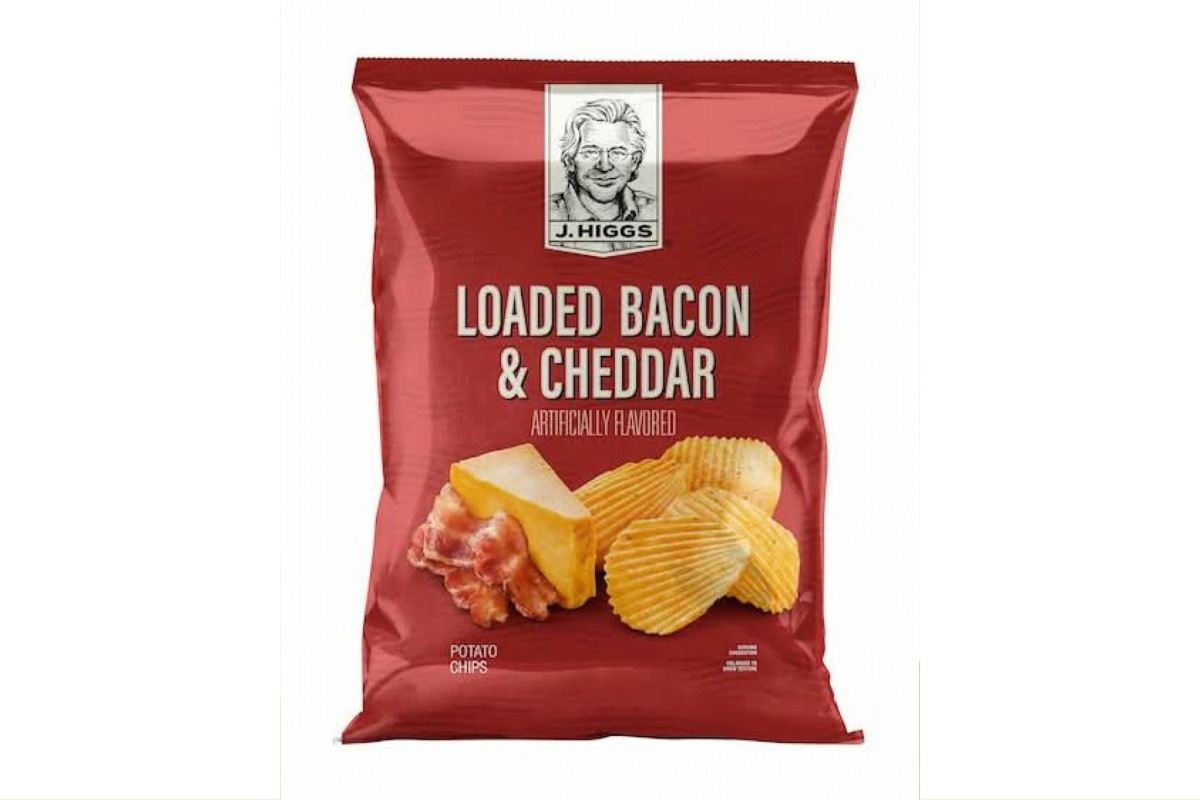
Saratoga Potato Chips LLC is recalling two best-if-used-by codes of J. HIGGS brand loaded bacon and cheddar potato chips due to potential undeclared soy allergen concerns, the U.S. Food and Drug Administration (FDA) warned in an alert on Friday.
The recalled chips were distributed to Save A Lot stores in Indiana, Kentucky, Tennessee, Ohio and Maryland. The recalled product has a UPC code number of 0-51933-31645-4, is sold in 7.75-ounce packaging with best-by dates of December 11, 2026, and December 18, 2026, the FDA says. Numerous recalls have been issued this year due to the potential for damage, foodborne illness, contamination, lack of inspection or undeclared food allergens.
Recently, federal officials also announced a recall of So Delicious Dairy Free® Salted Caramel Cluster Non-Dairy Frozen Dessert pints over fears the product could be contaminated with foreign materials. Meanwhile, millions of Americans experience food allergies or sensitivities every year. According to the FDA, the nine "major" food allergens in the United States are eggs, milk, fish, wheat, peanuts, soybeans, crustacean shellfish, sesame, and tree nuts.
Newsweek reached out to Saratoga Potato Chips LLC via phone after hours on Friday and left a voice message, and to Save A Lot via online form. According to the alert, no injuries or illnesses have been reported in connection with the recall. "People who have an allergy or severe sensitivity to soy run the risk of serious or life-threatening allergic reaction if they consume these products," the FDA warned in its alert in part.
People who have purchased the recalled product can return it to the original place of purchase for a full refund. Consumers with additional questions may contact Saratoga Potato Chips LLC via phone at 1-260-969-0066 with additional questions, the alert says. The latest recall affecting the potato chips distributed to certain Save A Lot stores comes amid heightened fears and attention to foodborne illnesses and recalls, including national cases of Salmonella and Cyclospora.
Keith Schneider, professor of food safety at the UF Institute of Food and Agricultural Sciences, said in a release sent to Newsweek last week, in part when asked in a survey why some recalls involve well-known grocery stores or large companies, "Large companies distribute enormous amounts of food, so problems involving those products are more likely to be detected." "Imagine one supplier distributes a million units of a product. If there is a contamination problem, there is a much greater chance that multiple people will become sick and that health officials will see a pattern. A small farm selling a few dozen units may have the same contamination rate, but if only one person becomes sick, that illness may never be connected to the farm or producer.
Extract — continue reading at the source.